


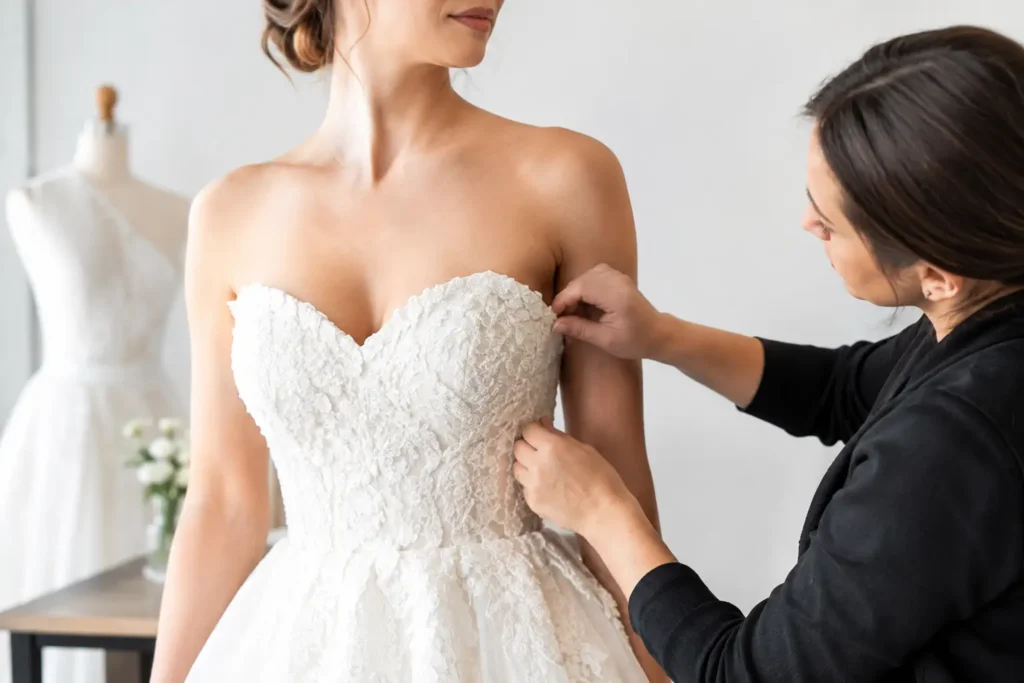
Wedding Dress Bodice Alterations Explained
A bodice that is only slightly too loose can leave you pulling at the neckline all day. One that is too tight can make sitting, hugging guests and taking a full breath surprisingly difficult. Wedding dress bodice alterations explained properly means looking beyond the waist measurement: the bodice must support, shape and move with you while preserving the gown’s original design.
For many brides, bodice work is the most important part of wedding dress alterations. The skirt may be the first thing people notice in photographs, but the bodice determines how secure and comfortable you feel from the ceremony through to the dance floor. Careful fitting is where expert tailoring makes a genuine difference.
What counts as a wedding dress bodice alteration?
The bodice is the fitted upper section of a wedding dress, usually running from the neckline to the waist or hip. It may include boning, cups, corsetry, lace, beading, buttons, sleeves, straps, a zip or a lace-up back. Because these elements work together, an adjustment in one area can affect the whole fit.
A bodice alteration may involve taking in or letting out the side seams, reshaping the bust, adjusting straps, changing the neckline, refining the shoulder fit or improving the support inside the dress. On a structured gown, the tailor may also need to reposition boning, rebuild internal layers or secure delicate embellishment after the seams are changed.
The right approach depends on the dress construction and the amount of adjustment required. A simple satin gown with plain seams can be more straightforward than a heavily beaded lace bodice, but every bridal gown deserves measured, careful handling.
Wedding dress bodice alterations explained by fit issue
A loose bodice
If the bodice gaps at the bust, slips down at the waist or sits away from your back, it usually needs to be taken in. This is commonly done through the side seams, centre-back seam or both, depending on where the excess fabric sits.
A loose bodice is not always solved by tightening the back alone. Pulling it in too much at the centre back can distort the zip, buttons or lace-up detail and may flatten the shape through the bust. An experienced tailor checks the balance of the garment so the gown remains centred and the neckline lies neatly against the body.
A tight bodice
A bodice that feels restrictive may be let out if there is enough seam allowance inside the dress. This is extra fabric left within the seams by the manufacturer, and the amount varies widely between gowns. Some dresses offer room for a modest adjustment; others have very little to release.
Where letting out is not possible, options may include altering the back closure, adding a corset panel or using matching fabric to create extra width. These changes need thoughtful design work, particularly on gowns with detailed lace, buttons or a low back. The aim is for the solution to look intentional, not like an afterthought.
Bust and cup adjustments
The bust should feel supported without being compressed, gaping or sitting too low. Built-in cups can often be replaced, moved or reshaped to suit your body and the dress. This is especially useful when the bodice fits through the waist but does not sit correctly across the bust.
Cup work is not simply about bra size. The position of the bust, the neckline shape and the dress’s internal structure all matter. A plunging neckline, for example, requires a different support strategy from a high-neck gown with firm boning.
Straps, shoulders and sleeves
Straps that are too long can make a bodice drop, causing a loose neckline even when the waist feels right. Shortening straps may sound minor, but the adjustment must maintain the correct angle over the shoulder and avoid pulling the neckline too high.
For dresses with off-the-shoulder sleeves or cap sleeves, movement is particularly important. The gown should look elegant with your arms relaxed, while still allowing you to embrace family, hold a bouquet and move naturally. A fitting should include these simple movements rather than only standing still in front of a mirror.
Neckline reshaping
A neckline can sometimes be raised for more coverage, tightened to remove gaping or reshaped for a cleaner line. Lace, appliqué and beading can make this work more detailed, as the original finish may need to be unpicked and recreated by hand.
It is possible to add modesty panels, illusion tulle or additional lace in some designs. However, not every change suits every gown. The fabric, existing pattern and placement of embellishments determine whether the alteration will look natural. A skilled tailor will explain what is achievable before any work begins.
Why the inside of the dress matters
A well-fitted bodice is often supported by work you cannot see. Bridal gowns may contain boning, waist stays, lining, bra cups, horsehair braid and multiple layers of mesh. These internal details give the dress its structure and help distribute its weight.
If a dress is heavy through the skirt, the bodice needs enough stability to stop the gown dragging downwards. If it has a strapless design, the waist and bust must work together so you are not relying on constant readjustment. Adding or refining a waist stay can sometimes improve security without making the visible bodice noticeably tighter.
This is why pinning the outer fabric alone is not the full answer. High-quality wedding alterations consider comfort, movement and garment engineering, as well as how the gown looks in the fitting room.
When to book your bridal fittings
Ideally, arrange your first alteration appointment around eight to twelve weeks before the wedding. This provides time for assessment, alterations and at least one follow-up fitting. If your gown has intricate beadwork, extensive lace or significant bodice changes, allowing additional time is sensible.
Bring the shoes and underwear you expect to wear on the day. Your shoe height affects the overall balance of the gown, while the right bra or shapewear can change the way the bodice sits. If you are planning to wear cups sewn into the dress, discuss this at the first fitting rather than making a last-minute decision.
Try not to schedule the final fitting too early. Small body changes are normal in the lead-up to a wedding, and the final check should be close enough to the date to confirm the fit is still right. At that appointment, practise sitting, lifting your arms and taking a few steps as you would on the day.
What can affect the cost and timing?
There is no one-price answer for bridal bodice work because the construction of the dress sets the complexity. A straightforward side-seam adjustment differs greatly from resizing a boned, beaded gown with a zip, button loops and lace appliqué.
The main factors are the number of layers, fabric type, amount of resizing, closure style, internal boning and decorative detail. Hand-sewn work often takes longer, but it protects the finish of the garment. Rushing a complex bodice alteration can compromise the result, so early fittings offer more choice and less stress.
Choosing the right fit, not the tightest fit
Many brides assume a secure bodice must feel very firm. It should feel supported, but you still need room to breathe, eat, sit and enjoy the celebration. A gown can look beautifully sculpted while allowing normal movement.
During your fitting, speak up about anything that pinches, rubs or feels unstable. Do not dismiss discomfort because the dress looks good for a few minutes. Your wedding gown should carry you confidently through a long, meaningful day.
At AD Stitch, bridal alterations are approached with the same precision and personal care as any fine garment. Bring your gown in with your ideas, your accessories and any concerns about fit. The best bodice alteration is the one you stop thinking about once the day begins – because you feel comfortable, supported and completely yourself.
FAQ content
Q1. What are wedding dress bodice alterations?
Wedding dress bodice alterations involve modifying the upper section of a bridal gown to improve its fit, comfort and support. These adjustments may include the bust, waist, neckline, straps, shoulders and internal structure.
Q2. Can a wedding dress bodice be made smaller?
Yes. A wedding dress bodice can often be made smaller by adjusting the side seams, back seams or other areas where excess fabric is available. The method depends on the gown’s design and construction.
Q3. Can a wedding dress bodice be made bigger?
Yes. A bodice may be enlarged by releasing existing seam allowances. If there is insufficient fabric, a professional tailor may recommend additional panels or a corset-style back.
Q4. Can the bust area of a wedding dress be altered?
Yes. Bust alterations may include adjusting built-in cups, reshaping seams, improving internal support or repositioning the bust area to achieve a better fit.
Q5. Can wedding dress straps and shoulders be adjusted?
Yes. Bridal straps can be shortened, lengthened or repositioned. Shoulder adjustments can also help improve the neckline position and overall support.
Q6. Can the neckline of a wedding dress be changed?
Yes. Depending on the gown’s construction, a neckline can be raised, tightened or reshaped. Lace, beading and delicate embellishments may require additional specialist hand-finishing.
Q7. How long before my wedding should I arrange bodice alterations?
Ideally, arrange your first fitting around 8–12 weeks before your wedding. More complicated alterations may require additional time and multiple fittings.
Q8. Where can I get wedding dress bodice alterations in Melbourne?
AD Stitch offers professional bridal and clothing alteration services in Melbourne. Visit its Heidelberg location for a personalised fitting and assessment of your wedding gown.