


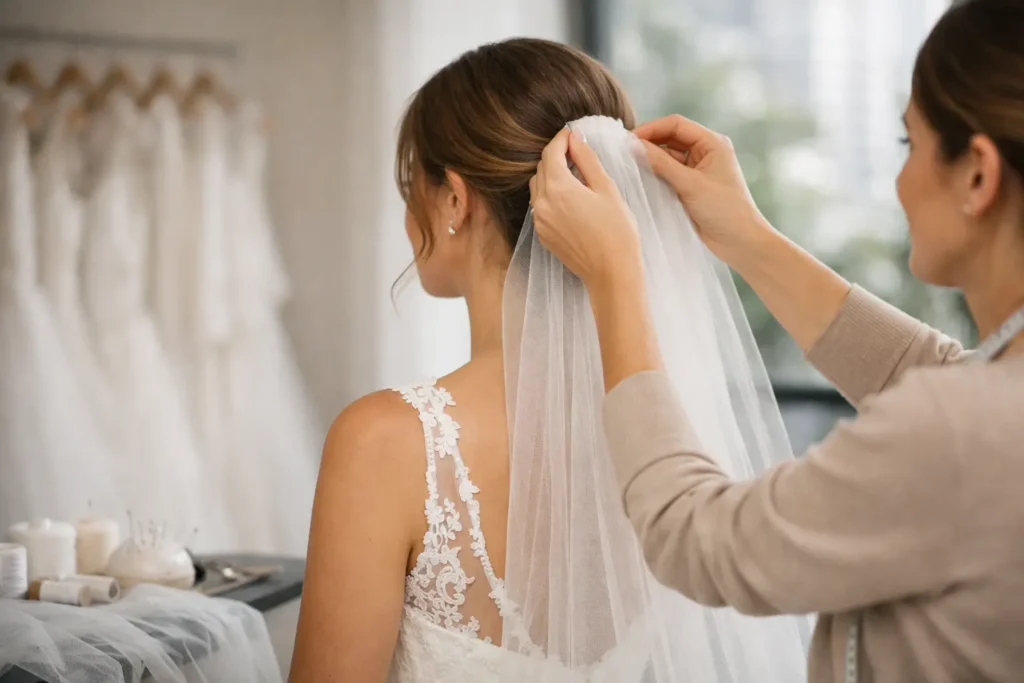
Veil Alterations Melbourne for Your Wedding
A veil can look beautifully finished on its own, then feel completely different once it is paired with your gown, hairstyle and wedding shoes. If you have searched for veil alteration melbourne, you are likely looking for more than a quick trim. You need careful tailoring that protects delicate tulle, lace and beading while making sure your veil sits securely and complements the dress you chose.
The right veil should feel effortless. It should stay in place through hugs, photos, walking down the aisle and dancing, without pulling at your hair or competing with the shape of your gown. Small adjustments can make a remarkable difference to the final look.
Why veil alterations need a careful hand
Bridal veils are often made from fine tulle, soft netting, silk or lace. These fabrics can catch, stretch or develop visible damage if handled roughly. A veil may also have a hand-finished edge, scattered pearls, embroidery, appliqué or detailed lace that needs to remain balanced after any alteration.
That is why veil work is different from shortening a simple skirt hem. The tailor needs to consider how the fabric falls, where the veil frames your shoulders and dress, and whether a trim will change the proportions of the design. On a veil with a lace border, for example, simply cutting excess length away may leave an uneven or incomplete pattern at the edge.
Expert alterations focus on preserving what makes the veil special. In some cases, this means carefully reshaping the tulle and recreating an edge. In others, it may mean repositioning lace or decorative details so the finish still looks intentional from every angle.
Veil alterations Melbourne brides commonly request
Every veil is different, but several adjustments come up regularly during bridal fittings. Length is one of the most common. A veil bought online may be longer than expected, brush the floor too heavily, or sit at an awkward point against the gown’s train. A tailored length can give you the soft, floating effect you want without creating a trip hazard or hiding the back of your dress.
Width is another consideration. A veil that is too full can overwhelm a streamlined gown, while one that is too narrow may not create the coverage or movement you imagined. Reducing or adjusting the gather can change the volume while retaining the original character of the veil.
The attachment also deserves close attention. Combs can be replaced, strengthened or repositioned so the veil works with your chosen hairstyle. If you are wearing an upstyle, loose waves or a low bun, the placement of the comb affects both comfort and balance. A secure attachment helps you feel free to move rather than constantly checking whether the veil has shifted.
Other requests include adding or removing a blusher, repairing small tears, securing loose pearls or beading, and altering lace edging. These jobs require patience and precise finishing, particularly where a repair needs to disappear into delicate netting.
Bring your gown to the fitting
A veil should never be altered in isolation if it can be avoided. Bringing your wedding dress to the fitting allows the tailor to assess the full picture: the neckline, back detail, train length, fabric texture and silhouette. A veil that looks ideal against a plain wall can fall differently over satin, crepe, tulle or a heavily embellished bodice.
Bring your wedding shoes as well. Their height influences where your gown sits and how much clearance you need between the veil, dress and floor. If your hair trial has already happened, photos are useful too. They can show the planned hairstyle and help determine the best comb position.
This fitting is also the time to discuss when you intend to remove the veil. Some brides wear it for the ceremony and photographs, then take it off for the reception. Others want a style that can remain comfortable all day. There is no single right choice, but the plan affects how firmly the veil should be secured and whether a simpler attachment will suit you better.
Matching the veil to the gown’s proportions
The best veil length depends on the dress, not just bridal tradition. A shoulder-length veil can suit a detailed back or shorter dress, while a fingertip veil often works well with modern gowns that have a clean, defined silhouette. Chapel and cathedral lengths create drama, but they need enough space and a gown that will not be lost beneath layers of tulle.
A longer veil is not automatically more formal or more flattering. If your dress has beautiful buttons, a low back, statement sleeves or intricate embroidery, a shorter or lighter veil may let those details remain visible. Conversely, a simple gown can carry a fuller or longer veil beautifully.
This is where professional advice matters. The goal is not to follow a rule. It is to create a proportion that feels like you, photographs well and allows the dress and veil to work together.
When a veil should not be cut
Not every issue requires shortening. Sometimes the veil only needs a better attachment point, a small change to its gather or a different hairstyle to sit correctly. Cutting is permanent, so it should be the final decision rather than the first solution.
A detailed lace-edged veil may be especially worth preserving. If it is too long, a tailor can assess whether the lace can be lifted, repositioned or carefully reshaped rather than removed. The approach depends on the construction of the veil and the amount of adjustment needed.
Family veils also call for extra caution. If you are wearing a veil passed down from a parent, grandparent or another loved one, the sentimental value may be greater than the practical need for a major alteration. Gentle repairs, stabilising fragile areas or making a removable attachment can be better choices than extensive changes.
Timing your bridal alterations
Veil alterations are best organised once your gown is selected and your main dress fittings are underway. This gives you time to see the whole outfit together and avoids last-minute decisions. If your veil has lace, beading, multiple layers or needs repair work, allow extra time for careful finishing.
Avoid waiting until the week of the wedding where possible. A rushed decision can limit your options, especially if the alteration reveals that the comb needs replacing or the edge needs more detailed work. Early planning also gives you time to try the finished veil with your hairstyle and make sure it feels secure.
At AD Stitch, bridal alterations are approached with the same attention to fit and finish as the gown itself. A veil may be light in weight, but it is one of the most visible pieces you will wear on the day.
A few practical details before your appointment
Store the veil loosely and cleanly before bringing it in. Avoid folding it tightly beneath heavy garments, as creases can be stubborn in fine tulle. Keep any original combs, spare beads or lace pieces that came with it, even if you are unsure whether they will be needed.
It also helps to be clear about what feels wrong. Is the veil too long? Does it slip from your hair? Is the lace catching on the dress? Does it hide a feature you want visible? These details guide the fitting and help identify whether a minor adjustment or a more involved alteration is appropriate.
Most importantly, try the veil on while moving. Stand still, then walk, turn and sit. A veil should feel secure and graceful, not like something you need to manage all day. The right alteration lets it become part of the moment, leaving you free to enjoy the people, photographs and celebration ahead.