


Uniform Alterations That Actually Fit
A uniform that pulls across the shoulders, bunches at the waist or drops over the shoes does more than feel awkward – it affects comfort, movement and the way you present yourself all day. That is why uniform alterations matter. Whether it is a school blazer, healthcare tunic, hospitality apron or corporate shirt, the right adjustments can turn standard-issue clothing into something that looks cleaner, feels better and lasts longer.
Off-the-rack uniforms are made to fit as many people as possible. In real life, bodies do not work that way. One person needs more room through the hips, another needs sleeves shortened, and someone else needs the hem taken up without throwing off the shape of the garment. A proper alteration is not about vanity. It is about function, confidence and getting more wear from something you rely on regularly.
Why uniform alterations are worth it
A well-fitted uniform helps you move naturally. If you are bending, lifting, standing for long hours or greeting customers face to face, poor fit becomes obvious very quickly. Tightness under the arm, gaping at the bust, twisting trousers or a skirt that rides up can make a long day feel even longer.
Presentation matters too. Uniforms are often part of how a school, workplace or team is recognised. When the fit is tidy and proportionate, the whole look appears more professional. That does not mean every garment should be skin-tight or heavily reshaped. It means the clothing should sit correctly on the body and do its job without distraction.
There is also a practical side. Replacing uniforms can be expensive, especially for growing children or workplaces with multiple pieces in rotation. Thoughtful tailoring can extend the life of a garment and delay unnecessary replacement. In many cases, a small adjustment is all that is needed to make a usable piece wearable again.
What can be adjusted in uniform alterations
Most people are surprised by how much can be improved. Shirts can often be taken in through the side seams, shortened at the hem or adjusted at the sleeves. Trousers may be hemmed, tapered slightly, taken in at the waist or repaired at stress points. Skirts can be shortened, waists refined and darts reshaped for a cleaner fit.
Blazers and jackets usually need a more experienced hand, but they can often be improved significantly. Sleeve length is one of the most common fixes. Body shaping may also be possible, depending on the construction, lining and seam allowance inside the garment. Dresses, tunics and aprons can be adjusted for length, fit through the torso and ease of movement.
The key point is this: what is possible depends on how the uniform was made. Some garments have enough seam allowance to allow changes. Others are tightly overlocked or mass-produced in a way that limits major reshaping. A tailor can usually tell quite quickly whether a garment is a good candidate for alteration or whether replacing it makes more sense.
Common requests by type of uniform
School uniforms often need hems, waist adjustments and blazer sleeve shortening. Work uniforms tend to need practical changes such as trouser length, shirt shaping and repairs to worn areas. Formal or customer-facing uniforms, including corporate and hospitality wear, usually benefit from more precise fitting because appearance is part of the role.
Healthcare and beauty uniforms often need a balance between comfort and neatness. Staff need freedom to move, but also want a polished look. In those cases, the best result usually comes from subtle shaping rather than aggressive tailoring.
When a uniform should be altered, not replaced
If the fabric is still in good condition, alteration is often the smarter option. A hem that is too long, a waistband that no longer sits properly or sleeves that cover the hands are all straightforward issues. These are fit problems, not garment failures.
Alteration also makes sense when matching a uniform set matters. Schools and workplaces sometimes update styles or colours, which can make it difficult to replace one item without the new piece looking slightly different. Adjusting the existing garment can help maintain a consistent appearance.
That said, there are times when replacement is the better path. If a garment is badly worn at the knees, elbows or seat, or the fabric has faded unevenly, tailoring may not deliver the finish you want. The same applies when a uniform is far too small and there is no allowance left to let it out. Good advice should be honest. Not every piece is worth altering.
The difference between a quick fix and a proper fit
Some adjustments are simple. Taking up a hem or replacing a zip is usually straightforward. But fit is rarely solved by one measurement alone. A trouser hem, for example, depends on the cut of the leg, the shoes usually worn with it and whether the person needs room for movement at work.
That is where experience matters. Proper tailoring looks at balance, proportion and wearability. A shirt might technically button up, but if it strains across the chest or billows at the back, it still does not fit well. A skirt may be the right length standing still, but become impractical once the wearer sits down. The best alterations account for real use, not just how the garment looks on a hanger.
This is especially important with uniforms because they are worn repeatedly. Comfort flaws become daily frustrations. A careful fitting can prevent that.
How fittings work for uniform alterations
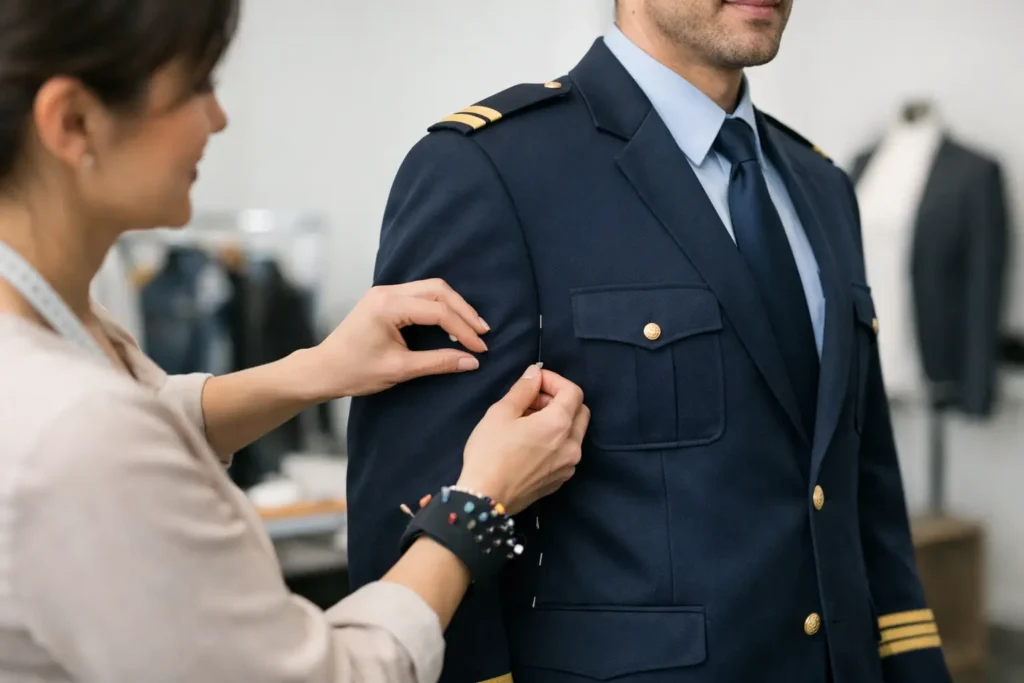
A fitting should be simple and clear. The tailor checks how the garment sits on the body, pins where needed and talks through what can be adjusted. If the uniform is for a child, room for growth may be part of the discussion. If it is for work, movement and durability matter just as much as appearance.
Bring the shoes or layers normally worn with the uniform when possible. Trouser and skirt lengths can change depending on footwear. Shirts and blazers also sit differently over undershirts or knitwear. Small details at the fitting stage often make the final result much more accurate.
It also helps to mention any recurring problems. If you are always tugging at the hem, struggling to sit comfortably or rolling sleeves all day, say so. The most useful information is often practical rather than technical.
Timing matters more than people think
Leave alterations too late and your options narrow quickly. This is common with school uniforms before term starts and with workplace uniforms before a new role begins. Booking early allows time for fitting, adjustments and any follow-up tweaks if needed.
Rushed work is not always bad, but some garments need care. Lined jackets, structured dresses and pieces with embroidery or logos may require more planning than a basic hem. If the finish matters, give the process enough time.
Choosing the right tailor for uniforms
Uniform tailoring is slightly different from occasionwear. The garment needs to look sharp, but it also has to stand up to regular washing, daily wear and repeated movement. That requires practical judgement as well as technical skill.
Look for a tailor who asks how the garment is worn, not just how it looks. A good alteration should suit the job the uniform has to do. It should also be neat on the inside, because weak stitching or rushed finishing tends to show up fast on high-use clothing.
Personal service matters as well. Uniforms are often tied to school, work or a major life routine. People want reassurance that the garment will be handled properly, altered accurately and ready when promised. That level of care is one reason many Melbourne locals prefer working with a dedicated alteration specialist rather than treating tailoring as an afterthought.
A better fit changes the day
When a uniform fits properly, you stop thinking about it. You are not adjusting sleeves between tasks, stepping on hems or wondering whether everything sits as it should. You simply get on with your day feeling more comfortable and more put together.
That is the real value of careful tailoring. It is not about making a uniform fancy. It is about making it work the way it should for the person wearing it. And when that is done well, even a standard garment can feel made for you.