


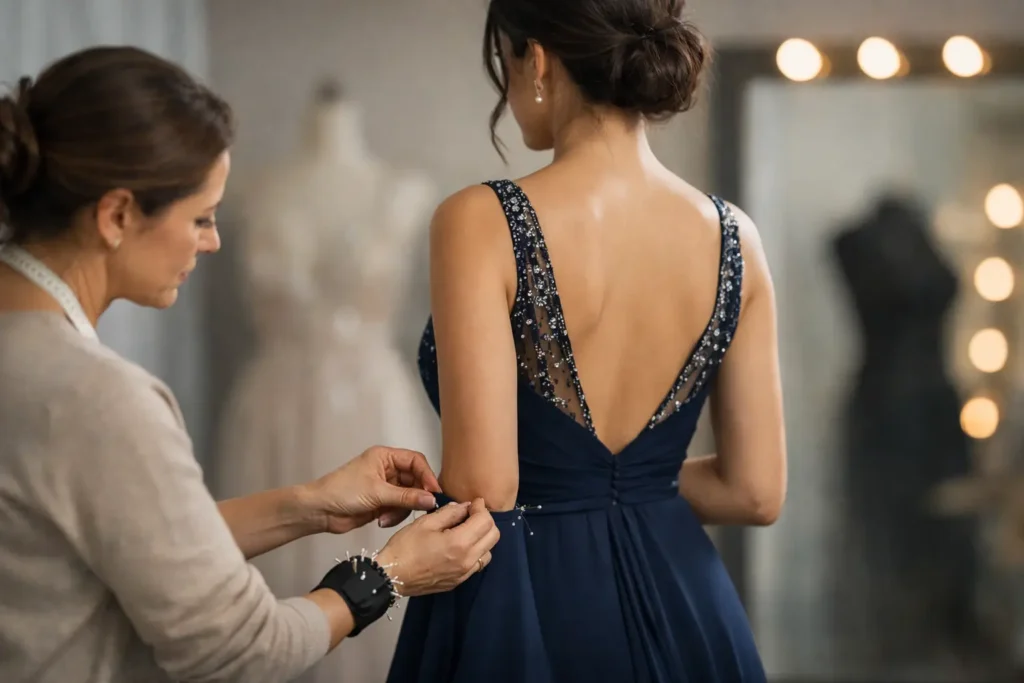
Evening Dress Alterations That Truly Fit
A formal dress can look perfect on the hanger and still feel wrong the moment you zip it up. The bust may sit too low, the hem might catch under your heels, or the waist can pull just enough to make you self-conscious all night. That is where evening dress alterations make the real difference – not only in how a dress looks, but in how comfortably and confidently you wear it.
For special events, small fit issues rarely stay small. A strap that slips during dinner, a skirt that twists in photos, or a bodice that gapes when you sit can distract from the whole occasion. A well-altered dress should feel secure, balanced and flattering from the first fitting through to the last dance.
What evening dress alterations can fix
Most formal dresses are made to standard sizing, but bodies are not. Even beautifully made gowns often need adjustment once they are on a real person with a real event ahead of them. The goal is not to force your body to match the dress. It is to shape the dress so it works with your proportions, movement and comfort.
The most common evening dress alterations involve the hem, straps, bust, waist and hips. Hemming is often the first priority because length affects both appearance and safety. A gown that is too long can drag, fray or trip you on stairs. Too short, and the dress can lose its intended line.
Bodice adjustments are just as important. Taking in the waist can create a cleaner silhouette, while refining the bust area can stop gaping or flattening. Strap shortening helps lift the bodice into the right position, which changes more than comfort – it changes the entire shape of the dress on the body.
Some dresses also need more detailed work, such as tapering side seams, adjusting sleeves, reshaping the neckline or adding support inside the garment. With formalwear, the inside matters as much as the outside. Hidden structure often determines whether a dress stays in place and feels secure over several hours.
Why formalwear needs a more careful approach
Evening dresses are rarely simple garments. They often feature delicate fabrics, layered skirts, boning, built-in cups, beadwork, lace, sequins or fine lining. Each of these details changes how an alteration should be done.
That is why formalwear should never be treated like everyday clothing. Shortening a beaded hem, for example, may require removing and reapplying embellishment. Adjusting a fitted bodice may involve working through multiple layers so the outer fabric remains smooth. A rushed or overly basic alteration can leave puckering, misaligned seams or a shape that looks off even if the measurements are technically right.
There is also the issue of fabric behaviour. Satin shows needle marks more easily than some other materials. Stretch mesh reacts differently from silk or crepe. Heavier gowns can pull on seams in ways lighter dresses do not. An experienced tailor reads these details before making changes, rather than discovering the problem halfway through.
When to book evening dress alterations
The best time to arrange alterations is earlier than most people think. As soon as you have the dress and a reasonably clear event date, it is worth booking a fitting. Leaving it until the final week creates pressure and limits what can be done well.
Ideally, formal alterations should begin several weeks before the event, especially if the dress has multiple layers or detailed finishing. This allows time for a first fitting, the work itself, and any final refinements once the dress has been tried on again. If shoes or undergarments will affect the fit, bring them to the fitting. Hem length, bust support and overall balance can change significantly depending on what you wear underneath.
Weight fluctuations and event timing also matter. If the dress is for a school formal, gala, black-tie wedding or major celebration, alterations should be planned around your actual wear date, not around when the dress arrived. The closer the final fitting is to the event, the more accurate the result is likely to be, but there still needs to be enough time to do the work properly.
How a fitting should feel
A good fitting is not rushed, vague or purely about pinning fabric. It should feel like a practical conversation about how the dress sits, how you move in it and what you want from it.
You may be asked where the dress feels loose or tight, whether you plan to wear heels, and how fitted you want the silhouette to be. That matters because a technically close fit is not always the right fit. Some clients want a sleek, body-hugging shape. Others want more ease through the waist or hips so they can sit, walk and dance comfortably.
This is where craftsmanship and communication meet. Precision matters, but so does listening. A dress that looks beautiful for two minutes in front of a mirror is not enough if it becomes uncomfortable halfway through the evening.
What to expect from common adjustments
Hemming is usually straightforward in concept, but not always in execution. A plain hem on a single-layer dress is different from a horsehair hem, a circle skirt, or a gown with tulle and lining. The cleaner the finish needs to be, the more care the job requires.
Taking in the sides can refine the silhouette, but this depends on seam allowance, fabric type and design details. Some dresses can be let out slightly if there is enough fabric in the seams, though not all garments allow for this. Built-in corsetry or heavily embellished panels can limit how much change is possible.
Strap and sleeve alterations are often underestimated. They seem minor, yet they strongly affect posture, bust placement and the overall line of the dress. A simple strap adjustment can stop the neckline from shifting and make the whole garment feel more secure.
Invisible repairs can also be part of evening dress alterations. A loose zip, split seam, dropped hook or damaged lining may be easy to overlook until the last minute. Fixing these issues early protects the dress and avoids event-day stress.
The trade-offs to keep in mind
Not every dress can be altered in every way, and honest advice matters. Some designs are very forgiving, while others are constrained by fabric, cut or construction. A heavily beaded gown might be alterable at the waist but not easily at the hem. A bias-cut dress may be beautiful, but it can behave unpredictably once adjusted.
There is also a point where altering a dress becomes less practical than choosing a better base size from the beginning. If a gown is dramatically too large or too small, major reconstruction can affect proportion and finish. In those cases, a skilled tailor should explain what is realistic and what may compromise the result.
That kind of transparency builds trust. Good tailoring is not about promising everything. It is about knowing what will improve the garment and what may not be worth the risk or cost.
Choosing the right tailor for evening dress alterations
Formalwear deserves more than a quick pin-and-go service. You want a tailor who understands garment structure, handles delicate fabrics carefully and pays attention to how the dress feels on the person wearing it.
Look for clear communication, realistic timing and a professional approach to fitting. Experience with special occasion wear matters because the finish is more exacting than everyday alterations. Clean lines, balanced hems and secure construction are not optional when the dress will be photographed, worn for hours and remembered.
For Melbourne clients, this is often where a trusted local alterations specialist stands apart from a general counter service. Personal fittings, direct advice and careful workmanship can turn a nearly-right dress into one that feels made for you.
AD Stitch approaches this kind of work with the same focus we bring to all expert clothing alterations – precision fit, careful handling and service that makes the process easier from start to finish.
Before your appointment
To get the best result, bring the shoes you plan to wear and any shapewear or bra that will change the fit. Try not to switch these after the hem or bodice has been adjusted. If the event includes a handbag, jacket or particular jewellery, those can sometimes influence comfort and movement too, especially with straps, sleeves and necklines.
It also helps to speak plainly about what bothers you. If the dress feels too exposed, too loose at the back, or hard to walk in, say so. Alterations are not only about measurements. They are about making the dress work for the evening you actually have planned.
A special occasion outfit should never spend the night being tugged, lifted or second-guessed. When the fit is right, you stop thinking about the dress and simply enjoy wearing it.