


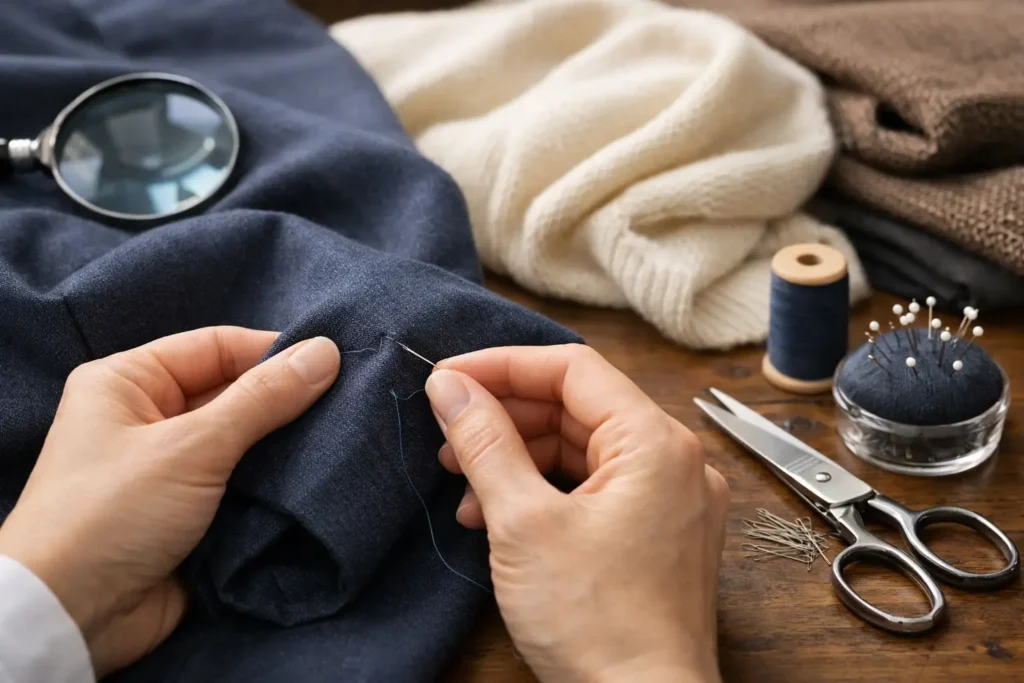
Invisible Mending for Clothes That Matter
A tiny hole near a trouser pocket, a moth mark on a knit, a tear at the seam of a favourite dress – these are the kinds of problems that make people think a garment is finished. Often, it is not. Invisible mending is a specialised repair method that restores damaged clothing so the fix is difficult to spot, helping you keep pieces that still fit well, feel good and deserve more wear.
For many people, the value of a garment is not only in the price tag. It might be the suit you wear for work each week, a dress that sits perfectly, or a coat that is still in excellent condition apart from one damaged area. When the fit is right, replacing it is rarely simple. A careful repair can be the better option.
What invisible mending really means
Invisible mending is the art of repairing fabric damage as discreetly as possible. The aim is not to hide poor workmanship under a quick patch. It is to rebuild or reinforce the damaged area so the repair blends with the surrounding fabric in both appearance and function.
That can mean reweaving broken threads in woven cloth, stitching a torn seam so the line sits correctly again, or using carefully matched thread and technique to make a repair far less noticeable from normal viewing distance. The exact method depends on the garment, the fabric, the location of the damage and how severe the problem is.
This is where experience matters. A repair that works beautifully on wool trousers may be the wrong approach for silk, denim or a loosely knitted jumper. Good invisible mending is not one technique. It is a category of skilled repair work that relies on judgement.
When invisible mending is worth it
The best candidates for invisible mending are garments with good overall value, whether that value is financial, practical or sentimental. Tailored jackets, trousers, coats, dresses and quality skirts are often worth repairing because the base garment still has plenty of life left in it.
It also makes sense when the fit is already right. Anyone who has spent time finding a flattering pair of pants or a suit that sits properly knows how hard it can be to start again. If the only issue is one burn mark, snag, split or worn section, repair is often the sensible path.
There are limits, though. If the fabric is badly weakened across a broad area, if multiple parts of the garment are failing, or if the damage sits in a highly visible place on delicate fabric, the result may improve the piece without making it look perfect. A trustworthy tailor will tell you when invisible mending is likely to be excellent, and when it will simply be the least noticeable option available.
Invisible mending for common clothing damage
Small holes are one of the most common reasons people ask about invisible mending. Moth damage in wool, friction holes near pockets, and little tears caused by catches or sharp edges can often be addressed if the surrounding fabric is stable. The smaller and cleaner the damage, the better the chance of a discreet finish.
Tears along seams are another strong candidate because the original construction line gives the repair some structure. If handled carefully, the fabric can often be brought back together without changing the shape of the garment.
Worn areas are more complicated. Elbows, inner thighs, cuffs and seat areas often fail because of repeated friction. In these cases, the challenge is not only visual. The weakened fabric around the obvious hole may continue to break down. Sometimes reinforcement from behind is the best long-term choice, even if it is not completely invisible close up.
Knits sit in their own category. A pulled thread or small hole in a fine knit may be repairable, but knitted structures behave differently from woven fabrics. A good result depends on how much the loops have distorted and whether the yarn can be reworked cleanly.
Why fabric type changes everything
Not all fabrics respond the same way to repair. Wool is often one of the more forgiving materials for invisible mending because its texture and fibre behaviour can help the repaired area blend in. That is one reason many tailored wool garments can be repaired very successfully.
Cotton can also be repaired well, especially in structured garments, but flat weaves and smooth finishes may show every intervention more clearly. Denim is durable, yet because it fades and wears unevenly, any repair must account for both strength and colour variation.
Silk, linen blends and very lightweight synthetics can be less forgiving. Fine fabrics show needle marks more easily, and damage may spread when the cloth is under tension. In those cases, the right repair is often the one that protects the garment and restores neatness, even if absolute invisibility is unrealistic.
Pattern and texture matter too. Checks, stripes, herringbone and textured weaves can help disguise a repair when aligned properly, but they can also expose poor workmanship immediately if the pattern shifts.
The difference between repair and disguise
People often use the term invisible mending to mean any repair they cannot easily see. In practice, there is a difference between a repair that is structurally sound and one that simply looks acceptable at first glance.
A rushed fix may close a hole but pucker the fabric, create stress around the damaged area or alter the drape of the garment. That can shorten the life of the item and make the repair more obvious once the piece is worn.
Proper invisible mending considers how the fabric moves, where the pressure falls when you sit or walk, and whether the area needs reinforcement to prevent the same issue happening again. The visual finish matters, but so does wearability. Clothing should still feel comfortable and sit correctly after repair.
What to expect from a professional assessment
A professional tailor will usually begin by looking at four things: the size of the damage, the condition of the surrounding fabric, the visibility of the area and the overall value of the garment. That assessment shapes what is possible and what is worth doing.
Sometimes the answer is straightforward. A neat seam tear on a lined skirt may be repaired with little sign of damage. Other times, there is a trade-off. A hole in the front of a very fine blouse may be improved significantly, but not erased. The right conversation is about outcome, not false promises.
This is especially important for occasion wear and business clothing. If you need a garment to look polished under bright lights, in photographs or in close conversation, realistic expectations matter. Skilled workmanship can make a major difference, but honesty is part of good service.
Why invisible mending supports a better wardrobe
There is a practical value in repairing clothes well. It helps extend the life of garments you already know you will wear. It can save the cost and frustration of replacing items that fit properly. It also reduces waste, which matters more when wardrobes are filled with pieces that are almost right rather than exactly right.
A well-maintained wardrobe tends to look better overall. Clothes sit better when they are repaired before damage spreads. Small issues stay small. A favourite blazer with a tiny tear is far easier to restore than one left in the cupboard until the lining shifts, the outer cloth weakens and the problem becomes harder to solve.
For many customers, this is where expert alterations and repairs come together. A garment may need invisible mending in one area and a fit adjustment in another. Treating the piece as a whole, rather than as a single fault, usually gives the best result.
Is invisible mending always the right choice?
Not always. Some garments are not worth the labour involved, especially low-value fast fashion with poor fabric quality. Some damage is too extensive to repair neatly. And sometimes a visible repair, done intentionally and well, is more durable than chasing a finish that is almost invisible but not especially strong.
The right choice depends on what you need from the garment. If it is an everyday piece you want to keep in circulation, a practical, tidy repair may be ideal. If it is a tailored work item or a special garment where appearance matters most, invisible mending is often worth exploring first.
That is why personalised advice matters. A good tailor does not apply the same solution to every fabric or every customer. The repair should suit the garment, your expectations and how you plan to wear it.
At AD Stitch, we see this often with customers who bring in clothing they thought they had to give up on. With the right technique, many pieces can be restored far better than expected.
If you have a garment with a small tear, hole or worn spot, it is worth having it checked before you write it off. The best repairs do not call attention to themselves. They simply let you wear the piece again with confidence – which is exactly what good tailoring should do.