


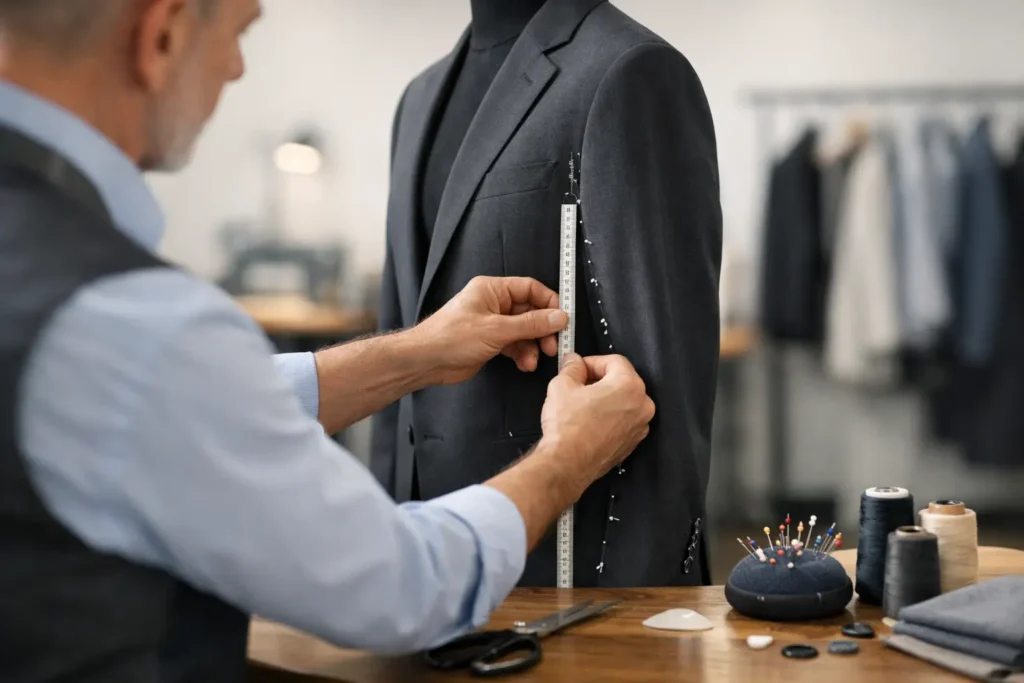
Can a Jacket Be Resized? What to Expect
A jacket that almost fits can be more frustrating than one that clearly does not. The shoulders sit just wide enough to feel off, the sleeves bunch at the wrist, or the body looks boxy when you button it up. If you are wondering can a jacket be resized, the short answer is yes – but only certain parts can be altered well, and the quality of the result depends on how the jacket was made.
This is where tailoring becomes less about quick fixes and more about judgement. A good tailor is not simply taking fabric in or letting it out. They are reading the structure of the garment, checking seam allowances, lining, padding, balance and proportion, then deciding what can be improved without compromising the jacket.
Can a jacket be resized without ruining the fit?
Often, yes. Jackets are among the more complex garments to alter, but they can usually be improved significantly when the changes are realistic. The easiest areas to adjust are typically the sleeves, jacket length, side seams and waist suppression. These are the kinds of alterations that can sharpen the fit and make the jacket feel made for you.
The difficult areas are the shoulders, armholes and overall chest balance. These parts form the architecture of the jacket. If they are too far off, resizing becomes more labour-intensive and, in some cases, not worth doing. That does not mean the jacket is hopeless, but it does mean the conversation should be honest from the start.
A well-made wool blazer, suit jacket or formal coat often gives a tailor more to work with than a cheaply fused fashion jacket. Better garments usually have cleaner construction, more stable fabric and allowances that support precise alteration work. That matters because a resized jacket should still hang naturally and move comfortably, not look pinched or distorted.
What parts of a jacket can be resized?
Most jackets can be adjusted through the body. Taking in the waist or side seams is common, especially when a jacket fits the shoulders reasonably well but looks too full through the middle. This can create a neater line and improve comfort at the same time.
Sleeves are another frequent alteration. A tailor can shorten or lengthen them depending on the jacket design and the available fabric. If there are functioning buttonholes at the cuff, the job becomes more specialised, but it may still be possible. Sleeve width can also sometimes be tapered if the arms look too loose.
The jacket length may be shortened in some cases, though this depends on pocket placement, vent position and overall proportion. Shortening a jacket sounds simple, but if the pockets end up too close to the hem, the whole garment can look visually wrong. That is why experienced tailoring matters.
Collar roll and neckline adjustments are also possible when the jacket is sitting away from the neck or creating a gap at the back. These issues can affect both comfort and appearance, and they often require more than a basic alteration.
Can a jacket be resized up as well as down?
Resizing down is usually more straightforward than resizing up. Taking fabric away is possible when there is excess through the body, sleeves or length. Making a jacket larger is more limited because it depends on how much seam allowance was left inside when the garment was originally made.
Some jackets have enough inlay to let out the side seams a little. That can provide extra room through the chest or waist, which is useful if the jacket feels tight but not dramatically undersized. Sleeve seams may also offer a small amount of extra ease.
However, if the jacket is tight across the shoulders or pulling heavily when buttoned, there may not be enough hidden fabric to solve the issue properly. In those cases, the result can be disappointing even if the tailor makes every possible adjustment. The key question is not just can it be made bigger, but can it be made bigger while still looking balanced.
The most important rule: start with the shoulders
If the shoulders fit, the odds of a successful resize improve dramatically. That is why professional tailors often assess shoulder width first when fitting a jacket. The shoulder line affects sleeve pitch, chest drape and how the whole garment hangs on the body.
Minor shoulder corrections are possible, but major shoulder work is advanced tailoring. It involves taking apart significant sections of the jacket, including the sleeve head and often the lining and padding. This adds time, cost and risk. Sometimes it is absolutely worth doing on a quality jacket. Sometimes it is not.
As a practical guide, if the shoulders are only slightly wide and the rest of the jacket is close, a tailor may be able to refine the fit beautifully. If the shoulders are noticeably oversized or too tight, it is worth getting advice before spending money on other adjustments.
When resizing a jacket is worth it
A jacket is usually worth resizing when the fabric, quality and overall fit are already in your favour. If you have a good blazer that fits the shoulders but needs shaping through the body and sleeves, tailoring can transform it. The same goes for work jackets, special event pieces and well-made coats that deserve a longer life.
It is also worth considering when the garment has sentimental or practical value. Perhaps it is your wedding suit jacket, a favourite winter coat, or a quality purchase that simply never felt quite right off the rack. In those cases, alteration is often the smarter option than replacing it.
For many Melbourne customers, resizing is not only about appearance. It is about comfort at work, confidence at an event, or getting more wear from a garment rather than leaving it in the wardrobe. A properly altered jacket should feel easier to wear, not just better to look at.
When it may not be worth resizing
If the jacket is poor quality, heavily fused, badly out of proportion, or wrong in the shoulders and chest, the alteration cost can outweigh the value of the garment. The same applies when major structural changes would be needed to chase a result that still may not look right.
There are also design limitations. Cropped jackets, heavily detailed styles, leather jackets and garments with unusual pocket placement can all require more specialised work. That does not mean they cannot be altered, only that the process needs careful assessment.
A trustworthy tailor should tell you when the better choice is to leave the jacket as it is, alter only part of it, or look for a better base garment. Honest advice is part of good service.
What a tailor will check before resizing
Before any pins go in, an experienced tailor will look at more than the obvious tight or loose areas. They will assess the shoulder line, chest shape, sleeve pitch, jacket balance, collar position and how the garment sits when buttoned and unbuttoned. They will also inspect the inside construction to see how much fabric is available and how the lining is attached.
This step matters because two jackets with the same visible problem may need very different solutions. A sleeve that looks too long could be a cuff issue, or it could be the result of a dropped shoulder. A jacket that feels tight in front may actually be sitting incorrectly through the back. Accurate diagnosis is what separates expert clothing alterations from guesswork.
At AD Stitch, this kind of assessment is a core part of the process. It gives customers a clear idea of what can be improved, what should be left alone, and what result they can realistically expect.
How to get the best result from jacket resizing
Bring the jacket in with the clothes you would normally wear underneath, especially if it is a suit jacket or winter piece. A dress shirt, knit or blouse can change how the jacket sits. Wear the shoes you would usually pair with it if overall proportion matters.
Be clear about what bothers you most. You may dislike the sleeves, while the real fit issue is the shoulder. Or you may feel the jacket is too big, when in fact it only needs shaping through the waist. A fitting works best when your concerns and the tailor’s observations come together.
Most importantly, be open to professional advice. The best alteration is not always the biggest one. Sometimes a few precise changes create a sharper, more comfortable fit than a full rework.
A jacket does not need to be perfect off the rack to become one of the hardest-working pieces in your wardrobe. When the structure is sound and the alterations are well judged, resizing can turn an almost-right jacket into one you reach for with confidence.