


How to Tailor a Blazer the Right Way
A blazer can look expensive, well made and perfectly good on the hanger – then feel awkward the moment you put it on. The shoulders sit too wide, the sleeves hide half your hands, or the waist hangs straight when it should shape the body. That is usually why people start searching for how to tailor a blazer.
The short answer is that a blazer can often be improved dramatically, but not every part should be altered. Good tailoring is about knowing where adjustments will make the biggest difference, where the fabric and construction allow it, and when the cost is worth it. A well-tailored blazer should feel easier to wear, sit neatly on the body and look more polished without looking obviously altered.
How to tailor a blazer without ruining the shape
The most successful blazer alterations work with the garment’s original structure rather than fighting it. A blazer is more complex than a shirt or pair of trousers. It has lining, canvassing, padding, lapels and carefully balanced proportions. That means the best results usually come from selective changes, not a full rebuild.
In most cases, the safest and most effective alterations are sleeve shortening, taking in the side seams, adjusting the waist and refining the body length slightly. These changes can sharpen the fit while keeping the jacket balanced. Major shoulder work, on the other hand, is more complicated and more expensive because the entire top of the jacket may need to be dismantled and reset.
If you are deciding whether to alter a blazer, start with the parts that matter most visually. The shoulder line should sit close to your natural shoulder. The chest should lie smoothly without pulling. The waist should follow your shape without straining the button. The sleeves should finish around the wrist bone, depending on the shirt and the look you want. The overall length should feel proportional to your height and frame.
A common mistake is focusing only on one detail, such as sleeve length, while ignoring the rest. A blazer can have perfect sleeves and still look wrong if the body is too boxy or the shoulders are too broad. Tailoring works best when the jacket is assessed as a whole.
What parts of a blazer can be altered?
Most blazers can be altered in several areas, but the level of difficulty varies.
Sleeves are one of the most common adjustments. If they are too long, a tailor can often shorten them from the cuff or shoulder, depending on the buttonholes and construction. Shortening from the cuff is usually simpler, but functional buttonholes can change the approach. This is where experience matters, because a clean result depends on preserving the proportions of the cuff and vent.
The waist and side seams are also commonly altered. If a blazer feels too loose through the middle, shaping the side seams can create a cleaner silhouette. For many people, this is the change that makes the jacket feel custom rather than off-the-rack. It is especially useful for blazers bought to fit the shoulders, which often leaves extra room through the torso.
The centre back seam can sometimes be adjusted as well, especially for minor shaping. In some jackets, the body can also be shortened, though pockets, vents and button placement will affect how much can realistically be done without disturbing the design.
Collar roll is another issue a skilled tailor can assess. If the collar stands away from the neck, it can make even a good blazer look cheap or badly fitted. This type of correction is more technical, but it can make a surprising difference to the final result.
Then there are the alterations that are possible but not always advisable. Shoulder reductions are the classic example. Yes, they can be done on some jackets, but they require significant reconstruction. The same is true for major chest adjustments. These alterations can be worth it for a high-quality blazer, but often not for a lower-value garment.
How to tell if a blazer is worth tailoring
Not every blazer deserves the same investment. The fabric quality, construction and original fit all matter.
If the shoulders fit reasonably well and the jacket only needs shaping through the sleeves or body, tailoring is often worthwhile. This is especially true if the fabric is good, the blazer suits your wardrobe and you know you will wear it regularly for work, events or smart casual dressing.
If the blazer is cheap, poorly made or wrong in several major areas, alterations may cost more than the garment is worth. A jacket that is too small through the chest, too tight in the upper back and too narrow in the shoulders is not a good candidate. Tailoring can improve fit, but it cannot always overcome poor starting proportions.
This is why professional fittings are useful. A good tailor will tell you what can be improved, what should be left alone and whether the result will justify the cost. Honest advice saves time and money.
The fitting points that matter most
When people ask how to tailor a blazer, they often really mean how to make it look better on the body. That starts with understanding fit priorities.
Shoulders come first. If the shoulder seam extends too far past your natural shoulder, the whole blazer can look oversized and untidy. If it cuts in too early, the jacket can look strained and feel restrictive. This is the hardest area to alter, so it should be the first thing checked before any other adjustment.
Next comes the chest and lapel line. When buttoned, the front should lie flat without pulling or creating an X-shape across the body. The lapels should sit smoothly. If there is minor fullness, a tailor may be able to refine the shape. If there is strong pulling, the jacket may simply be too small.
Then look at the waist. A little shaping usually improves the blazer immediately, but too much can create strain around the button or cause the skirt of the jacket to flare. This is where balance matters. A fitted blazer should still allow movement, sitting and normal wear.
Sleeve length is one of the easiest visual wins. For many styles, a little shirt cuff showing looks neat and intentional, though personal preference and the blazer design still matter. Too short can look awkward. Too long can make the whole jacket appear borrowed.
Finally, check the length. A blazer that is too long can swamp the frame. Too short can feel out of proportion, especially in more classic styles. Minor shortening may be possible, but not if it interferes with pockets or button spacing.
What to expect from the tailoring process
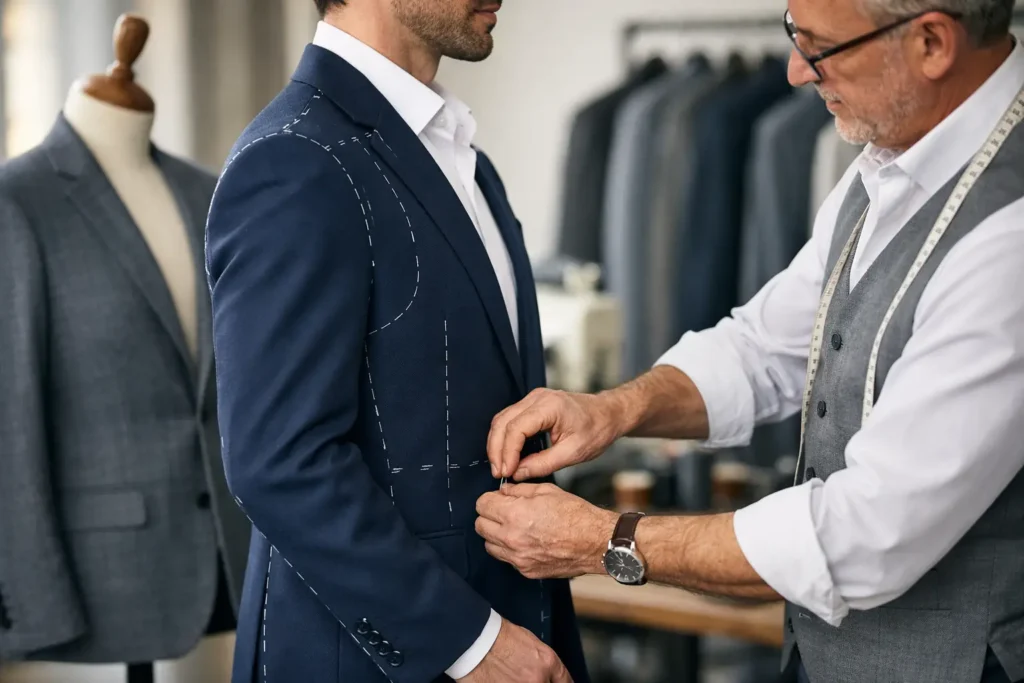
A proper blazer alteration usually starts with a fitting while you are wearing the garment. The tailor will pin key areas, assess the balance and talk through what you want the blazer to do. Some customers want a sharper business fit. Others want a little more comfort for long days, events or travel. The best result comes from matching the fit to the way you will actually wear it.
After fitting, the jacket is opened through the lining where needed, adjusted internally and then finished so the changes sit naturally. That is why blazer alterations should never look like rough quick fixes. The stitching, lining and external shape all need to be handled carefully.
Turnaround time depends on the complexity of the job. A simple sleeve or waist adjustment is usually faster than structural work. If you need the blazer for a wedding, work event or special occasion, leave time for at least one fitting and possible fine-tuning.
DIY or professional tailor?
For a blazer, professional tailoring is almost always the better choice. Small emergency fixes like replacing a button are one thing. Structural fit changes are another.
Because blazers are lined and shaped, home alterations can easily distort the front, twist the sleeve or create puckering around seams. What looks like a simple pinch at the waist can throw off the drape of the entire jacket. Once that happens, correcting it can be more difficult than doing it properly from the start.
A skilled local tailor can also spot issues you may not notice yourself, such as collar gap, sleeve pitch or imbalance between the front and back. These are the details that separate a blazer that merely fits from one that looks sharp and feels comfortable.
For customers in Melbourne who want that kind of result, AD Stitch approaches blazer alterations the way tailoring should be done – with careful fitting, clear advice and craftsmanship that respects the garment.
A blazer does not need to be brand new or designer to be worth improving. If it fits well in the right places and the fabric has life left in it, good tailoring can turn it from something you rarely wear into one of the hardest-working pieces in your wardrobe. Sometimes the smartest style decision is not buying another jacket. It is making the one you already own fit properly.