


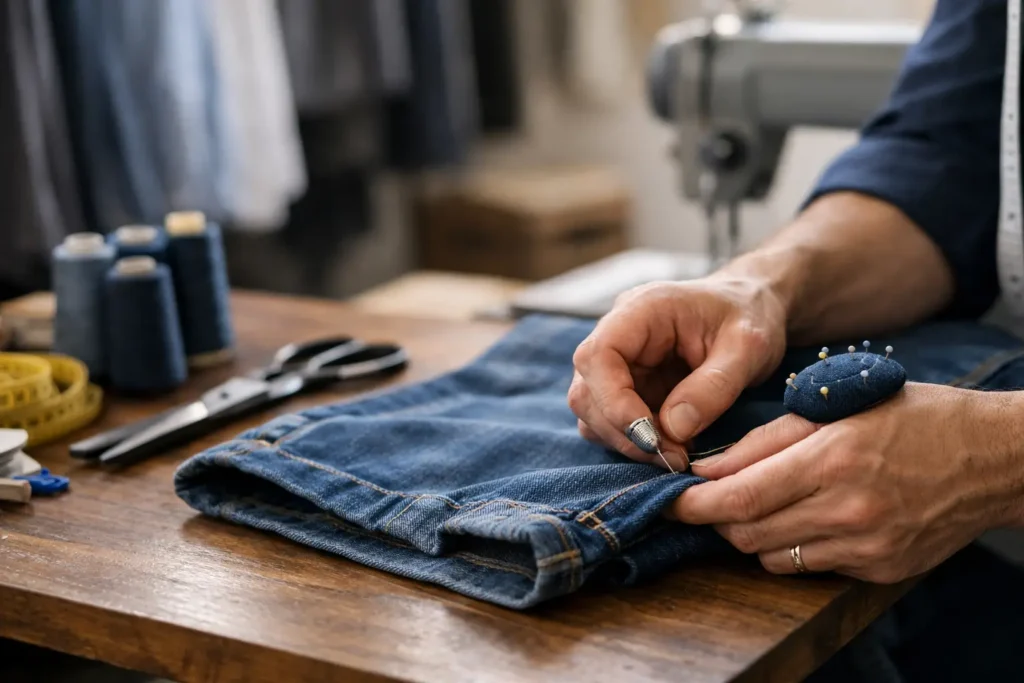
Is It Worth Altering Jeans? A Tailor’s View
A good pair of jeans can sit in your wardrobe for years, yet one small fit issue can stop you wearing them. If you have ever asked, is it worth altering jeans, the short answer is often yes – but only when the jeans, the problem and the expected result all line up.
Jeans are one of the most altered everyday garments. They are also one of the easiest to get wrong if the adjustment is rushed or handled without proper tailoring skill. Denim is thick, structured and full of visible topstitching, so any change needs to respect how the original garment was made. That is why the real question is not just whether jeans can be altered, but whether the alteration will improve fit, comfort and wearability enough to justify the cost.
Is it worth altering jeans for a better fit?
In many cases, yes. If your jeans are good quality, still in excellent condition and only miss the mark in one or two areas, alterations can turn an almost-right pair into one you reach for every week.
This is especially true when the issue is common and straightforward. Hemming jeans that are too long, taking in the waist to stop gaping at the back, or tapering the leg for a cleaner shape can make a noticeable difference. These changes often improve both comfort and appearance without changing the character of the jeans.
Where people hesitate is usually the cost. That is fair. A cheap pair bought on sale may not be worth investing in if the required work is extensive. On the other hand, if you have paid for premium denim, found a pair in a great wash, or finally discovered a cut that nearly suits you, professional alterations can be a smart way to protect that purchase.
When altering jeans makes the most sense
The best candidates for alteration are jeans with one clear problem rather than several major ones. If the rise feels right, the seat sits well and the fabric has enough room where it matters, a tailor can usually refine the rest.
Length is the most obvious example. Too much stacking at the ankle can make even expensive jeans look untidy. A proper hem keeps the proportion neat and helps the jeans sit better with your everyday shoes.
Waist adjustments are another worthwhile fix, especially for people who find that jeans fit through the hips and thighs but gape at the back. This is common, and it can make a good pair feel awkward all day. Taking in the waistband can create a much cleaner fit without forcing you to size down and feel too tight elsewhere.
Leg tapering can also be worthwhile if the jeans feel bulky below the knee. Done well, this sharpens the silhouette while keeping enough ease to move comfortably. The aim is not to chase trends, but to make the jeans work better for your shape and lifestyle.
Repairs can be worth it too. If you have a favourite pair with damage at the inner thigh, pocket edge or hem, repair work may extend their life significantly. Sentimental value matters here as well. People often return to the same pair because the denim has softened in all the right places and feels better than anything new off the rack.
When it may not be worth altering jeans
There are times when the answer is no. If the jeans are poor quality, heavily worn out in multiple areas, or fundamentally the wrong size, alterations may not deliver a satisfying result.
If the seat is too tight, the rise is uncomfortable or the jeans strain across the hips, there is only so much a tailor can do. Letting out denim is limited because there is rarely enough seam allowance to add meaningful room. In those cases, the cost of trying to rescue the fit may not compare well with buying a better base garment.
The same applies if the jeans need changes everywhere – waist, crotch, thigh, leg and hem. Technically, many of these adjustments are possible. Practically, the work can become complex and expensive, and the final result may still feel like a compromise.
Very cheap denim is another point to consider. Budget jeans sometimes twist at the seam, stretch unevenly or lose shape quickly. Even with skilled alterations, the fabric itself may not hold up well. If the garment is not worth preserving, the money is usually better spent on a pair with stronger construction.
What jean alterations can usually be done well
Some alterations are far more reliable than others. Hemming is usually straightforward, whether you want a standard finish or a result that keeps the original hem look. Waistband reductions can be highly effective when handled cleanly. Tapering from the knee down is also common and can look very natural.
Repairs to split seams, worn hems and pocket damage are often worthwhile. Reinforcing stress points early can prevent more serious wear later.
Other changes need a more careful assessment. Taking in the seat, adjusting the rise or reshaping the crotch area is more technical. These are not impossible jobs, but they require experience and a realistic conversation about what can be achieved. With denim, every stitch line is visible, so precision matters.
The cost versus value question
If you are weighing up whether it is worth altering jeans, think beyond the alteration price alone. Consider cost per wear, comfort and how often the jeans would actually leave the wardrobe once fixed.
A pair that costs money to alter but becomes your regular go-to can offer better value than a cheaper replacement you never quite love. Fit affects confidence. It also affects practicality. Jeans that sit properly at the waist, fall cleanly at the ankle and move well through the leg tend to be worn far more often.
There is also the sustainability angle, though it should not be treated as a buzzword. Extending the life of clothing is a practical decision. Altering or repairing jeans you already own can reduce waste and make better use of garments that still have plenty of life in them.
For many Melbourne customers, this is part of the appeal of working with a trusted local tailor. You get honest advice, not just a yes to every job. Sometimes the best service is being told that an alteration is worth doing. Sometimes it is being told that it is not.
How to decide before you bring them in
Start with three simple questions. First, do you genuinely like the jeans – the denim, wash, rise and overall feel? Second, is the problem specific and fixable rather than broad and structural? Third, will you wear them often if the issue is resolved?
If the answer to all three is yes, alterations are usually worth considering.
It also helps to look at the finishing details. Jeans with distinctive stitching, hems or washes often need more careful handling to preserve their original look. That does not mean do not alter them. It just means the work should be done by someone who understands denim construction and can explain the likely result clearly.
If you are unsure, try the jeans on properly before deciding. Wear the shoes you would normally pair with them. Sit down. Walk around. Pay attention to where the fit bothers you. Customers often say their jeans are simply wrong, but the real issue may be just one area. Once that is identified, the decision becomes much easier.
Is it worth altering jeans instead of buying new ones?
Sometimes yes, sometimes no. Buying new can be the better option when the current pair is beyond repair or badly fitted from the start. But replacing jeans is not always as simple as it sounds. Different brands cut denim differently, sizing varies, and what looks right on the hanger can feel completely different by the end of the day.
If you already own a pair that is close to ideal, refining it can be more efficient than starting from scratch. A skilled alteration can solve a frustrating fit problem without asking you to repeat the whole search again.
At AD Stitch, we see this often with customers who have found jeans they like through the hips and fabric but need the waist, hem or leg adjusted. Once altered properly, those jeans become easier to wear and much harder to replace.
The best test is simple. If fixing the jeans would make you excited to wear them tomorrow, they are probably worth altering. If even a perfect fit would not change how you feel about them, it is time to move on.