


Sustainable Fashion Repair Trends in 2026
A split seam on a favourite dress or worn elbows on a good blazer used to be the point where many people gave up and bought something new. That mindset is changing. Sustainable fashion repair trends are moving repairs out of the background and into everyday wardrobe care, with more people choosing to mend, alter and restore clothes they already own instead of replacing them too quickly.
This shift is not really about fashion rules. It is about value. When a garment fits properly, feels comfortable and still has quality fabric left in it, repairing it often makes more sense than starting again. For many people, especially those building a reliable work wardrobe or investing in occasionwear, repair is becoming part of smart clothing ownership.
Why sustainable fashion repair trends are gaining ground
People are buying differently now because they are wearing differently. Wardrobes are under more pressure to do more jobs – office wear needs to move into dinners, event outfits need to be reworn, and everyday basics need to last beyond one season. That has made clothing longevity far more practical than theoretical.
There is also a stronger awareness of waste. Many shoppers have seen how quickly cheap garments lose shape, fray at stress points or become unwearable after only limited use. In response, repair has become less of a last resort and more of a quality decision. A well-executed zip replacement, hem repair or lining fix can give a garment months or years of extra life.
Cost plays a role too. Replacing a well-made suit, dress or leather item is rarely inexpensive. Repairing a garment that already suits your style is often the more sensible option, especially when the issue is localised rather than structural.
Repair is becoming more tailored, not just more common
One of the clearest sustainable fashion repair trends is the move away from generic mending. Customers are looking for repairs that restore both function and appearance. They do not just want a garment wearable again. They want it to sit properly, move well and look finished.
That changes what good repair means. A trouser repair may also need a taper adjustment so the leg line still looks clean. A torn dress strap may need reinforcement to prevent the same issue returning. A jacket with a damaged lining may need internal reshaping so the outer fabric falls correctly again. The best repair work is often part technical correction, part fit improvement.
This is where craftsmanship matters. Not every repair is worth doing, and not every garment can be restored to the same standard. Fabric condition, seam allowance, garment construction and future wear all affect the result. Honest advice is part of good service, because a repair should improve the garment in a meaningful way, not simply delay its next problem by two wears.
Visible mending has a place, but it is not the whole story
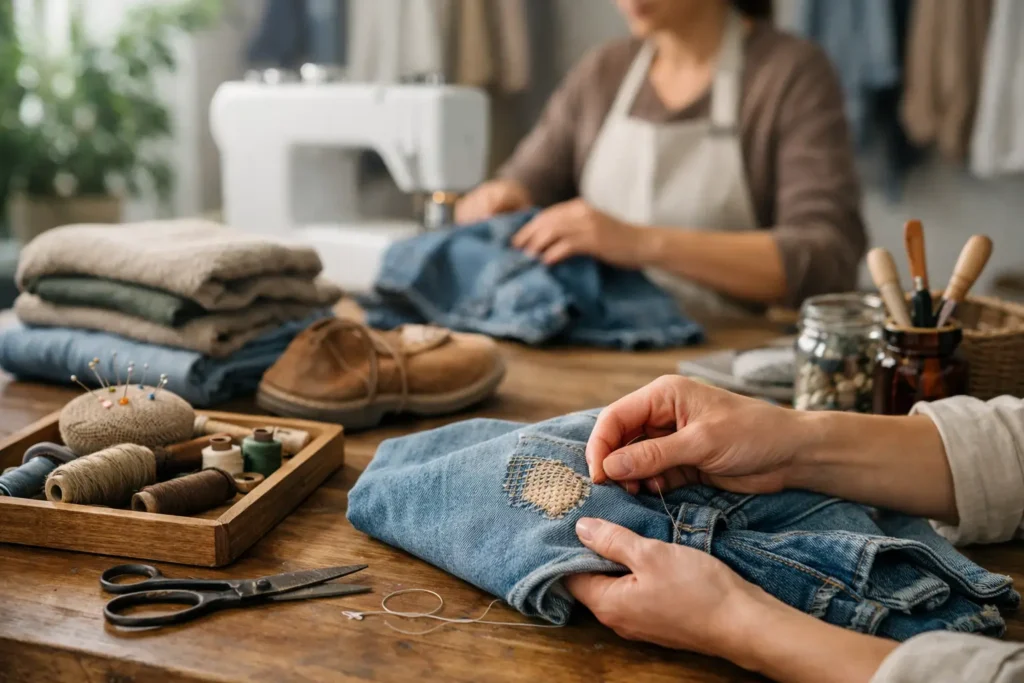
Visible mending gets a lot of attention in conversations about sustainable fashion, and for some garments it works beautifully. Decorative stitching, contrast patching and repaired denim with character can turn wear into part of the design. It suits casual clothing, personal style pieces and garments where individuality is the point.
But most people do not want every repair to be seen. Professionals usually want workwear to look polished. Bridal and formalwear need a discreet finish. School and business clothing often benefit more from subtle restoration than creative contrast. That is an important trade-off in the repair conversation. Sustainability does not always mean making the repair obvious. Often, it means repairing so well that the garment looks confidently wearable again.
The stronger trend is choice. Some customers want a visible repair that tells a story. Others want an invisible fix that preserves the original look. Both approaches support a longer garment life. The right option depends on the item, the fabric and how it will be worn.
Alterations are now part of the repair conversation
A garment is often abandoned not because it is damaged, but because it no longer fits as it should. Weight changes, style changes and manufacturing inconsistencies all affect wearability. That is why alterations are becoming central to sustainable wardrobe habits.
Shortening sleeves, reshaping a waist, adjusting hems or refining a trouser leg can bring neglected clothing back into regular use. In practical terms, this may be one of the most useful sustainable fashion repair trends because it deals with a common reason clothing sits unworn in the wardrobe.
There is a limit, of course. Some garments have very little seam allowance. Others are poorly cut from the start, which means adjustments can only do so much. Still, when the base garment has decent construction, expert alterations can rescue pieces people thought they had outgrown, both physically and stylistically.
Occasionwear is being repaired and restyled more often
Special event clothing used to be treated as one-time or very limited-use wear. That pattern is shifting. Brides, wedding guests and event attendees are increasingly looking at how a garment can be altered after the occasion, repaired if needed, and worn again in a different way.
This might mean shortening a formal dress after an event, refining the fit of a bridesmaid dress for future use, replacing damaged closures, or adjusting delicate areas that took strain during wear. Because occasionwear often carries both financial and sentimental value, repair decisions tend to be more thoughtful.
These garments do require care. Beading, lace, silk-like fabrics and structured bodices are less forgiving than basic cotton items. Repairing them properly takes judgement as well as technical skill. Done well, though, the result is not just preservation. It is renewed usefulness.
Leather and structured garments are back in focus
Another notable shift is renewed interest in repairing garments with more complex construction. Leather jackets, lined coats, tailored trousers and suits are being maintained for longer because they offer real long-term value when they fit well.
These are not quick-fix garments. A leather repair needs careful handling because every needle mark matters. A structured blazer may need work that protects the shape of the shoulder, sleeve pitch or lining balance. People are becoming more aware that these items deserve specialist attention rather than rough patch jobs.
That awareness is healthy for wardrobes. Better garments are often worth repairing, but only if the work matches the quality of the piece. This is one reason local, skilled tailoring services remain relevant. Customers want to speak to someone who can assess whether the issue is cosmetic, structural or fit-related before any work begins.
What customers are expecting from repair services now
The modern repair customer is practical. They want honesty, a clear timeframe and confidence that their garment is in capable hands. They are also more informed than they used to be. Many understand that a cheap, rushed repair can distort the fit or shorten the life of the fabric.
That means expectations have lifted. People want repairs that consider the whole garment. If a zip has failed because the surrounding seam is strained, they want that addressed too. If trouser hems are fraying because the length is wrong for their shoes, they want a better long-term solution. Repair is no longer separate from wardrobe planning. It is part of it.
For a trusted local business such as AD Stitch, this aligns naturally with what customers already value – expert clothing alterations, careful workmanship and service that feels personal rather than transactional.
Where sustainable fashion repair trends are heading next
The next stage is likely to be less about novelty and more about normal habits. People are starting to treat repairs the way they treat shoe maintenance or car servicing – as a sensible part of looking after something they rely on. That does not mean every item should be saved. Some garments are too poorly made, too worn through or too compromised to be worth the cost.
But the broader direction is clear. More people are learning to assess clothes by potential, not just current condition. A good garment with a split seam, dated hem or tired lining is not necessarily finished. With the right repair or alteration, it may still have plenty of wear ahead.
That is probably the most useful change of all. When clothing is seen as something worth improving rather than quickly replacing, wardrobes become more durable, purchases become more considered, and personal style becomes less disposable. If a piece still deserves a place in your wardrobe, a thoughtful repair can be the difference between waste and years of extra wear.