


How Much Can a Wedding Dress Be Altered?
A wedding dress can look perfect on the hanger and still need careful adjustment before it feels right on you. So, how much can a wedding dress be altered? In many cases, more than brides expect – but the answer depends on the gown’s construction, fabric, seam allowances and the type of change required. A skilled bridal tailor can refine the fit beautifully, but some alterations are far more straightforward than others.
The best time to find out what is possible is before you commit to a dress, particularly if you are buying a sample gown, ordering online or choosing a pre-loved design. A close inspection by an experienced tailor can help you make a confident decision and avoid expensive surprises later.
How Much Can a Wedding Dress Be Altered in Size?
As a general guide, most wedding dresses can be taken in by one to two sizes without compromising their shape. Some gowns can be reduced further, especially when they have side seams, a simple bodice and minimal embellishment. However, a significant reduction may require the bodice, straps, bust cups, lace placement or skirt proportions to be rebuilt rather than simply sewn closer.
Letting a dress out is usually more limited. Many bridal gowns have a small amount of seam allowance inside, which may allow an extra 2 to 5 centimetres around the bust, waist or hips. This varies greatly between designers and styles. A dress with generous seam allowance and side seams offers more flexibility than one with tightly finished seams, boning or a zip set close to the edge of the fabric.
If more room is needed, a tailor may be able to add a lace-up back, insert matching fabric panels, alter the closure or use discreet gussets. These solutions can be very effective, but they need to suit the original design. A structured satin gown may show every added seam, while lace, tulle and layered skirts can often disguise additional work more easily.
Taking a Dress In
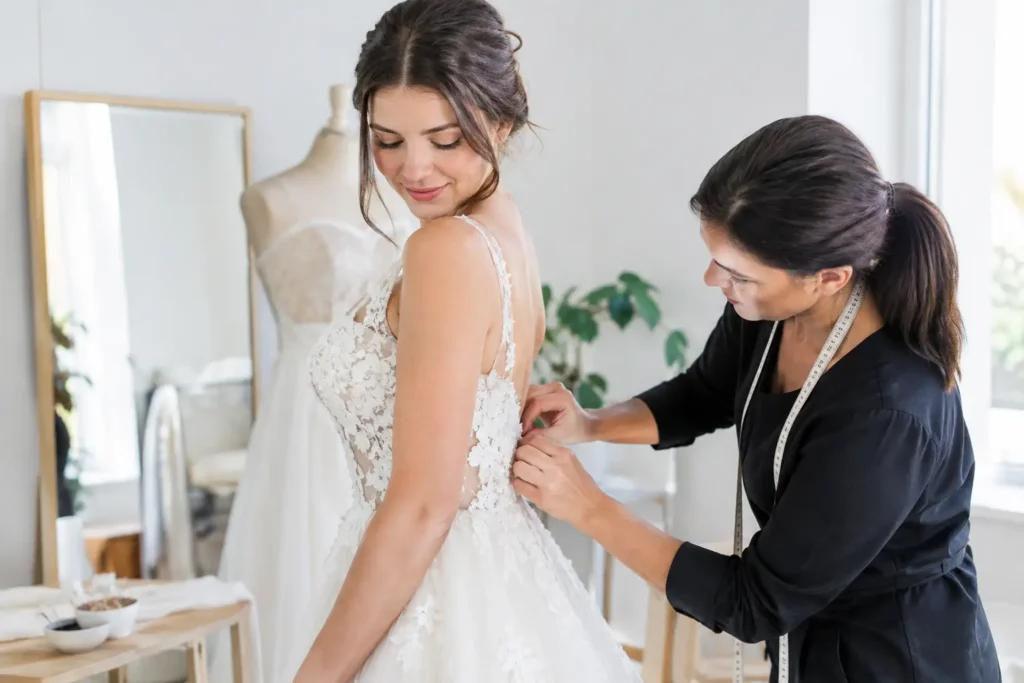
Taking in is one of the most common bridal alterations. It can involve adjusting the side seams, centre back, waistline, bodice or hips to create a closer and more secure fit. A well-fitted bodice should support you comfortably without digging in, gaping at the neckline or shifting when you move.
The difficulty increases when a dress has heavy beading, embroidered lace, boning, an illusion neckline or detailed appliqué. These features do not make alteration impossible, but they add time and require precise handwork. Beading may need to be removed and reapplied, while lace motifs may need to be repositioned so the finished dress still looks balanced.
Letting a Dress Out
A gown that is only slightly snug may be adjustable, but it is never safe to assume it will stretch or that there is plenty of fabric hidden in the seams. Bridal fabrics such as satin, crepe and silk can show strain quickly, especially across the bust and hips.
Before buying a dress that is too small, check whether it can zip fully and whether there is visible seam allowance. If it is several centimetres away from closing, a larger size or a different gown may be the wiser choice. The right dress should leave room to sit, breathe, hug your guests and enjoy the dance floor.
Alterations That Can Change the Look of a Wedding Dress
Sizing is only one part of the picture. Wedding dress alterations can also improve proportion, comfort and how the gown moves throughout the day.
Hemming is among the most common adjustments. A bridal hem is not just about stopping the dress from dragging on the ground. It needs to work with your wedding shoes, venue and chosen bustle. A full skirt with multiple tulle layers takes considerably more work than a simple crepe sheath, and lace edging or horsehair trim must be handled carefully to preserve the original finish.
Straps can often be shortened, lengthened or reshaped to lift the bodice into the right position. This is especially useful when the waist sits too low, the neckline gaps or the bust does not feel properly supported. On dresses with beaded straps or delicate lace, the adjustment needs to be planned so the detailing remains even on both sides.
Bust cups can be added, moved or replaced for improved shape and coverage. Boning can sometimes be strengthened, and the bodice may be adjusted to provide better support. These refinements matter because your wedding dress needs to feel secure for hours, not only during a fitting.
A bustle is another valuable alteration for gowns with a train. It lifts the train after the ceremony so you can move comfortably at the reception. The best bustle style depends on the gown’s fabric, train length and weight. It should look neat, hold securely and be simple enough for a trusted friend or family member to fasten on the day.
What Cannot Always Be Altered Easily
Some changes are possible in theory but are not always practical, flattering or cost-effective. A dress can only be altered within the limits of its original construction.
Changing a high neckline into a deep V-neck, converting long sleeves into strapless styling, or dramatically reshaping a heavily structured bodice may require extensive reconstruction. The same applies to reducing a gown by several sizes where the skirt, waist and bodice would lose their intended proportions.
Fabric also matters. Silk, delicate lace, organza and vintage materials may show old stitch lines, needle marks or colour changes after seams are moved. Crepe can be unforgiving, while sequins and beading can turn a simple adjustment into detailed hand-finishing work. An honest tailor will explain both what can be done and whether the result will be worth the investment.
It is also worth being cautious with dresses that are too short. Length can sometimes be added with lace, a border or a redesigned hem, but finding a perfect fabric match is not guaranteed. If you are tall or planning to wear high heels, check the length early rather than hoping a solution will appear later.
When to Book Wedding Dress Alterations
Ideally, arrange your first fitting around three to six months before the wedding. This gives enough time for careful work, follow-up fittings and any changes to shoes or undergarments. If your gown has complex beadwork, a detailed hem, major resizing or a redesign, booking earlier is sensible.
Bring the shoes, bra or shapewear and any petticoat you plan to wear. These items affect the length, posture and fit of the dress. If you have not chosen them yet, wait before finalising the hem. A small heel-height change can make a noticeable difference to where the skirt falls.
Try to keep your body measurements reasonably stable once alterations begin. Normal fluctuations are expected, and minor final adjustments can often be made, but major changes close to the wedding can limit what is achievable. Be open about your timeline, as rushing delicate bridal work can narrow the available options.
Choosing the Right Size Before Alterations
When you are between sizes, it is usually safer to choose the larger dress and have it taken in. Taking fabric away is generally easier than creating extra room where none exists. That does not mean every oversized gown is a good candidate, though. A dress that is dramatically too large may alter the placement of the waist, bust and decorative details.
Pay attention to the area that fits least generously. If the gown is comfortable at the hips but loose at the waist, alterations are often straightforward. If it is tight through the ribcage, bust and hips, there may be less room to work with. Your tailor can assess this during a fitting and recommend the most practical path.
For Melbourne brides, a professional fitting is particularly helpful when choosing between an online purchase, a sample sale gown or a family dress with sentimental value. At AD Stitch, each adjustment is approached with the same care given to the original garment, with attention to fit, finish and your comfort from ceremony to last dance.
Your wedding dress does not need to fit perfectly when you first find it. It does, however, need to have the right foundations for careful tailoring. Bring it in early, ask what is realistically achievable, and give yourself the time for a fit that lets you feel completely at ease on your day.