


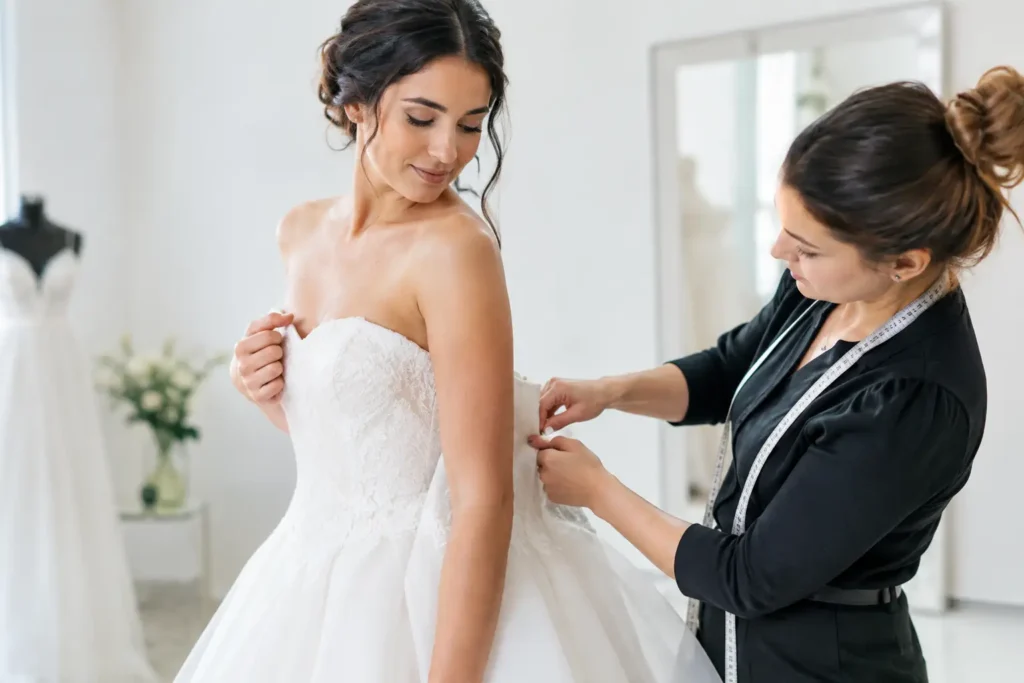
Wedding Dress Too Big? What Can Be Done?
A wedding gown can look perfect in the boutique, then feel unexpectedly loose after it arrives or after a change in weight. If you are asking, “wedding dress too big? what can be done?”, the reassuring answer is that most gowns can be altered beautifully. The best solution depends on where the extra room sits, how the dress is constructed, and how much time remains before the wedding.
A well-fitted gown should feel secure without restricting your breathing, movement or ability to sit. It should support the bodice, sit evenly through the waist and hips, and allow the hem and train to fall as the designer intended. Professional bridal alterations are about far more than simply taking in a seam. They protect the balance, structure and detail that make a wedding dress special.
Wedding Dress Too Big? What Can Be Done First
Start by booking an alteration fitting rather than trying to judge the work from a mirror at home. Bring the shoes, bra or shapewear you expect to wear on the day. Even a modest change in heel height or undergarments can affect where the bodice sits and where the hem falls.
At the fitting, a tailor can identify whether the gown is too large through the bust, underarms, waist, hips or all over. This matters because each area has a different construction. A simple A-line dress with plain seams may allow generous adjustment, while a heavily beaded corset gown requires more careful planning.
Avoid pinning, stitching or using permanent fashion tape yourself before the appointment. Bridal fabrics can mark easily, and small home fixes may pull the lining or distort delicate lace. If the dress is loose only at the final fitting, temporary options can sometimes help, but they should never replace a proper assessment for a gown that is clearly oversized.
The Most Common Ways a Gown Is Taken In
Taking in the side seams
For many gowns, taking in the side seams is the cleanest option. The tailor removes excess width from the bodice, waist and skirt while keeping the centre back closure in its original position. This can work especially well for dresses with smooth satin, crepe or simple lace overlays.
The amount that can be removed depends on the seam allowance inside the gown. Many wedding dresses include extra fabric for alterations, but not all do. If a large amount needs to come out, the work may need to be shared between side seams, princess seams or the centre back to maintain an even shape.
Adjusting a lace-up or corset back
A lace-up back offers useful flexibility because the lacing can be tightened for a closer fit. However, there is a limit. If the panels overlap too much or the gap becomes too narrow, the proportions can look unbalanced and the bodice may not sit smoothly.
A tailor may be able to reshape the back panels, adjust the modesty panel or alter the lacing loops. This is detailed work, particularly where lace, beadwork or boning is involved, but it can restore a secure and elegant fit.
Reshaping the bodice
A loose bodice is one of the most important issues to correct. If it gapes at the neckline, slips at the sides or lacks support through the bust, the wearer can spend the day pulling it into place instead of enjoying it.
Bodice alterations may involve taking in seams, shortening shoulder straps, repositioning cups, adjusting boning or refining the neckline. With strapless dresses, the internal structure is just as important as the outside fabric. The aim is to create support from within, so the gown stays comfortable and secure from ceremony to dance floor.
Altering straps and shoulders
Sometimes a dress appears too big when the real issue is that the straps are too long. Shortening them can lift the neckline, improve bust support and remove excess fabric around the armholes. It is a relatively small alteration with a noticeable effect on the overall fit.
For gowns with embellished straps, appliqué lace or sheer mesh, the work needs careful handling. The tailor may need to remove and reapply details so the alteration looks original to the dress.
Reworking the skirt and waist
A dress that is loose at the waist can make the whole silhouette feel less polished. Taking in the waist may be straightforward on a simple skirt, but it becomes more involved when there are pleats, gathers, pockets, a fitted hip line or a full tulle skirt.
The skirt must still hang evenly after the waist is adjusted. On layered gowns, each layer may need separate attention. This is why bridal alterations should be approached as garment construction, not just a quick adjustment.
When a Dress Is Too Big by Several Sizes
It is often possible to reduce a wedding dress by one or two sizes, and sometimes more. But a major size reduction is not always the most economical or visually sound choice. Once a gown is taken in significantly, the original proportions can change. Bust points, waist placement, lace motifs, boning channels and skirt fullness may no longer sit where they should.
A skilled tailor can explain what is realistic before any work begins. In some cases, reconstructing parts of the bodice provides the best result. In others, it may be wiser to consider a different gown if the alteration would compromise the design or cost close to the dress itself.
This is particularly relevant for dresses with intricate beading, heavily placed lace, moulded cups or a dramatic fitted mermaid shape. These gowns can certainly be altered, but the time and technical work required should be considered early.
Timing Matters More Than Many Brides Expect
Ideally, arrange your first bridal fitting around eight to 12 weeks before the wedding. This gives enough time for a detailed assessment, alterations, follow-up fittings and any refinements. If you expect your size to change, discuss this openly at the first appointment so the work can be scheduled sensibly.
Most gowns need at least two fittings. The first establishes the plan and pins the main adjustments. The second checks the finished fit with your shoes and undergarments. More complex dresses, or gowns with extensive beadwork and multiple layers, may need an additional fitting.
If your wedding is only a few weeks away, do not assume it is too late. An experienced alteration specialist can assess the work and advise on what can be completed safely within the available timeframe. The key is to act promptly rather than waiting in the hope the dress will somehow sit differently on the day.
Details That Need Special Care
Wedding dresses often include features that make every alteration more technical. Lace may need to be unpicked and reapplied by hand. Beading and sequins must be removed from seam areas before stitching, then restored so there is no visible interruption in the pattern. Delicate fabrics such as silk, tulle and chiffon can show every needle mark if handled without care.
A bustle is another important consideration. If the hem or train is altered, the bustle points may also need to be repositioned. A properly fitted bustle keeps the train off the floor for the reception while preserving the gown’s line. Before leaving your final fitting, practise fastening it with a trusted friend or family member who will be there on the day.
What to Bring to Your Bridal Fitting
Bring the complete items that affect your fit: your wedding shoes, bra or shapewear, jewellery if it catches near the neckline, and any veil or overskirt that needs to work with the gown. If you are wearing a petticoat, bring that too.
It also helps to move naturally during the fitting. Raise your arms, sit down, take several steps and turn around. A dress can look fitted when standing still but reveal gaping, tightness or slipping once you start moving. Your gown should allow you to hug people, eat dinner and dance with confidence.
For Melbourne brides seeking careful, personal attention, AD Stitch approaches bridal alterations with the precision required for structured bodices, fine fabrics and detailed finishes. A clear fitting plan gives you certainty about the work, timing and final result.
Your wedding dress does not need to fit perfectly when you buy it. It needs to be capable of becoming yours. Give the gown, and the alteration process, enough time and expert care, then you can walk into your day feeling comfortable, secure and entirely yourself.