


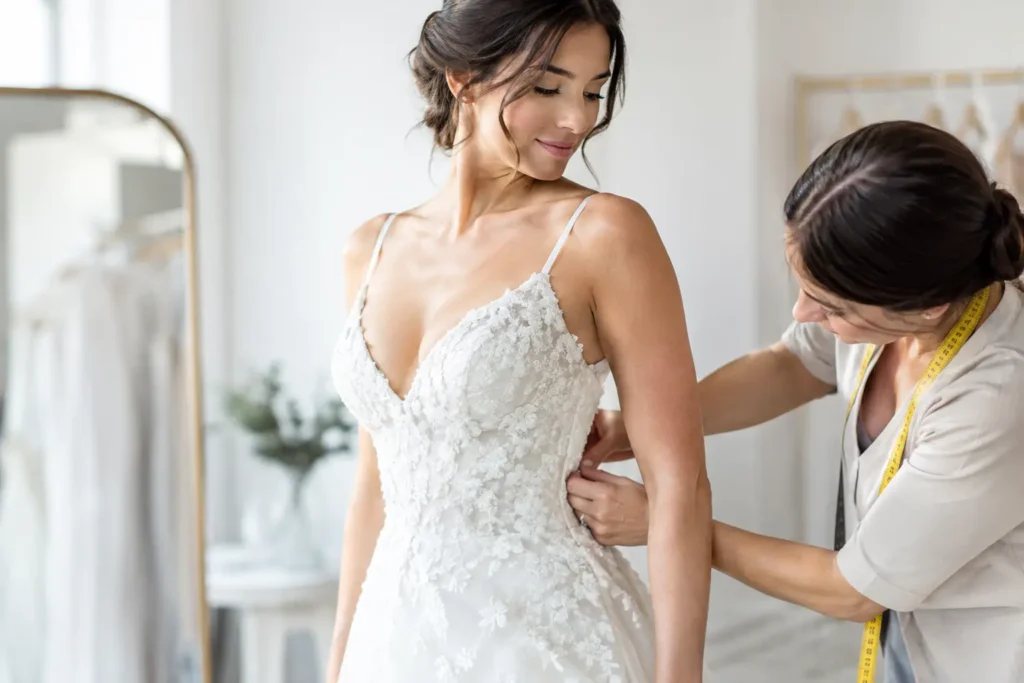
Wedding Dress Too Small? Can It Be Altered?
The zip stops a few centimetres short, the bodice feels tight across the ribs, or the dress that fitted beautifully in the boutique now feels unforgiving. If you are asking, wedding dress too small? can it be altered?, the answer is often yes – but the amount of change possible depends on the gown’s construction, fabric and seam allowance.
A skilled wedding dress tailor will assess the garment before making promises. Some dresses can be let out enough to transform comfort and fit. Others need a more considered solution, such as adjusting the closure, reshaping the bodice or adding a discreet panel. The earlier you have the dress assessed, the more options you are likely to have.
Can a wedding dress that is too small be altered?
In many cases, a wedding dress can be made bigger, particularly when it is only one size or less too tight. Most formal gowns are constructed with seam allowance – extra fabric hidden inside the seams that a tailor may be able to release. This is commonly found at the side seams, centre back seam and sometimes through the bodice.
The practical limit is not simply the number on the label. Bridal sizing varies widely between designers, and the key question is where the dress is tight. A gown that is snug at the waist may be straightforward to alter if there is fabric in the seams. A dress that is too tight through a highly structured bodice, across the bust or at the hips can require more complex work.
Your tailor will also look at whether the garment is lined, boned, beaded, lace-covered or made from delicate fabric. These details do not mean an alteration is impossible, but they affect the method, time and cost involved.
How much can a wedding dress be let out?
There is no reliable one-size answer. As a general guide, a dress with generous seam allowance may allow for a few centimetres of extra room around the body. That can be enough to make sitting, breathing, dancing and moving comfortably much easier.
A simple satin or crepe gown is often more flexible than a heavily embellished dress. With a beaded, sequinned or lace-appliqued gown, the tailor may need to carefully remove and reinstate embellishment so the finished work remains balanced. This is detailed craftsmanship, not a quick adjustment at the last minute.
It also matters how the dress was originally made. Designer wedding gowns may include more seam allowance than made-to-order or mass-produced styles, but this is never guaranteed. A professional fitting is the only way to know what is available inside your particular dress.
Where the extra room can come from
The side seams are often the first place a tailor checks. Letting out both sides can preserve the position of the centre-back zip or buttons while creating more space through the bodice and waist.
The centre back seam may also be an option, especially on a dress with a zip closure. However, this area needs careful handling so the zip sits flat and the dress remains symmetrical. For gowns with buttons, loops or detailed backs, changes must be planned around the original design.
A corset back is another possibility for some dresses. Replacing a zip with lacing can add adjustability and create a beautiful bridal finish, but it is not suitable for every style. The back needs enough structure to support the change, and the alteration should look intentional rather than like an afterthought.
When letting out the seams is not enough
If there is little or no seam allowance, an experienced tailor may recommend adding fabric rather than forcing the dress to do something it cannot. A matching or complementary panel can be placed at the back, side seams or under the arms, depending on the style and where space is needed.
For lace dresses, a panel can sometimes be created from spare lace supplied with the gown or sourced to blend with the original. For clean-lined dresses, a carefully selected satin, crepe or mesh insert may be less noticeable than a strained zip or poorly fitting bodice.
Other solutions can include changing the fastening, adjusting internal boning, reshaping cups, or altering a separate bodice and skirt arrangement. The right approach should protect both your comfort and the dress’s proportions. Making a gown bigger is not only about creating room. It is about maintaining the line of the garment so you still feel like yourself when you look in the mirror.
Why a wedding dress can feel smaller than expected
A dress may genuinely have become tighter after purchase, but that is not always the full story. Bridal gowns are usually tried on with sample clips, without the exact undergarments, or before the final shoes and accessories are chosen. Even a small change in bra shape or shapewear can affect how a fitted bodice sits.
Body changes are also completely normal in the lead-up to a wedding. Stress, travel, exercise routines, medications, hormonal changes and altered eating patterns can all affect fit. Avoid blaming yourself or trying drastic fixes to suit a garment. Your dress should support a joyful day, not create unnecessary pressure.
Sometimes the issue is simply that the dress needs to be positioned correctly. A structured gown may need to sit at a particular point on the waist, while straps or shoulders may need adjustment before the bodice can settle properly. This is why a full fitting gives a clearer answer than trying the dress on alone at home.
When should you book a fitting?
Book an assessment as soon as you notice the dress is too tight. Early action gives your tailor time to inspect the seams, discuss options and complete more detailed work if needed. It is especially worthwhile if the dress has boning, extensive hand beading, multiple layers, a long train or delicate lace.
Ideally, bring the shoes, bra or shapewear you expect to wear on the day. If you have a veil, jewellery or other accessories that affect the neckline or overall balance, bring those as well. Your tailor can then see the complete silhouette and make decisions based on how the gown will actually be worn.
Do not wait until the week of the wedding hoping the fit will change. A minor adjustment may be possible quickly, but a proper solution to a too-small dress can involve unpicking, reinforcing seams, sourcing fabric or rebuilding part of the closure. Allowing time protects the quality of the result.
What to ask your wedding dress tailor
At your fitting, ask whether the dress has enough seam allowance to be let out and where the tightness can be relieved. It is also helpful to ask how the alteration will affect the original design, whether any extra fabric or matching trim is needed, and when you should return for a final fitting.
Be honest about how the dress feels. If you cannot take a full breath, lift your arms, sit down comfortably or move naturally, say so. A wedding dress can be fitted without being restrictive. The best result is one that photographs beautifully and feels secure from the ceremony through to the last dance.
A careful alteration is worth the time
Wedding gown alterations require a different level of care from everyday hemming. Fine fabrics can mark easily, boning can shift, and a small change at the bodice can affect the way the whole dress falls. Choosing an alteration specialist who understands bridal construction helps preserve the quality you invested in.
At AD Stitch, wedding alterations are approached with the patience and precision that a once-in-a-lifetime garment deserves. A personal fitting allows the dress to be assessed properly, with clear advice on what can be achieved and how to achieve it without compromising the finish.
A dress that feels too small today does not automatically mean you need to start again. Bring it in early, wear the right foundation garments to your fitting, and let expert tailoring guide the next step. The goal is simple: when you step into your gown, you should be thinking about the moment ahead, not the zip at your back.