


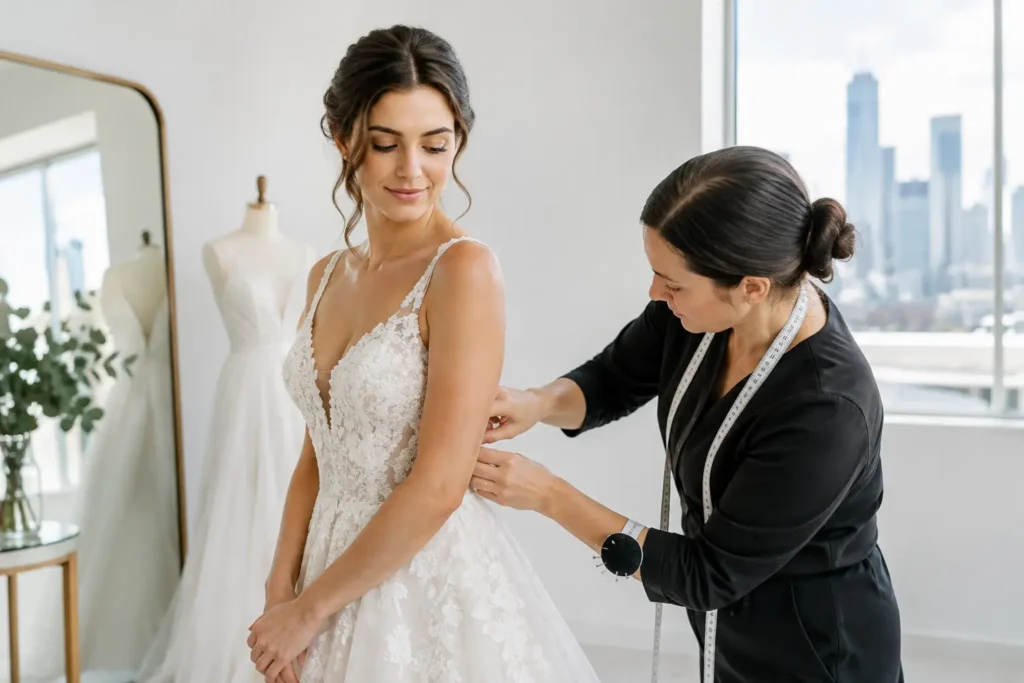
When to Book Wedding Dress Alterations in Melbourne
Your wedding dress may look beautiful on the hanger, but the real moment happens when it fits your body comfortably and moves with you. Knowing when to book wedding dress alterations gives you time for careful fitting, thoughtful adjustments and those small finishing details that make a dress feel truly yours.
The best time is usually earlier than brides expect. Wedding alterations are not something to leave until the final few weeks, particularly if your dress has delicate lace, beading, boning, multiple layers or a detailed hem. A well-planned fitting schedule protects the quality of the gown and removes one major job from your pre-wedding list.
When to book wedding dress alterations
As a general guide, book your first alteration appointment around eight to 12 weeks before your wedding. This timeframe works well for most made-to-order and off-the-rack gowns, giving your tailor enough room to assess the fit, complete the main work and schedule a final check closer to the day.
If you have already collected your gown and know it needs significant changes, it is sensible to get in touch sooner. Complex work can include reshaping the bodice, altering straps, adjusting intricate sleeves, taking in or letting out structured seams, remodelling the neckline, or shortening several layers of tulle. These changes need skilled handling and should not be rushed.
Booking early does not mean your dress must be altered too early. Your first fitting is the time to create a plan. The final refinements can happen nearer to the wedding, once your shoes, undergarments and accessories are confirmed.
Allow more time for detailed or vintage gowns
A simple satin gown with a straightforward hem may need only minor alterations. A heavily beaded gown, a dress with fine lace appliqué, or a vintage piece is different. Every adjustment may involve carefully removing and replacing embellishments, matching thread and preserving the original construction.
Allow three to four months where possible if your dress is highly detailed, you are having custom changes made, or you have a particular fit concern that needs more than one fitting. This is also wise during Melbourne’s busy wedding periods, when experienced alteration specialists can book out well ahead.
Book as soon as you know your wedding date for peak season
Spring and autumn are popular times for Melbourne weddings, and alteration appointments can become limited. If your wedding falls in a high-demand period, secure an appointment as soon as your dress is expected to arrive. You can always confirm the exact fitting date later, but having a place in the diary is reassuring.
This matters even more if several people in your wedding party need alterations. Bridesmaid dresses, a mother-of-the-bride outfit and a partner’s suit may all require attention in the same lead-up period. Planning each garment early helps everyone avoid last-minute compromises.
A practical wedding dress fitting timeline
Every bride, dress and wedding schedule is different, but this timeline gives you a dependable starting point.
Three to six months before: organise your dress and accessories
By this stage, aim to have your gown ordered or collected. If it has arrived early, inspect it carefully and try it on before storing it away. Confirm whether it needs a hem, bodice adjustment, strap shortening, bustle, sleeve alteration or any other work.
Choose your wedding shoes as early as you can. Even a small difference in heel height changes the length required for the hem. You should also select the undergarments, shapewear or bra you plan to wear. The structure of a wedding dress often responds differently depending on what is underneath it.
Eight to 12 weeks before: attend the first fitting
The first fitting is where the important decisions are made. Bring your shoes, underwear and any items that influence the way the dress sits, such as a petticoat or detachable overskirt. If you are planning to wear a particular necklace or veil, it can also be useful to bring these along when discussing the overall look.
At this appointment, your tailor will assess the dress while you stand, walk, sit and move. A wedding dress should not only look fitted in a mirror. You need to be able to breathe, hug people, get into a car and enjoy the dance floor without constantly pulling at the bodice or lifting the skirt.
Four to six weeks before: return for the second fitting
Your second fitting is usually when you see the main alterations taking shape. The hem, sides, straps and bodice can be checked, along with how the dress behaves in motion. This appointment is also the right time to test any bustle.
A bustle lifts and secures the train after the ceremony, protecting the gown from being stepped on and making it easier to move during the reception. Ask a trusted friend, family member or member of your bridal party to attend if possible. They can learn how to fasten it correctly and practise before the day.
One to two weeks before: complete the final fitting
The final fitting should feel calm rather than rushed. You will try on the completed gown with your full wedding-day shoes and undergarments, and confirm that the fit is comfortable. Minor refinements can be made if needed, but substantial changes at this point may be limited.
Take the dress home in a protective garment bag and store it safely, away from moisture, pets, food and direct sunlight. If it needs steaming, organise this carefully so delicate fabrics and embellishments are not damaged.
What can affect your alteration schedule?
Your body does not need to be a fixed measurement months before your wedding, and a good tailor will approach this with care. However, major planned changes to your weight or fitness routine can affect the timing and number of fittings needed. Be open about your plans from the beginning so the alteration schedule can allow for them.
Pregnancy, a destination wedding, interstate travel and changes to your shoes can also alter the plan. If your wedding is overseas or outside Melbourne, complete your final fitting before travelling and make sure the dress is packed according to your airline’s requirements. Avoid making last-minute changes after you arrive unless there is no other option.
The dress itself matters too. Some gowns have generous seam allowances and can be taken in or let out more easily. Others have limited room to adjust, especially if the bodice has boning, cups or detailed beadwork. An experienced tailor can explain what is achievable before work begins, rather than promising a result that could compromise the gown.
Do not wait until the last month
It can be tempting to delay because life gets busy, particularly when you are coordinating suppliers, invitations and family plans. But leaving wedding dress alterations until the last month narrows your options. You may have fewer appointment times, less scope for detailed work and more pressure if another fitting is needed.
Rush alterations can sometimes be possible, but they are not ideal for a garment as important as your wedding dress. A rushed hem may not sit correctly with your shoes. A bodice adjusted in haste may feel restrictive after hours of wear. Time allows for precision, and precision is what makes the difference between a dress that merely fits and one that makes you feel confident.
How to get the most from each fitting
Arrive with the exact shoes and undergarments you intend to wear, rather than similar alternatives. If you change either item later, the fit and length may change too. Wear your hair up or down in a way that is close to your wedding plan if necklines, straps or a veil need checking.
Speak up about comfort. Let your tailor know if you feel pressure under the arms, slipping at the bust, pinching around the waist or difficulty sitting down. These details are not fussy. They are useful information that helps achieve a better result.
It also helps to nominate one person to learn your bustle and assist with any buttons, hooks or ties. A bride should not have to work out an unfamiliar fastening while the reception is underway.
Your dress deserves the same thoughtful planning as every other part of the day. Booking early gives your tailor the time to protect the craftsmanship of the gown while refining the fit around you. For brides in Melbourne, AD Stitch offers careful, personal wedding dress alterations so you can step into your celebration feeling comfortable, secure and completely yourself.