


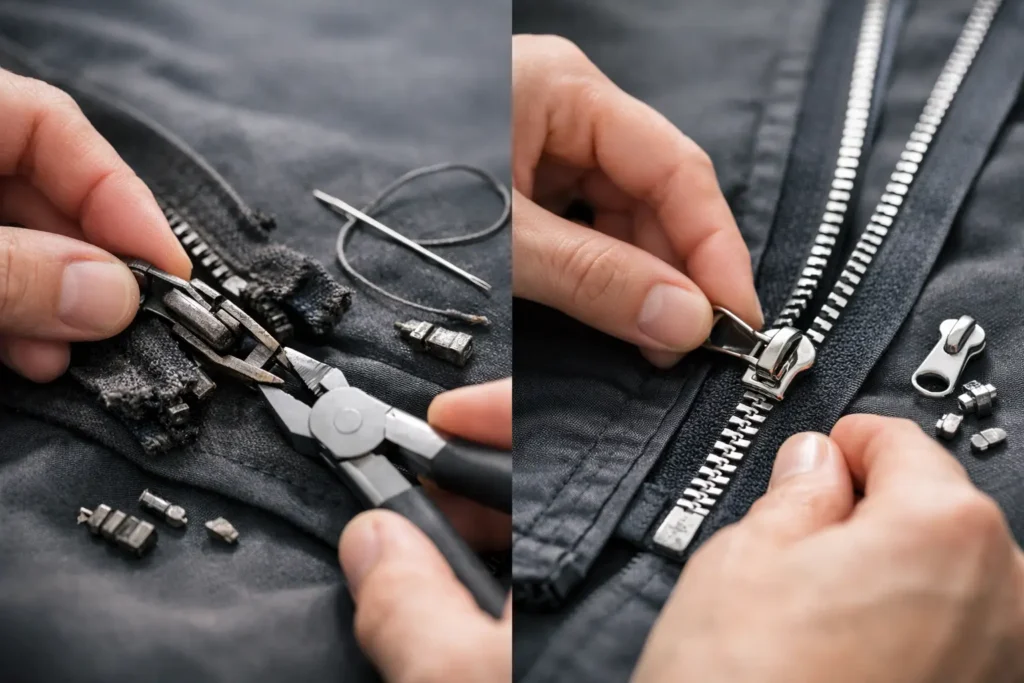
Zip Replacement: Repair or Replace?
A zip usually fails at the worst possible moment – just before work, before an event, or when you reach for a favourite jacket on a cold morning. When that happens, zip replacement is often the simplest way to save the garment and get it back into regular wear.
A broken zip does not always mean the whole item is worn out. In many cases, the fabric, lining and overall fit are still in good condition. The problem is the fastening itself. Replacing that one component can restore function, improve comfort and help you keep a piece that still deserves a place in your wardrobe.
What zip replacement actually fixes
People often describe every zip issue as the same problem, but the cause matters. Sometimes the slider has worn out and no longer grips the teeth properly. Sometimes the teeth are missing, warped or separating. In other cases, the bottom box has cracked, the top stops have come loose, or the zip tape has torn away from the garment.
A proper assessment looks at more than whether the zip opens and closes. The tailor also checks the surrounding seams, the condition of the fabric and whether the original zip type suits the garment. A heavy winter jacket, for example, needs a very different zip from a skirt, pair of jeans or evening dress. If the wrong zip is used, the repair may work for a while but feel stiff, bulky or short-lived.
That is why zip replacement is rarely just a matter of swapping one zip for another. The strength, length, colour, tooth type and insertion method all affect how neatly the garment sits and how reliably it performs.
When zip replacement is better than a quick repair
Not every faulty zip needs full replacement. If the slider is loose but the teeth are intact, a targeted repair may be enough. If a stop has come off, that may also be fixable without removing the whole zip. These smaller repairs can be worthwhile on casual garments where cost and speed are the main concerns.
But there are plenty of cases where a quick fix is false economy. If the teeth are damaged, if the zip has started separating repeatedly, or if the tape is fraying, patching one part often leaves another weak point behind. You end up back with the same problem after a few wears.
Full zip replacement is usually the better choice when reliability matters. That includes fitted dresses, work trousers, school uniforms, jackets, leather pieces and formalwear. On these garments, you do not want a zip that feels uncertain or catches every second time. You want a clean finish and dependable everyday use.
Zip replacement by garment type
Jeans and trousers
Jeans zips take a lot of strain. They are pulled frequently, sit under tension, and are exposed to pressure when seated or moving through the day. A quality replacement needs the right weight and length, plus stitching that sits flat through thicker seams. If the area around the fly has also stretched or torn, that may need reinforcing at the same time.
For dress pants and trousers, appearance matters just as much as function. The replacement zip should sit neatly behind the fly front, close smoothly and avoid adding bulk.
Dresses and skirts
Dress zip replacement can be delicate work, especially with fitted garments, fine fabrics or invisible zips. The challenge is not just sewing in a new zip. It is preserving the line of the garment so it still sits properly on the body.
On occasionwear and bridesmaid dresses, even a small ripple along the zip seam can affect the overall look. That is why precise handling matters. The new zip must blend with the garment rather than drawing attention to the repair.
Jackets and coats
Jacket zip replacement often involves heavier materials, linings and topstitching. Outdoor jackets may need durable moulded or metal zips, while fashion jackets may call for a more refined finish. If the garment is lined, the work can be more involved because the construction needs to be opened and closed neatly from the inside.
With coats, length is another factor. A replacement must suit how the garment moves and fastens, especially if it is worn daily through winter.
Leather garments
Leather zip replacement requires extra care because every needle mark can remain visible. Once the original stitching is removed, the new work needs to line up accurately. The zip must also suit the weight and character of the leather, whether that is a fitted skirt, biker jacket or pair of leather pants.
This is one area where experience makes a real difference. Leather does not forgive rough handling, and a poor repair can be harder to correct later.
What affects the cost of zip replacement
Customers often ask for a price before bringing the garment in, which is understandable. But the final cost depends on the type of item and the construction around the zip.
A simple trouser zip replacement is generally more straightforward than replacing an invisible zip in a fitted dress or a heavy-duty zip in a lined jacket. Fabric type, lining, access, topstitching and the quality of the new zip all play a part. If the surrounding seam has torn or the area needs reinforcement, that can also add to the work involved.
The cheapest option is not always the best value. A low-grade zip may save money upfront, but if it catches, twists or fails early, you are paying twice. A well-fitted replacement done with care tends to last longer and feel better in daily wear.
Why workmanship matters more than most people realise
A zip sits in one of the most functional parts of a garment, but it also affects the shape. If it is inserted unevenly, the fabric can pull. If the stitching is too tight, the area may pucker. If the replacement is too stiff, the garment may not sit naturally.
Good zip replacement balances strength with finish. The goal is not simply to make the garment close again. It is to restore ease of use while keeping the original look as close as possible.
This is particularly important for tailored clothing and special garments. A suit trouser zip should sit smoothly without interrupting the line. A formal dress zip should disappear into the seam. A jacket zip should feel sturdy without distorting the front panels. These details are small until they go wrong.
Is zip replacement worth it?
Most of the time, yes – provided the garment itself is still worth keeping. If the piece fits well, has quality fabric, sentimental value or regular use in your wardrobe, replacing the zip is usually a practical decision. It extends the life of the item and saves you from replacing something that may be more expensive or harder to match.
There are cases where it may not be worthwhile. If the garment is heavily worn in multiple areas, badly misshapen or made from very low-quality material, a new zip may not solve the bigger issue. In those situations, an honest assessment is more useful than pushing ahead with a repair that will not deliver long-term value.
That is one reason many customers prefer a trusted local alterations specialist over a basic counter service. You want someone to tell you not just whether the zip can be replaced, but whether it should be.
Getting the best result from a zip replacement
If your zip has started sticking, separating or pulling away from the seam, do not keep forcing it. Continued use can damage the surrounding fabric and turn a simple repair into a more involved one. Bring the garment in while the issue is still contained.
It also helps to mention how the item is worn. A work skirt worn five days a week has different demands from an occasional evening dress. The more your tailor knows about the garment’s use, the easier it is to recommend the right zip and finish.
At AD Stitch, careful garment assessment is part of achieving a result that looks right and lasts. Whether it is everyday clothing, occasionwear or a favourite jacket that still fits perfectly, the aim is the same: precise work, practical advice and a repair that gives you confidence to wear the piece again.
A broken zip can feel like the end of a garment, but often it is just a repair waiting to be done properly.