


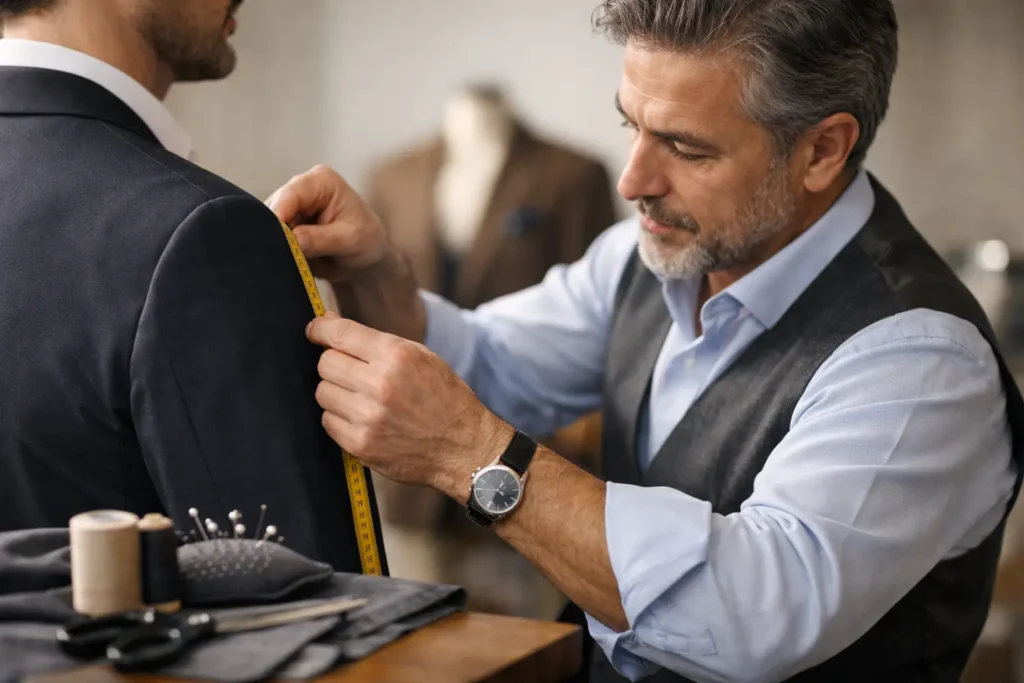
What Makes a Good Tailor? 8 Signs to Look For
A jacket that pulls across the shoulders, a dress that sits awkwardly at the waist, or trousers that break in the wrong place can change how an otherwise excellent outfit feels. So, what makes a good tailor? It is not simply someone who can shorten a hem or replace a zip. A good tailor understands how a garment should sit on a real person, then makes careful changes that improve comfort, movement and confidence without losing the character of the original piece.
For everyday clothing, workwear, formal suits and once-in-a-lifetime garments, the difference is visible. Quality alterations should look intentional, not like an afterthought. The garment should feel like it was made for you.
What makes a good tailor in practice?
The best tailoring begins before a needle touches the fabric. A skilled tailor looks beyond the measurement you request and considers the garment as a whole. If trousers are being shortened, for example, they will check the width of the leg, the original hem finish and where the trousers sit on your waist. If a dress needs taking in, they will assess whether the adjustment belongs at the side seams, centre back, bust or straps.
This judgement matters because clothing is built from connected parts. Altering one area can affect another. Taking in a jacket too aggressively through the body may distort its balance. Shortening a lined dress without handling the lining correctly can leave it pulling or showing beneath the outer fabric. Good work respects the construction already there.
A dependable tailor also asks how and when you will wear the garment. The right length for office trousers may differ from the right length for trousers worn with heels at an evening event. A wedding dress needs enough movement for walking, sitting and dancing. A work shirt needs comfort through the shoulders and arms, not only a neat shape when standing still.
1. They take accurate measurements and listen carefully
Measuring is a technical skill, but listening is just as valuable. You may know that a garment feels wrong without knowing exactly why. A good tailor asks useful questions, watches how the garment falls and translates your concerns into a practical alteration plan.
During a fitting, they should check more than one point. For a suit, this can include the shoulder line, sleeve length, jacket waist, trouser seat, rise and hem. For a dress, it may include the bust, waist, hip, straps, neckline and hemline. They will also notice whether you stand naturally, whether one shoulder sits slightly lower, or whether a garment pulls when you move.
Bring the shoes and undergarments you expect to wear with an important outfit. This is especially helpful for wedding alterations, evening dresses and tailored suits. Even a small change in heel height or support garment can affect the final fit.
2. They understand fabric, linings and garment construction
Not every fabric responds to alteration in the same way. Denim, silk, linen, wool, leather, stretch knitwear and heavily beaded fabrics each need different handling. An experienced tailor knows which seams can be altered safely, where a fabric is likely to mark, and when a requested change carries a risk.
This is where cheap, rushed work often shows. Fine fabrics can pucker under the wrong tension. Delicate materials may snag or develop permanent needle marks. Leather requires specialised equipment and techniques, while lined jackets and coats need the outer fabric and lining adjusted in a way that allows both layers to sit smoothly.
A good tailor does not treat every job as a standard alteration. They examine the fabric, stitching, seam allowances and finish before committing to the work. If a garment has limited room to be let out, they will explain that honestly rather than promise an unrealistic result.
3. They preserve the original look of the garment
The strongest alterations are often the least obvious. When someone asks where you bought a well-fitting garment, they should not immediately be able to see where it was changed.
That can mean retaining the original jeans hem when shortening denim, matching thread colour closely, reshaping a sleeve without losing its clean line, or maintaining the proportions of a formal gown after a hem adjustment. On a quality suit, details such as vents, buttonholes, cuffs and lining all need consideration before the alteration begins.
Preserving the original finish is not always possible, particularly where fabric is limited or a garment has complex decoration. A good tailor will explain the options and help you choose the result that best balances appearance, durability and budget.
4. They give honest advice, even when the answer is no
One of the clearest signs of professional tailoring is honest advice. Some garments can be transformed. Others have limits because of their construction, fabric condition or available seam allowance.
For instance, a jacket can often be refined through the waist or sleeve, but altering its shoulders is a more involved job and may not be worthwhile on every garment. A dress with heavy beading, lace appliqué or boning may need more time and care than a simple style. A well-loved pair of jeans may be repairable, but fabric worn thin across the inner thigh can only be reinforced for so long.
A trusted local tailor explains these trade-offs clearly. They should not pressure you into spending money on an alteration that is unlikely to deliver the result you want. At the same time, they may spot a simpler solution you had not considered, such as adjusting straps rather than rebuilding a bodice, or repairing a zip rather than replacing a garment you love.
5. They focus on comfort as well as appearance
A garment can look sharp in front of a mirror and still be uncomfortable after half an hour. Good tailoring accounts for real movement. You should be able to sit, walk, reach, breathe and go about your day without seams digging in or fabric twisting.
This is particularly relevant for professionals who wear suits regularly, people attending long events, and bridal clients who need their outfit to last from ceremony through to the dance floor. A tailored garment should support your day, not demand your attention.
At a fitting, move naturally. Sit down if you are having trousers altered. Lift your arms in a jacket. Walk in your dress. Mention any area that rubs, catches or feels restrictive. These small observations help a tailor make an adjustment that works beyond the fitting room.
6. Their workmanship is neat inside and out
You do not need to be a sewing expert to recognise care. Look at the hem, seams and finishing. Stitching should be neat, secure and suited to the fabric. Hems should hang evenly. Linings should not bunch. There should be no loose threads, visible puckering or unnecessary tension in the seams.
The inside of a garment also tells a story. While not every alteration will mirror factory construction exactly, quality work should be tidy and durable. A good repair or adjustment is designed to hold up to normal wear, not merely look acceptable when collected.
This attention to detail matters for everything from replacing a zip to altering a suit. It is also why timing can vary. A simple hem may be quick, while a lined garment, leather item or formal dress requires careful work that should not be rushed.
7. They provide clear pricing and realistic timing
Tailoring prices depend on the garment, fabric, construction and complexity of the change. A clear quote gives you confidence that the tailor has assessed the job properly. If the work may reveal an issue once a seam is opened, they should explain that possibility upfront.
Fast service is valuable when you have an event approaching, but speed should not come at the cost of fit. A professional tailor will be realistic about turnaround times, particularly during busy wedding and formal seasons. If you need an outfit for a specific date, mention it when booking or enquiring so the work can be planned properly.
Clear communication also includes collection details and any final fitting required. Some garments need one fitting only; others, especially bridalwear or more structured pieces, may need several adjustments to achieve the right result.
8. They make the experience personal and straightforward
Tailoring is personal because clothing is personal. You may be bringing in a suit for a new role, a dress for a family celebration, a saree blouse that needs a precise fit, or a favourite coat you are not ready to part with. The right tailor treats the item, and your reason for wearing it, with care.
At AD Stitch, that approach combines expert clothing alterations with the attentive service expected from a trusted local business. Whether the job is a straightforward hem, a repair, a suit adjustment or a detailed wedding alteration, the goal is the same: a garment that fits properly and feels right when you put it on.
Choosing a tailor for an important garment
For high-value, sentimental or event clothing, do not wait until the last minute. Arrange a fitting early enough to allow for adjustments and, where needed, a second check. Bring every part of the outfit you intend to wear, including shoes, belt, jacket or accessories that affect the fit.
It also helps to be clear about your priorities. Do you want a close fashion fit, more room for movement, a modest neckline adjustment, or a repair that extends the garment’s life? There is rarely one perfect alteration for every person. The best result is the one that suits your body, your lifestyle and the way you want to feel in the garment.
A good tailor brings precision, patience and practical judgement to every stitch. When you find one who listens well and takes pride in the finish, your wardrobe starts working harder for you – one well-fitted piece at a time.