


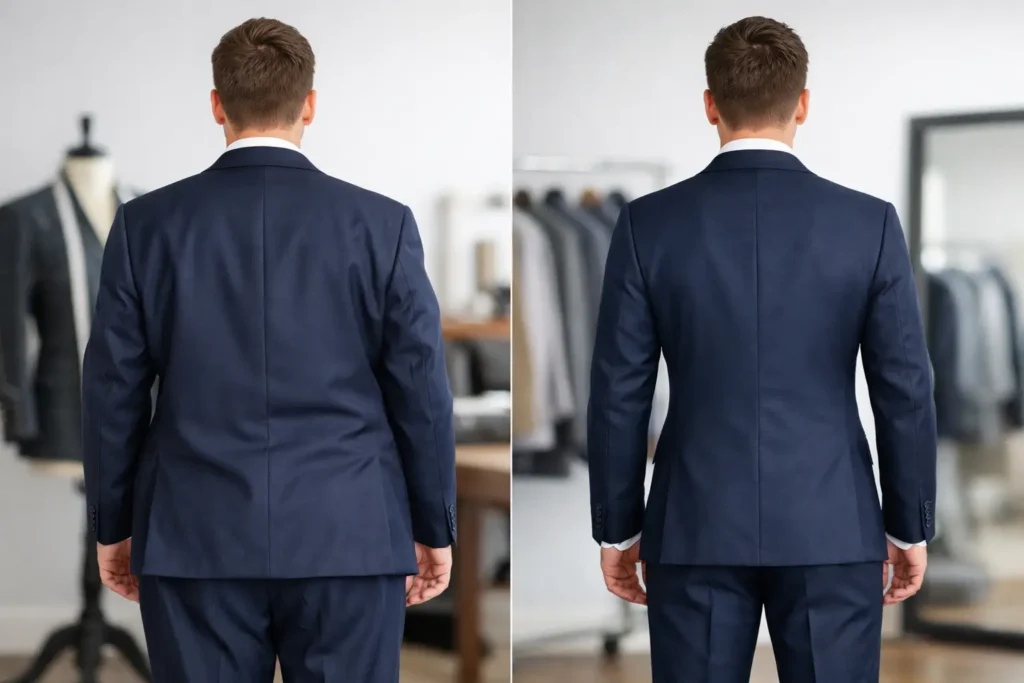
Before After Suit Alteration Example Explained
A suit can be expensive, well-made and the right colour, yet still look ordinary if it does not sit correctly on the body. A before after suit alteration example shows why fit matters so much: the same jacket and trousers can go from loose and distracting to sharp, comfortable and considered without changing the garment’s character.
For Melbourne professionals, wedding guests and anyone returning to the office in a suit that has been sitting in the wardrobe, alterations are often the detail that brings the whole outfit together. The goal is not to make a suit look tight. It is to help it follow your natural shape, allow you to move freely and look appropriate for the way you wear it.
What changes in a suit alteration before and after?
The most convincing change is usually not one dramatic adjustment. It is a series of small corrections that make the jacket and trousers work as a single outfit. Before alteration, a jacket may hang away from the waist, bunch at the sleeves or extend too far past the seat. The trousers may break heavily over the shoes, sit loose through the leg or pull uncomfortably at the waistband.
After expert tailoring, the jacket appears cleaner through the torso, the sleeves finish at a more flattering point on the wrist, and the shoulder line is allowed to do its job. The trousers sit correctly at the waist and finish at a length that suits the wearer’s shoes and preferred style. The result should feel natural rather than obviously altered.
This distinction matters. A suit that is too closely fitted can restrict movement, strain buttons and date quickly. A suit that remains too loose can look borrowed, even when the fabric is premium. Skilled alterations find the useful middle ground: enough shape to create a polished silhouette, with enough ease for sitting, driving, walking and raising your arms.
A before after suit alteration example in practice
Consider a classic two-piece wool suit bought off the rack for a client with a broad chest, a narrower waist and a shorter arm length. Before alterations, the jacket buttons but has excess fabric around the lower back. The sleeves cover most of the shirt cuffs, and the trouser hem pools slightly over the shoes. None of these issues makes the suit unwearable, but together they reduce its impact.
The fitting begins with the client wearing the shirt and shoes they expect to wear with the suit. This gives the tailor an accurate view of how the jacket sits at the collar, chest and waist, along with the correct trouser length. Pins mark the areas that need adjustment, while the client moves naturally to check for pulling or restriction.
For the jacket, taking in the side seams and centre back can remove the excess fabric through the waist. This creates a neater shape without forcing the jacket to cling. Sleeve shortening brings the cuff to the right point, usually allowing a small amount of shirt cuff to show. If the jacket length and shoulder fit are already right, these comparatively modest changes can make it appear custom made.
For the trousers, the waist may be adjusted for a secure fit that does not need the belt to do all the work. The leg can be refined carefully if it is overly full, while retaining enough room through the thigh and seat. Finally, the hem is set to suit the client’s preferred break. A slight break is a versatile choice for many business suits, while a cleaner no-break finish can suit a more contemporary look. The best option depends on the trouser cut, shoe shape and where the suit will be worn.
After these changes, the suit still looks like the original garment, only more intentional. The lapels lie flatter, the jacket closes without strain, and the trousers look balanced from the front and side. More importantly, the client is less likely to tug at their sleeves, pull down the jacket or keep adjusting the waistband throughout the day.
The alterations that make the biggest difference
Not every suit needs every alteration. A proper fitting identifies the changes that will deliver the best result for the garment and the wearer. Jacket waist suppression, sleeve shortening and trouser hemming are among the most common adjustments because they have a clear visual effect and are often achievable on well-constructed ready-to-wear suits.
Trouser seat, waist and leg adjustments can also transform comfort and appearance. If the trousers fit at the waist but balloon through the leg, a careful taper may give the suit a more balanced line. If they are tight through the seat or thigh, there may be some scope to let them out, provided the garment has sufficient seam allowance.
The jacket collar deserves particular attention. A gap between the collar and shirt collar, or a pronounced roll at the back of the neck, can affect the appearance of the entire jacket. Some collar issues can be improved, but they are more technical than a hem or waist adjustment. This is why buying a jacket that fits well across the shoulders and collar remains the smartest starting point.
What tailoring can and cannot fix
Alterations are highly effective, but there are limits. A jacket that is too large through the shoulders may need major reconstruction to correct, and this is not always practical or cost-effective. Likewise, a jacket that is too short cannot usually be made longer in a meaningful way. A suit that is too small through the chest may not have enough seam allowance to provide the comfort you need.
Fabric, construction and age also influence what is possible. A quality wool suit often offers better alteration potential than a heavily fused budget garment, while worn or weakened fabric may not tolerate extensive changes. Patterned suits require additional care so stripes, checks and seams remain aligned.
A trustworthy tailor will be clear about these trade-offs. Sometimes the right advice is to alter the trousers and sleeves while leaving a difficult jacket issue alone. Other times, investing in detailed work is worthwhile because the suit has excellent fabric, sentimental value or years of useful wear ahead.
Why the fitting appointment matters
A suit should be assessed on the person, not on a hanger. Posture, shoulder position, how someone stands and even their usual footwear can change the final requirements. Bring the shirt, belt and shoes you are most likely to wear, particularly if the suit is for a wedding, interview or important event.
It also helps to explain how you want to feel in the suit. A corporate client may prefer a timeless, comfortable fit for regular wear. Someone dressing for a formal occasion may want a closer, cleaner line. Neither preference is automatically better. The right alteration respects the purpose of the suit as well as the wearer’s proportions.
At AD Stitch, fittings are approached as a practical conversation. The focus is on what will improve the garment, what will remain comfortable and what will provide lasting value, rather than making changes simply because they are possible.
Plan ahead for an event
Avoid leaving suit alterations until the day before an important occasion. A fitting may reveal additional work, and a second check can be valuable for more detailed adjustments. Allowing time also means decisions about hem length, taper and jacket shape can be made calmly rather than in a rush.
If your weight has changed or you have not worn the suit for some time, try it on early. Check the collar, shoulder fit, button closure, sleeve length and trouser hem in front of a full-length mirror. Small fit issues are easier to address before they become a source of stress.
The best before-and-after result is one you notice when you put the suit on, then forget about once your day begins. When the jacket sits cleanly, the trousers move comfortably and the proportions feel right, you can focus on the meeting, celebration or occasion in front of you.