


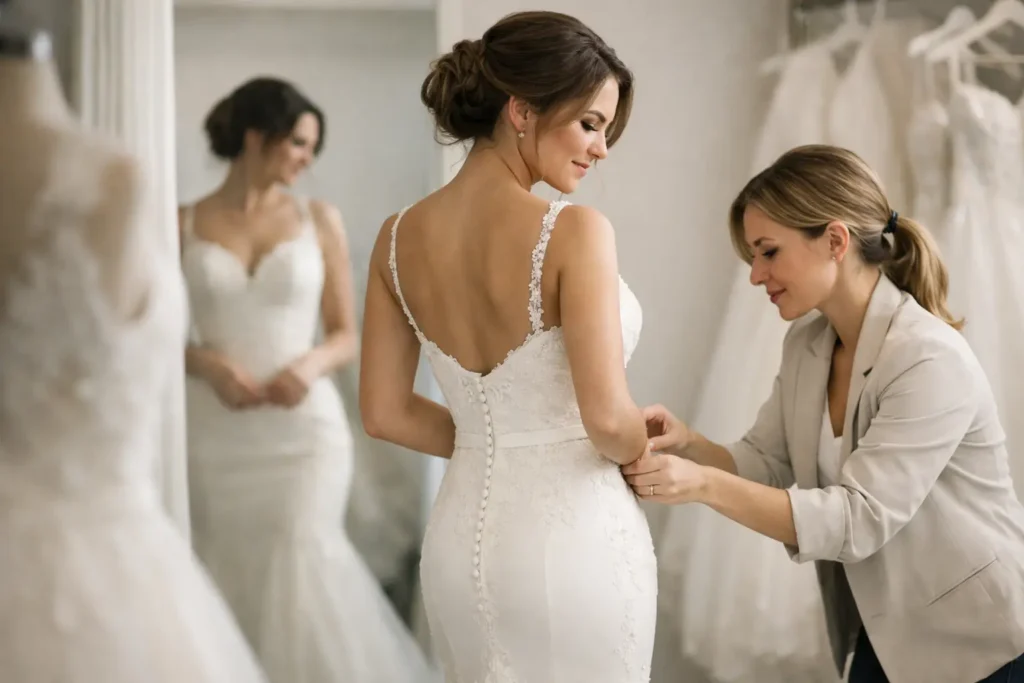
Wedding Dress Fit Matters More Than Size
The moment a wedding dress goes on, most brides know quickly whether it feels right. What is less obvious is whether it truly fits. A gown can look beautiful on the hanger, zip up in the fitting room, and still need careful adjustment to sit properly through the bodice, waist, hem and bustle. That difference matters, because on your wedding day, comfort and confidence are just as important as appearance.
A well-fitted gown does more than flatter. It lets you move naturally, breathe comfortably, sit without strain and enjoy the day without constantly checking straps, smoothing fabric or worrying about a hem underfoot. That is why wedding alterations are rarely a small detail. They are often the step that turns a lovely dress into your dress.
Why a wedding dress rarely fits perfectly off the rack
Bridal sizing is not especially intuitive. Many gowns are ordered based on the closest standard size to your measurements, then refined later. Even when the size is technically correct, your shape, posture, height and proportions may not match the pattern the dress was made from.
That is completely normal. One bride may need the bust adjusted while the hips fit perfectly. Another may find the waist sits too low, or the straps are slightly too long, or the hem throws off the line of the entire skirt. None of this means the wrong dress was chosen. It simply means the garment needs tailoring to suit the person wearing it.
Fabric also changes how fit behaves. Structured satin, mikado and crepe can show every small tension point, so precision matters. Softer tulles, chiffons and lace can appear more forgiving, but they bring their own challenges, especially when multiple layers need to fall evenly. Beading, boning, cups and corsetry all add complexity. This is where experienced alteration work becomes less about simple adjustment and more about craftsmanship.
What a good wedding dress fit actually feels like
A proper bridal fit should feel secure without feeling restrictive. The bodice should support you well enough that you are not pulling it up all day, but not so tight that breathing becomes shallow or sitting feels uncomfortable. Seams should sit where they are meant to sit. The waistline should match your natural shape. The skirt should fall cleanly from the body rather than twist or drag.
There is also a practical test that many people overlook. Can you walk at your normal pace? Can you sit down with some ease? Can you raise your arms enough to hug people, hold your bouquet and move through the reception without feeling trapped in your own gown? A wedding dress is formal, yes, but it still has to function across many hours.
This is why the best fit is not always the tightest fit. Some brides equate firmness with polish, but too much tension can distort the dress and become uncomfortable surprisingly quickly. The goal is shape and support, not strain.
The most common wedding dress alterations
Most gowns need some degree of adjustment, and a few requests come up again and again. Hemming is one of the most common, especially when shoes have changed or the gown has several layers that need individual attention. Bustle work is also common for dresses with a train, so the gown can transition more easily from ceremony to reception.
Bodice alterations are another frequent need. This might involve taking in the side seams, adjusting cups, refining the bust, shortening straps or reshaping the neckline so it sits neatly against the body. Waist and hip adjustments can improve the line of the dress, while sleeve or shoulder changes can make a major difference to comfort and balance.
Sometimes the alterations are less visible but just as important. Adding discreet support, correcting twisting linings, securing lace placement or improving closure strength can all help the dress feel more stable and polished. The best bridal tailoring is often the work you do not notice because the gown simply looks and feels right.
Timing matters more than many brides expect
One of the biggest mistakes with a wedding dress is leaving alterations too late. Bridal garments often involve delicate fabrics, layered construction and fittings that need to be staged rather than rushed. If changes are significant, the work may need to happen over more than one appointment to ensure the fit is precise.
Bodies can also change in the lead-up to a wedding. Weight fluctuations, changes in posture from different shoes, or even a new bra choice can affect the final fit. That does not mean you should wait until the last minute. It means your timeline should allow room for thoughtful adjustments and a final fitting closer to the date.
If your gown includes heavy embellishment, complicated lace placement or a long train, allow even more time. These details can take longer because the dress cannot simply be altered in the quickest possible way without affecting its finish.
Choosing shoes, underwear and accessories before fittings
A fitting is only as accurate as the conditions you bring to it. If you have not chosen your wedding shoes yet, the hem is still a moving target. Even a small heel difference can change how the skirt falls and whether the front of the dress sits cleanly.
The same applies to undergarments. Supportwear, bras and shapewear can alter the position of the bust, waist and hips. If you plan to wear them on the day, bring them to your fitting. Jewellery and veils are less critical for structural changes, but they can still help you picture the finished look and decide whether the gown needs any final refinement.
This is one reason bridal fittings feel different from standard clothing alterations. The dress does not exist in isolation. It works together with your shoes, your movement, your styling and the pace of your day.
When the dress is beautiful but not quite right
It happens often. A bride loves the lace, the neckline or the silhouette, but something still feels off once the dress is on her body. Sometimes that issue is fixable. Sometimes it depends on the construction.
For example, taking in a gown is usually more straightforward than letting one out, because seam allowance may be limited. Adjusting strap length may be simple on one design and much more involved on another if lace motifs or beadwork need repositioning. Changing a neckline or adding sleeves may be possible, but the success of that work depends on the fabric, structure and available material.
This is where honest advice matters. Not every request should be forced just because it sounds possible in theory. Good tailoring weighs the result, the garment’s construction and whether the change will genuinely improve the dress. A measured approach usually leads to a better outcome than chasing a major redesign too late in the process.
Why bridal alterations are about confidence, not perfection
There is a lot of pressure around weddings, and dresses often carry more emotion than any other garment. Brides can become highly focused on tiny details that no one else would ever notice. While precision matters, it helps to remember what tailoring is really there to do.
A good fit should make you feel settled in the dress. You should not be thinking about whether the bodice will slip, whether the hem is awkward, or whether the back sits strangely in photos. When the technical work is done properly, you get to be present in the day rather than distracted by the gown.
That confidence is often what people respond to most. They notice that you look comfortable, poised and fully yourself. The dress supports the moment rather than competing with it.
Working with an experienced alterations specialist
Bridal work calls for patience, accuracy and clear communication. It helps to work with someone who understands how formal garments are built and how small changes can affect the whole shape of the dress. A careful fitter will assess not just where the gown is loose or tight, but how it hangs, where it pulls and how it moves when you walk.
That practical experience matters, especially with wedding garments that combine delicate fabrics and high expectations. At AD Stitch, we see the value of thoughtful alteration work every day. It is not just about making a dress smaller or shorter. It is about refining the fit so the gown feels secure, balanced and ready for a full day of wear.
The right wedding dress does not have to be perfect when you first find it. It has to have the right foundation – the style you love, the shape that suits you and the potential to be tailored properly. Once the fit is handled with care, the whole dress changes. And so does the way you feel wearing it.