


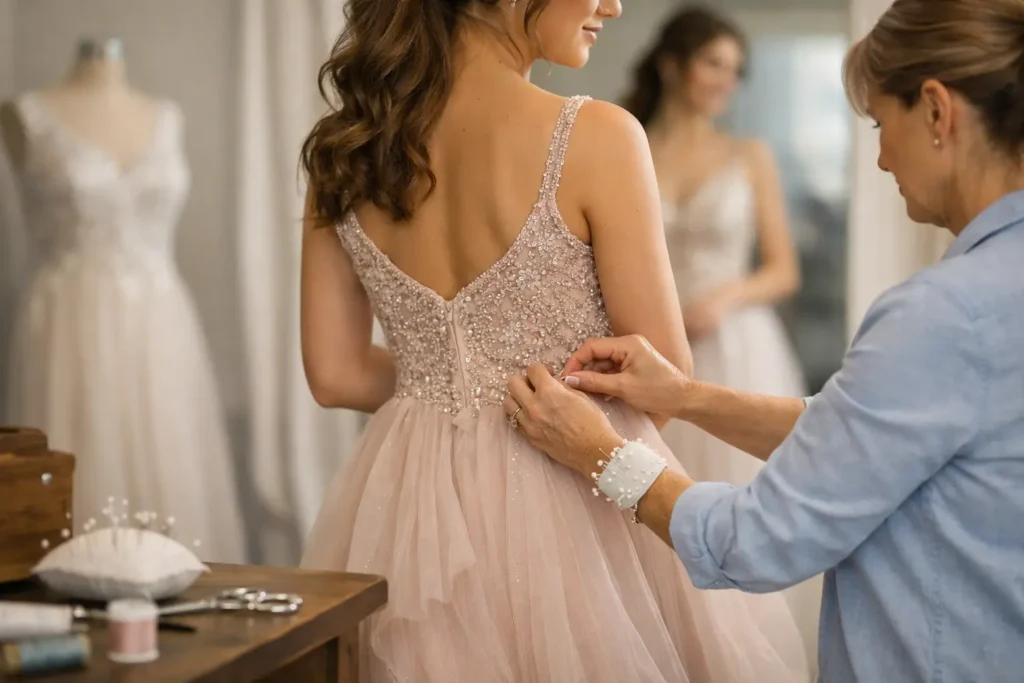
Prom Dress Alterations That Actually Matter
A prom dress can look perfect on the hanger and still feel wrong the moment you put it on. The hem skims at an awkward point, the bodice shifts when you move, or the straps dig in by the end of the fitting. That is where prom dress alterations make the difference between a dress that is simply pretty and one that feels made for you.
For most formal dresses, a small adjustment changes the whole result. A cleaner hemline makes the gown fall properly. A better fit through the bust and waist gives shape without discomfort. The right strap length keeps everything secure so you are not tugging at your dress all night. Good alterations are not about changing the style of the dress. They are about letting the original design sit properly on your body.
Why prom dress alterations are worth it
Formalwear is rarely designed to fit every body perfectly straight off the rack. Even premium dresses are made to standard sizing, and standard sizing does not account for height, proportions, posture, or the way different fabrics behave once worn. A dress can be the right size overall and still need work in key areas.
That matters more with promwear than with everyday clothing. A formal dress is usually cut closer to the body, made from more delicate fabrics, and expected to hold its shape for hours. If the fit is off, you feel it immediately. You see it in photos, notice it when walking, and keep adjusting it on the dance floor.
A professionally altered dress should feel secure, balanced and comfortable. You should be able to sit, stand, dance and move naturally. That comfort gives confidence, and confidence shows far more than any label ever will.
The most common prom dress alterations
Not every dress needs major changes. In fact, the best jobs are often the subtle ones. A hem adjustment is one of the most common requests, especially when shoes change the final length. The right hem should suit both the style of the dress and the way you plan to move in it. A floor-length gown that pools too much can become a trip hazard, but one taken too short can lose elegance.
Taking in or letting out the bodice is another common alteration. This area affects support, shape and comfort more than almost anything else. If the bodice is too loose, the dress can slip or gape. If it is too tight, it can pull across seams or feel restrictive after an hour of wear. Whether a bodice can be let out depends on the seam allowance inside the dress, so this is one of those situations where it depends on the garment construction.
Strap adjustments are often underestimated. Straps that are too long can throw off the whole fit of the bodice, while straps that are too short can pull the neckline out of place. The same goes for sleeve adjustments on off-shoulder or fitted designs. Small refinements here can make the dress sit neatly without constant readjustment.
Zips, bust cups, side seams and linings may also need attention. Sometimes the issue is not visible from the front but becomes obvious once you walk or turn. A skilled tailor looks at the full garment, not just the one problem you noticed first.
What can and cannot usually be altered
This is where expectations matter. Many prom dresses can be improved significantly, but not every change is straightforward. Hems, straps, side seams and waist shaping are generally achievable if the fabric and construction allow for it. Layered skirts, lace overlays, beading and boning can make the work more complex, but not always impossible.
More dramatic changes, such as resizing a heavily embellished gown by several sizes or completely redesigning the neckline, need careful assessment. Beaded fabric may need to be unpicked and reworked by hand. Delicate mesh can stretch or mark. Satin can show every needle hole. These are not jobs to rush.
The earlier you ask, the more options you usually have. If a dress needs detailed work, time allows the tailor to handle it properly rather than forcing quick fixes that compromise the finish.
When to book your alterations
The best time to arrange prom dress alterations is as soon as you have your dress and your event date is confirmed. Leaving it until the final week creates unnecessary stress, especially during busy formal and wedding seasons when alteration schedules fill quickly.
Ideally, your first fitting should happen several weeks before the event. That gives enough time for the initial assessment, any required pinning, the alteration work itself, and a final fitting to check the result. If your dress has intricate details or needs more than one round of adjustment, extra time matters.
It is also wise to bring the shoes and undergarments you plan to wear. Hem length changes with heel height, and the bodice fit can shift depending on the bra or shapewear underneath. These details sound minor, but they affect the final result more than many people expect.
How to prepare for a fitting
A good fitting is practical, not intimidating. Wear or bring the undergarments you expect to use on the night, along with your shoes and any accessories that affect the fit. If the dress has a particular issue, mention it clearly. Perhaps it feels loose through the bust, pulls at the hips, or twists at the zip. The more precise you can be about what feels wrong, the easier it is to identify the cause.
It also helps to move around in the dress during the fitting. Stand naturally, sit down, take a few steps. A dress that looks fine while standing still may behave differently once you move. Formalwear needs to work in real life, not just under fitting room lights.
If you are still deciding on shoes or undergarments, say so. A tailor can often advise on what needs to be finalised before certain alterations are completed. Honest communication usually leads to a better outcome than guessing.
Choosing the right tailor for prom dress alterations
Prom dresses are not everyday garments, so it helps to choose someone experienced with formalwear. A good tailor will assess the fabric, lining, structure and detailing before promising anything. That level of care matters because formal dresses often involve more than a simple nip and tuck.
You also want clear communication. The process should feel reassuring, not rushed. If a change is not advisable, a trustworthy alteration specialist will say so. That honesty protects both the dress and the final result.
For Melbourne customers, working with a local specialist who understands eventwear and values personal service can make the process much easier. AD Stitch approaches fittings with that balance of technical precision and practical advice, which is exactly what formal alterations require.
The cost question – and what you are really paying for
People often ask whether alterations are worth the extra spend after already buying the dress. In most cases, yes. You are not just paying to shorten a hem or adjust a seam. You are paying for fit, comfort and the finish of the garment on the night.
Costs vary depending on the fabric, design and complexity of the job. A plain hem on a simple dress is very different from altering a multi-layered gown with lace, boning or beadwork. Cheap alterations can seem appealing, but formalwear leaves very little room for poor workmanship. Visible stitching, uneven hems or a badly adjusted bodice are hard to ignore once the dress is on.
The better question is not whether alterations cost extra. It is whether the dress feels and looks right without them. If the answer is no, the value is usually obvious.
Confidence is the final fit
The best prom dress alterations are the ones you stop thinking about once the dress is on. You are not worrying about a slipping neckline, stepping on your hem, or wondering how the dress will look in photos. You are simply enjoying the night.
A well-altered dress does more than improve appearance. It lets you move comfortably, feel secure and carry yourself with ease. And when a special event comes around, that kind of confidence is never a small detail.