


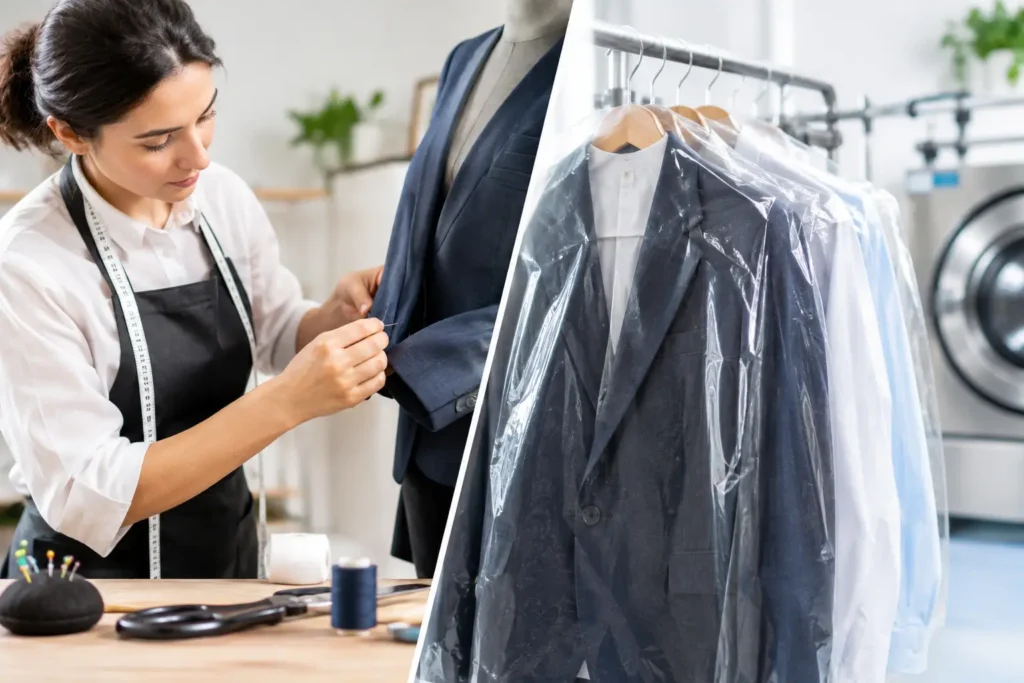
Tailoring Versus Drycleaning: What You Need
A suit jacket can come back beautifully pressed from the dry cleaner and still feel wrong the moment you put it on. The sleeves may cover too much of your shirt cuff, the waist may sit loose, or the shoulders may pull when you move. That is where tailoring versus drycleaning becomes a practical decision, not just a matter of garment care.
Both services help you get more wear from the clothes you own, but they solve entirely different problems. Drycleaning removes soil, odours and certain stains. Tailoring changes how a garment fits, functions and feels. Knowing which service to choose can save you time, prevent disappointment and help preserve pieces that deserve better than replacement.
Tailoring versus drycleaning: the key difference
Drycleaning is a cleaning process designed for garments that may not respond well to regular washing. Rather than using water in the usual way, specialist cleaning methods and solvents are used to lift oils, dirt and odours while protecting delicate fabrics, linings and construction. It is often useful for wool suits, formal dresses, coats and garments with care labels that specify dry clean only.
Tailoring is skilled garment work. A tailor adjusts the shape, length or structure of clothing so it fits your body properly. This can mean shortening trousers, taking in a dress, reshaping a jacket waist, repairing a split seam, replacing a zip or altering a wedding gown. The work involves measuring, pinning, cutting, sewing and pressing with close attention to the fabric and original construction.
Put simply, drycleaning refreshes a garment. Tailoring makes it yours.
When drycleaning is the right choice
Choose drycleaning when the fit is already good but the garment needs professional care. Perhaps your wool blazer has picked up food odours after a busy week of client meetings, or your evening dress has a mark that you do not want to risk treating at home. A professional cleaner can assess the fabric, stain type and care instructions before selecting an appropriate method.
Drycleaning can also help maintain the appearance of structured garments. Suit jackets, coats and lined dresses may lose their shape or suffer damage if washed incorrectly. Regular cleaning is not always necessary after every wear, however. Over-cleaning can be hard on some fabrics, so consider airing a garment between wears and cleaning it when it is genuinely soiled, stained or carrying odour.
If a stain is fresh, avoid rubbing it aggressively or applying an untested product. Blot it gently if appropriate, keep the care label handy and seek advice promptly. Heat and time can make some stains harder to remove.
When expert tailoring will make the bigger difference
A garment that is clean but uncomfortable is still likely to stay at the back of the wardrobe. Tailoring is the better answer when you like the item but its proportions no longer suit you, it was purchased off the rack, or your body shape has changed.
For working professionals, common suit alterations include shortening sleeves, hemming trousers, adjusting the waist and refining the jacket shape. Small changes can make a ready-to-wear suit look far more considered. The goal is not to make clothing tight. It is to create ease where you move and clean lines where the garment should sit close to the body.
Dresses often benefit from more detailed fitting. Straps can be shortened, bodices taken in, hems raised and necklines adjusted for comfort and coverage. For a special occasion, these details affect how confidently you move, sit and enjoy the event. A dress that fits through the bust and waist is also less likely to need constant adjusting throughout the day.
Tailoring is equally valuable for everyday pieces. Jeans can be hemmed while keeping their original finish, shirts can be shaped through the body, and favourite trousers can be repaired before a small issue becomes a tear. These are practical alterations that extend the life of clothing you already know and love.
Some garments need both services
The choice is not always one or the other. A pre-loved formal dress may need cleaning before it can be fitted accurately. A suit may need alterations first, then a final clean and press before a wedding or important event. The best order depends on the garment, the work required and its condition.
For garments that are heavily stained, it is often sensible to address the stain before major alteration work. A stain hidden in a hem or seam might affect what is possible, while a cleaner may need to inspect the full garment before it is changed. On the other hand, if a hem is dragging on the ground or a zip is broken, repair or alteration may need attention before cleaning.
Ask both service providers about timing when an event date is involved. Allowing room for fitting, adjustments, cleaning and final pressing is far less stressful than leaving everything to the last week.
Wedding and formalwear need careful planning
Wedding dresses, bridesmaid gowns and tailored suits are rarely straightforward. They often have delicate fabrics, beading, boning, multiple layers or detailed linings. These features influence both cleaning and alteration options.
For bridal alterations, bring the shoes and undergarments you plan to wear on the day. The heel height changes the ideal hem, while the right bra or shapewear changes how the bodice sits. If cleaning is needed, raise it at the first fitting so the work can be planned in the correct sequence.
Formalwear should never be treated as a quick last-minute job. An experienced tailor can explain what can be adjusted, what may be limited by the garment’s construction and whether the result will be worth the investment.
Why a tailor is not simply a dry cleaner with a needle
Many dry cleaners offer basic alteration drop-off services, which can be convenient for a simple hem. But there is a difference between handing over a garment at a counter and working directly with a tailoring specialist who assesses the fit on your body.
A proper fitting considers more than a measurement. A tailor looks at balance, posture, fabric drape, seam allowances and how you naturally move. For example, trousers that appear too long may actually be sitting too low at the waist. A jacket that feels tight across the back may have a shoulder issue rather than a simple need to be let out.
That level of assessment matters most for suits, fitted dresses, leather garments, weddingwear and pieces with sentimental or financial value. It also makes a difference when you want to preserve original details such as cuffs, vents, decorative stitching or a shaped hem.
At AD Stitch, fittings are approached with the same care whether you are adjusting work trousers, repairing a treasured jacket or preparing an outfit for a major celebration. Clear advice before work begins helps you decide whether alteration is the right investment.
Repairs are often the overlooked option
Not every damaged garment needs cleaning or resizing. Sometimes it needs a skilled repair. Loose seams, worn pocket linings, broken zips, damaged hooks and small tears can often be fixed before they worsen. Repairing early usually gives a neater result and prevents a minor fault from putting an otherwise good garment out of action.
Leather, lined garments and delicate fabrics deserve particular caution. Household glue, rough stitching or improvised patches can cause permanent damage. If the item matters to you, have it assessed before attempting a repair at home.
A simple way to decide
Start with the question: what is stopping me from wearing this? If the answer is a stain, odour or general lack of freshness, investigate professional cleaning. If the answer is that it pulls, hangs poorly, feels too long, is too loose or has a broken component, speak with a tailor.
If it is both dirty and ill-fitting, do not guess at the order. Take the garment in, explain when you need it and ask for professional guidance. The right care plan can turn an overlooked item into one you reach for again.
Well-made clothing should work with your life, not ask you to put up with an awkward fit or a preventable flaw. A careful clean has its place, but the confidence that comes from clothing fitted properly is something only skilled tailoring can provide.