


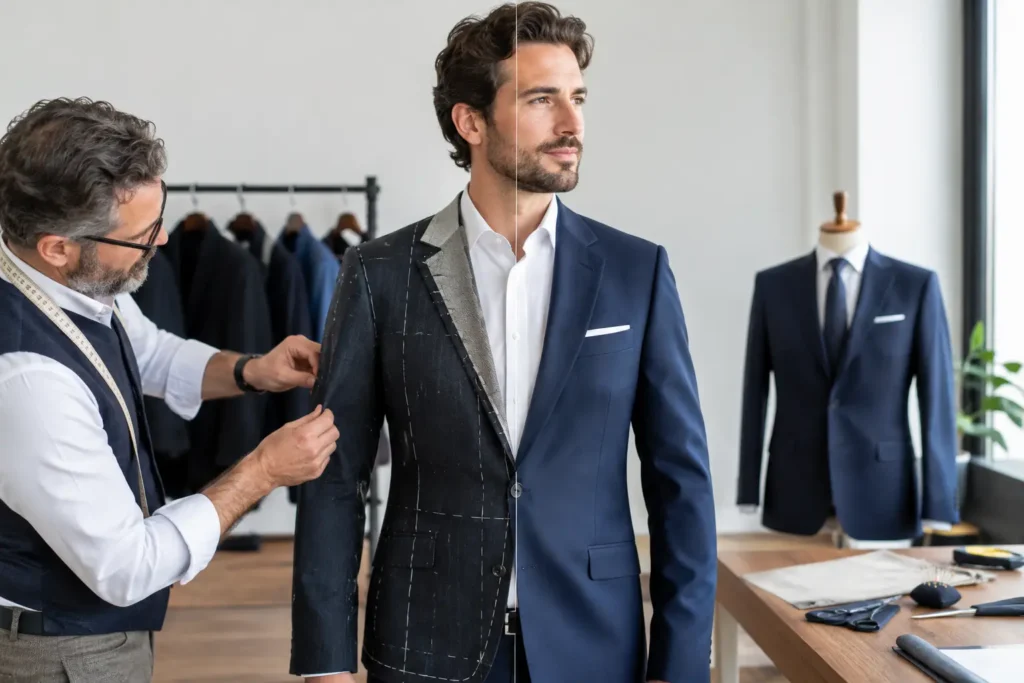
Bespoke Versus Alterations: Choose the Right Fit
A jacket that sits neatly through the shoulders, trousers that break cleanly over your shoes, and a dress that lets you move freely can change how you feel the moment you put it on. When weighing up bespoke versus alterations, the right choice comes down to what you already own, how you need it to fit, and whether the garment is worth rebuilding or simply refining.
Both services are valuable, but they solve different problems. Bespoke tailoring creates a garment around your body and preferences from the start. Alterations improve the fit, comfort or finish of a garment that already exists. Knowing the difference helps you spend wisely and get clothing you will genuinely enjoy wearing.
Bespoke versus alterations: the essential difference
A bespoke garment begins with measurements, consultation and design choices. The tailor considers your proportions, posture, lifestyle and the look you want to achieve before selecting or discussing fabric, structure and details. A bespoke suit, for example, is made from the ground up rather than adjusted from a standard size.
Alterations start with a finished or mostly finished item. You may have bought a dress that fits beautifully through the bodice but is too long, a suit jacket with sleeves that cover your hands, or jeans that gape at the waist. An experienced tailor assesses what can be changed and reshapes the garment to sit more naturally on your body.
The distinction matters because an alteration works within the garment’s existing construction. Seams, seam allowance, lining, pockets, zips, buttons, fabric condition and pattern placement all affect what is possible. A skilled tailor can achieve remarkable improvements, but not every garment can be transformed into a completely different size or shape.
When alterations are the smarter choice
For most wardrobes, alterations offer the best value. Ready-to-wear clothing is made to fit a broad range of bodies, not one individual. Even quality garments often need small adjustments to look their best.
Hemming trousers, shortening sleeves, taking in a waist, adjusting a dress bodice or tapering a leg can make an off-the-rack item feel far more considered. These changes are often less costly and faster than commissioning a new garment, particularly when the fabric, colour and overall style are already right.
Alterations are especially worthwhile when a garment has strong foundations. A well-made wool suit, silk evening dress, leather jacket or favourite pair of jeans may have years of wear left in it. Updating the fit can save a piece from sitting unused in the wardrobe and is often a more sensible choice than replacing it.
There is also an emotional value that should not be dismissed. Wedding dresses, family garments, pieces bought while travelling and clothes that are difficult to replace deserve careful attention. The aim is not always to make something look new. Sometimes it is to preserve what makes it meaningful while ensuring it can still be worn comfortably.
Common alterations with a big impact
The smallest adjustment can make the greatest visual difference. Trouser hems and jacket sleeves immediately affect proportions. Taking in a shirt or dress at the side seams can remove excess volume without changing its character. A careful waist adjustment can stop trousers slipping or bunching, while a neckline or strap adjustment can give a formal dress the security it needs.
For wedding and event wear, timing matters. A final fitting close to the occasion can account for shoes, undergarments and any changes in fit. Bring these items to the fitting where possible. They influence hem length, support and the way the garment sits when you walk, sit and dance.
When bespoke is worth considering
Bespoke is best suited to people seeking something highly individual, or those who consistently struggle to find ready-to-wear clothing that fits their proportions. This may include someone with a pronounced shoulder slope, a long torso, a significant difference between chest and waist measurements, or a fit requirement that standard sizing rarely addresses.
It also makes sense when the garment has a specific purpose and will be worn frequently. A carefully planned business suit, formal outfit or special-occasion garment can justify the investment when fabric, cut and finishing details matter as much as fit.
With bespoke work, you have more control from the beginning. You can decide on fabric weight for Melbourne weather, pocket style, lapel shape, lining, rise, hem finish and other details that ready-to-wear garments have already decided for you. The process usually involves multiple fittings, because precision comes from adjustment throughout the making stage rather than a single measurement session.
That level of personalisation takes time and costs more than altering an existing garment. It is not automatically the better choice. If you have found a high-quality jacket that suits your style and only needs the sleeves shortened, alterations are likely the practical answer. Bespoke is most rewarding when its extra control solves a genuine fit or design need.
The limits of alterations
A trustworthy tailor will be clear about what can and cannot be done. Taking a garment in is generally easier than letting it out, because extra fabric is needed inside the seams. Some garments have enough seam allowance for modest changes; others do not.
Major size changes can also affect balance. If a jacket is several sizes too large, altering the chest, shoulders and armholes may become complicated and may not produce the clean result you expect. Shoulder alterations, in particular, are specialised work and can be labour-intensive. In some cases, choosing a better starting size will give a better result and cost less.
Fabric condition is another consideration. Worn fibres, fading, sun damage and weakened areas around seams can limit repair or alteration options. Delicate fabrics, sequins, lace, leather and heavily lined garments require extra care. They can still be altered successfully, but the approach, time and cost will reflect the construction.
A fitting is the right time to ask direct questions: what result is realistic, whether the alteration will be visible, and how the garment will behave after the change. Good tailoring is not about promising the impossible. It is about finding the most effective solution for the item in front of you.
Cost, timing and value
Comparing bespoke and alteration costs without considering the garment itself can be misleading. Bespoke involves design, materials, pattern work, construction and fittings, so it is naturally a larger investment. Alterations vary according to complexity rather than just the number of centimetres changed.
A simple hem is very different from reshaping a lined formal gown, repairing leather or rebuilding a suit jacket sleeve. Before deciding, consider how often you will wear the piece, its original quality, replacement cost and how much a better fit will improve its usefulness.
Timing should also shape your decision. Do not leave formalwear, bridal garments or important work clothing until the last minute. Some adjustments need more than one fitting, especially where fit is precise or fabric is delicate. Bringing garments in early gives your tailor more options and gives you more confidence before the event.
How to get the best result from a fitting
Wear or bring the shoes and undergarments you intend to use with the garment. For suits, a shirt and shoes help establish the correct sleeve and trouser length. For dresses, the right bra or shapewear can completely change the fit through the bodice.
Be honest about how you want to wear the piece. A work dress needs room to sit comfortably at a desk. A wedding gown needs to allow movement, photographs and dancing. A jacket may look sharp when standing still but feel restrictive when driving or reaching forward. These details help the tailor make adjustments that work in real life, not just in front of a mirror.
It is also helpful to identify what bothers you most. Is the waistband pinching, are the sleeves too long, does the neckline move, or does the garment feel bulky? Clear feedback gives the fitting a purpose and helps avoid changes that look good but do not solve the comfort issue.
At AD Stitch, fittings are approached with the same practical care whether the job is a simple hem, a suit adjustment or a detailed wedding alteration. The goal is a result that looks natural, feels comfortable and respects the garment’s construction.
Choose the option that gives you confidence
Bespoke tailoring is a thoughtful choice when you need a garment built around you. Alterations are often the more efficient choice when you already have a piece with good fabric, good style and the potential for a better fit. Neither is a shortcut or a compromise when it is chosen for the right reason.
Before buying something new or giving up on an old favourite, look at the fit with fresh eyes. A considered adjustment may be all that stands between a garment you tolerate and one you reach for with confidence.