


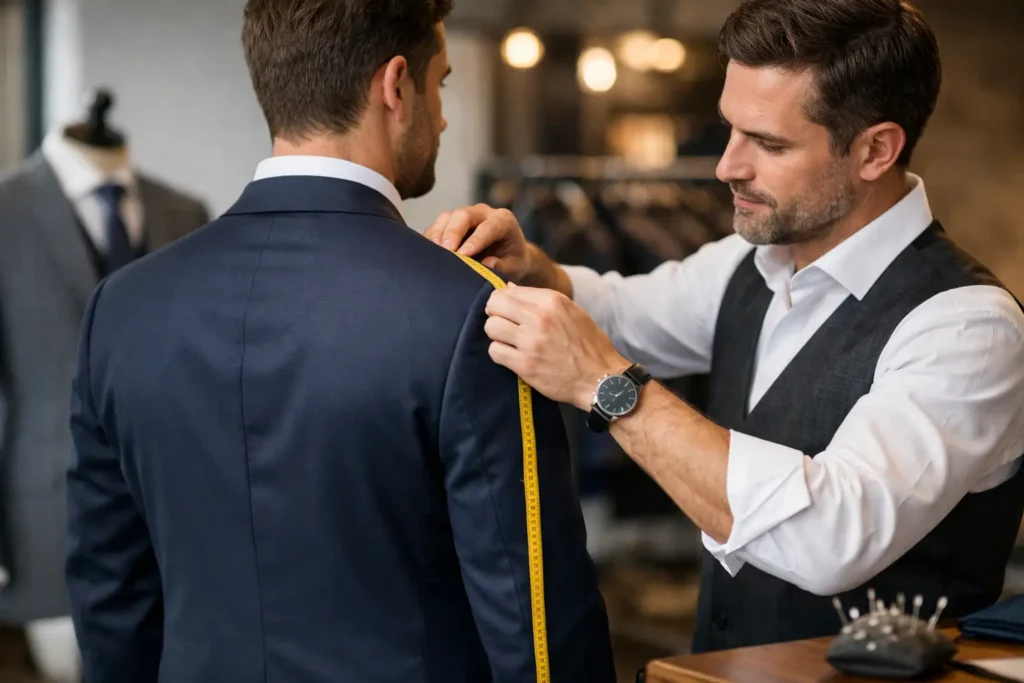
Suit Measurement Service in Melbourne That Fits
A suit can be made from beautiful cloth and still look ordinary if the fit is wrong. Sleeves that cover too much shirt cuff, trousers that bunch at the ankle, or a jacket that pulls across the chest can take away from an otherwise polished outfit. A professional suit measurement service in Melbourne gives you a clear starting point: measurements taken carefully, fit assessed in motion, and alterations planned around the way you actually wear your suit.
For work, a wedding, a special occasion or simply a better everyday wardrobe, accurate measuring makes the difference between a suit you tolerate and one you feel confident wearing.
Why suit measurements are about more than numbers
A tape measure is only one part of a proper fitting. Two people can share the same chest measurement yet need very different jacket adjustments. Shoulder shape, posture, arm position, preferred trouser rise and the cut of the garment all affect how a suit sits on the body.
A skilled tailor looks at the complete silhouette. The jacket should sit cleanly at the shoulders, close comfortably at the front and allow you to move your arms without strain. The collar should rest against the neck rather than standing away from it, while the sleeve length should leave a neat amount of shirt cuff visible.
Trousers need the same attention. The waist should be secure without digging in, the seat should remain smooth when standing and sitting, and the leg should fall cleanly over your chosen shoes. These details may sound small, but together they create the sharp, balanced appearance people associate with a well-fitted suit.
When a suit measurement service in Melbourne is worthwhile
Many customers assume measurements are only needed when ordering a fully custom suit. In reality, a fitting service is useful whenever a suit needs to work harder for you.
If you have bought a suit off the rack, measurements help identify which changes will make the biggest improvement. Ready-made suits are designed around standard proportions, not your individual shape. Often, a jacket sleeve adjustment, trouser hem and waist refinement can make a major difference. In other cases, the shoulders or jacket length may reveal that a different size or cut would be a better choice before you invest in alterations.
Measurements are also valuable after weight changes, when returning to office wear, or when bringing out a suit that has spent years at the back of the wardrobe. A quality garment may still have plenty of life left, but it needs to fit your body as it is now. Altering an existing suit is often a practical way to improve your wardrobe while avoiding unnecessary replacement.
For grooms, groomsmen and formal event guests, fitting early reduces last-minute stress. A suit that feels comfortable in the fitting room should also allow you to sit through dinner, greet guests, dance and move naturally throughout a long day.
What happens during a professional suit fitting
The best results come from trying the actual suit on, not relying only on a list of body measurements. Bring the shirt you expect to wear with the jacket, and where possible, bring the shoes you will wear on the day. Shoe height and style influence the ideal trouser break, while shirt collar height can affect how the jacket collar appears.
During the fitting, your tailor will assess how the suit sits across the shoulders, chest, waist, sleeves, seat and legs. You may be asked to stand naturally, sit down, walk a few steps and raise your arms. This shows where the garment restricts movement or creates excess fabric.
The tailor may pin the garment to mark the proposed changes. You will also have the chance to discuss how you prefer your suit to fit. Some clients want a close, modern profile; others need more room through the chest, thigh or waist for comfort. Neither approach is automatically right. The aim is to balance your style preference with the structure of the garment and the amount of fabric available for adjustment.
Common alterations identified at a fitting
Suit fitting frequently leads to sleeve shortening, trouser hemming, waist adjustments and jacket shaping through the side seams. Trouser tapering can create a cleaner line through the leg, particularly when a suit has a more traditional cut.
More complex work can include adjusting the jacket waist, taking in the trouser seat or refining the jacket sleeve from the shoulder. These alterations require experience because the suit’s lining, vents, pockets and original construction must be handled carefully.
Some changes have limits. Jacket shoulders are among the most difficult areas to alter, and garments can only be let out if sufficient seam allowance remains inside. An honest tailor will explain what will improve the fit, what may not be cost-effective and whether the suit is the right base for the result you want.
How to prepare for your appointment
Wear or bring a well-fitting shirt and the shoes planned for the occasion. If you already have a belt, tie or other key accessories, they can help you see the complete look, although they are not always essential for the measuring process.
Avoid judging a suit only while standing still in front of a mirror. Tell your tailor how you will use it. A suit for a desk-based role has different comfort priorities from one intended for a summer wedding or frequent travel. If you usually carry a mobile or wallet in a particular pocket, mention that too. Small habits affect how a garment performs day to day.
It is also helpful to speak up about what bothers you. Perhaps your jacket feels tight when you drive, your trouser hems catch under your shoes, or your sleeves feel too long. Clear feedback helps guide the fitting and ensures the finished alterations support both appearance and comfort.
Fit details that make a suit look considered
A good suit should look intentional rather than tight. The shoulder seam should end close to your natural shoulder point, without a pronounced overhang or visible divot. Across the chest, the jacket should close without pulling into an X shape. A slight waist suppression gives definition, but excessive tightness can distort the lapels and make movement uncomfortable.
Jacket length depends on proportion and personal style, but it should generally provide balanced coverage through the seat. Extremely short jackets can date quickly and may feel restrictive, while overly long jackets can make the legs appear shorter.
For trousers, the hem is one of the quickest ways to improve the overall impression. A full break creates more fabric at the shoe, while a slight or no break gives a cleaner, contemporary finish. The right choice depends on the trouser cut, footwear and your preference. What matters most is that both legs are even and the hem is finished neatly.
Choosing a local tailor you can trust
Suit alterations involve more than shortening fabric. A trusted local tailor should take time to understand the garment, explain suitable options and treat the work with care. Look for clear communication, a willingness to assess the suit in person and advice that is practical rather than pushy.
At AD Stitch, suit fittings combine personalised service with European tailoring expertise. From its Heidelberg studio, the team helps clients refine work suits, formalwear and treasured garments with careful measurements and expert clothing alterations.
A suit should support your day, not distract from it. Book a fitting before your next important occasion and give yourself enough time for thoughtful adjustments, a final try-on and the confidence that comes from clothes made to sit properly.