


Suit Alterations That Actually Improve Fit
A suit can be expensive and still look average if the fit is off by even a little. Sleeves that cover too much shirt cuff, trousers pooling at the shoe, a jacket collar that sits away from the neck – these small issues are exactly where suit alterations make the difference between simply wearing a suit and looking properly put together.
For most people, off-the-rack is only the starting point. Brands cut to standard proportions, but real bodies are rarely standard. One shoulder may sit lower, posture changes how a jacket hangs, and the right trouser break depends on both build and personal preference. Good tailoring corrects those details without making the suit feel stiff or overworked.
Why suit alterations matter more than the brand label
People often focus on the cloth, the label, or the price tag. Those things matter, but fit is what the eye notices first. A well-altered mid-range suit will usually look better than an expensive suit worn straight off the hanger.
That is because tailoring changes how the garment sits in motion as well as at rest. A cleaner shoulder line, a neater waist, and the right trouser length all affect comfort. When the fit is right, you stand better, move more naturally, and spend less time tugging at cuffs or adjusting your jacket after sitting down.
Suit alterations are also practical. They can update a suit that no longer fits as well as it once did, refine a new purchase before an event, or extend the life of a quality garment that is still worth wearing. For work, weddings, interviews, and formal occasions, that can be far more sensible than replacing the whole suit.
What suit alterations can usually fix
Some alterations are straightforward and highly effective. Trouser hemming is one of the most common. The right length depends on the cut of the trouser, the shoe you plan to wear, and whether you prefer little to no break or a more traditional finish. There is no single perfect answer, but there is definitely a wrong one if the hem bunches heavily or looks too short when you walk.
Jacket sleeve shortening is another common adjustment. Ideally, a little shirt cuff should show, but not so much that the jacket looks undersized. This sounds simple, yet the work can vary depending on whether the sleeve is shortened from the cuff or adjusted from the shoulder. Functional buttonholes and detailed cuff finishes can make the job more technical.
Taking in the jacket waist is often where the biggest visual improvement happens. A jacket should follow the body without pulling at the button or collapsing into excess fabric at the back. The aim is shape, not tightness. If it is over-fitted, the jacket can start to look strained and lose the clean drape that makes suiting look polished.
Trousers can also be taken in or let out at the waist, seat, and leg, depending on how much seam allowance is available. A taper through the leg can modernise the line of the trouser, though it needs balance. Too slim, and the trousers can distort around the pockets or catch awkwardly over the shoe.
Common adjustments that give the best return
The most worthwhile changes are usually trouser hems, waist suppression in the jacket, sleeve length, and trouser waist adjustment. These are the alterations that most directly affect proportion and comfort, and they tend to offer noticeable improvement without changing the original character of the suit.
What is harder to alter
Not every suit is equally alterable. Shoulder width, jacket length, and the overall balance of the coat are more complex than many people realise. They can sometimes be changed, but the work is more involved, more costly, and not always the best value.
The shoulder area is especially sensitive because it affects how the whole jacket hangs. If the shoulders are significantly too wide or too narrow, the result can be difficult to perfect even with skilled tailoring. Jacket length is similar. Shortening it too much can throw off pocket placement and button balance, while lengthening is often limited by available fabric.
This is why choosing the closest possible fit at purchase matters. A tailor can refine a suit brilliantly, but there are limits. The best starting point is a suit that already fits the shoulders well and is reasonably close through the body.
How to tell if a suit needs tailoring
A few simple signs tell you a lot. If the jacket collar gaps away from your neck, if horizontal pulling appears around the button, or if the back collapses into folds, the jacket likely needs adjustment. For trousers, watch for heavy bunching at the ankle, twisting through the leg, or a waistband that shifts during wear.
Try the suit on as you would actually wear it. Put on the shirt and shoes you plan to pair with it. Stand naturally, sit down, and move your arms. A fitting that only works while you are standing still in front of a mirror is not really a good fit.
It also helps to know your goal. A business suit often suits a cleaner, classic line with room for movement. An event suit may be shaped a little more closely. Neither is automatically better. It depends on the fabric, the cut, and how you want to wear it.
Suit alterations and cost – what affects the price
People often ask whether tailoring is worth the cost. Usually, the better question is whether the suit is worth refining. If the fabric is good, the construction is decent, and the fit is close in the right places, alterations are often excellent value.
Pricing depends on the complexity of the job, not just the garment itself. Hemming trousers is relatively simple. Reworking lined jacket sleeves, adjusting shoulders, or reshaping multiple areas takes more time and skill. Patterned fabrics can also add complexity because checks and stripes need to stay aligned.
There is also a difference between making a suit fit better and trying to force the wrong suit to work. Small to moderate refinements are where tailoring shines. Major structural correction can be done, but it is not always the most cost-effective path.
When to alter and when to replace
If the suit has quality fabric, sound lining, and enough seam allowance, alteration is often the smart option. This is especially true for suits worn for work, special events, or occasions where confidence matters. A good fit can make an older suit feel current again.
Replacement may make more sense if the shoulders are badly off, the cloth is worn thin, or the style is so dated that even good tailoring will not quite rescue it. There is no point spending carefully on alterations if the base garment is already at the end of its life.
For many Melbourne professionals, the sweet spot is buying a solid suit that fits well in the shoulders and then budgeting for tailoring. That approach usually delivers a better result than stretching for a more expensive suit and skipping the finishing work.
Getting the best result from suit alterations
A proper fitting matters. Wear the shirt, belt and shoes you expect to use most often, and mention the occasion if there is one. Wedding tailoring may call for a sharper finish than an everyday office suit. If comfort is your main concern, say so. If you ride, drive, or sit for long periods in your suit, that changes how the fit should be judged.
Clear communication helps, but expert guidance matters too. Many customers ask for a slimmer fit when what they really want is a cleaner line. A skilled tailor will know when to shape the garment and when to leave enough ease so the suit still moves properly and keeps its structure.
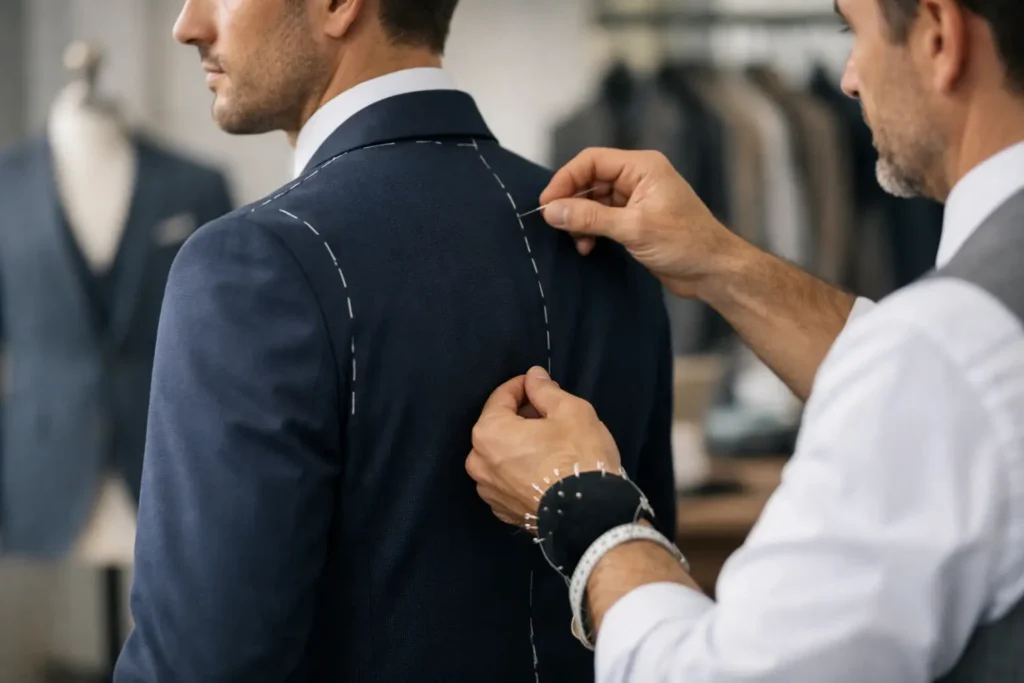
This is where experience shows. At a trusted local tailor such as AD Stitch, the process is not just about pinning fabric. It is about reading how the garment sits on your body, understanding what can be improved, and making changes that look natural once the suit is finished.
The best suit is the one that fits you properly
A suit should work with your body, not against it. Good tailoring does not chase perfection for its own sake. It sharpens proportion, improves comfort, and gives the garment the kind of finish people notice without always knowing why.
If your suit is almost right, that is often the ideal point for alterations. The final result is not just neater sleeves or a better hem. It is the confidence of putting it on and knowing it looks the way it should.