


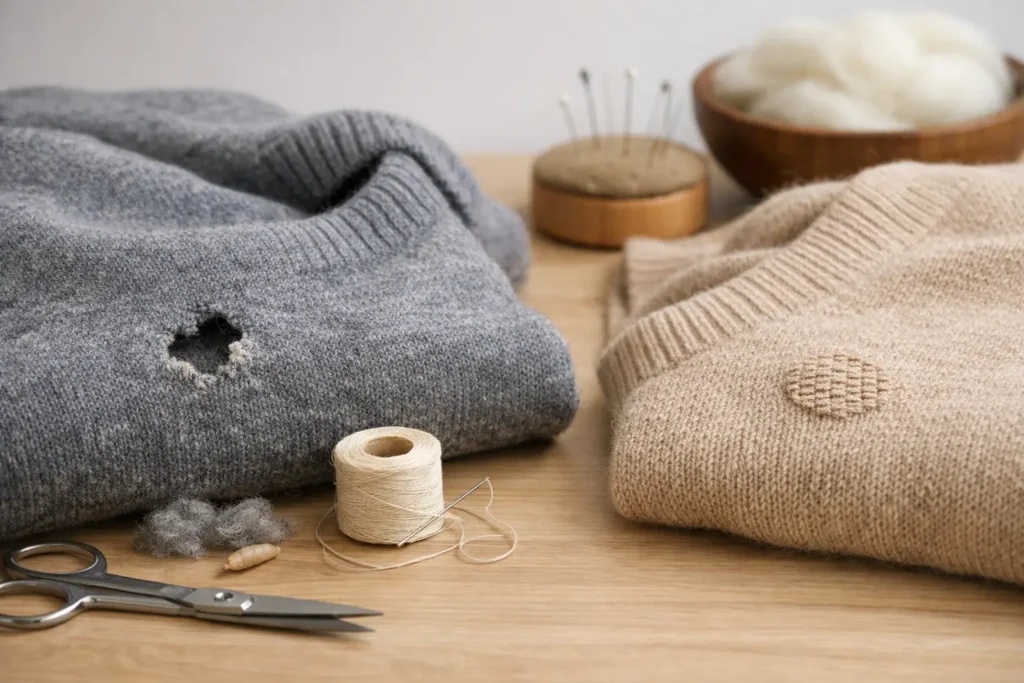
Moth Hole Repair: What Can Be Saved?
You pull on a favourite wool jumper, smooth the front, and there it is – a tiny hole near the chest, or worse, a small cluster of them near the hem. Moth hole repair often starts with that exact moment: surprise first, then the question of whether the garment is still worth saving. In many cases, it is.
The key is understanding what kind of damage you are dealing with, what a good repair can realistically achieve, and when professional handling will give you a much better result than a quick home fix. With wool, cashmere, suiting and other natural fibres, the difference between a neat repair and a disappointing one usually comes down to technique, fibre matching and the placement of the damage.
When moth hole repair is worth doing
A moth hole does not automatically mean a garment is beyond repair. Small holes in knitwear, coats, trousers and jackets can often be repaired successfully, especially when the surrounding fabric is still strong. If the piece fits well, has quality fabric, or is something you wear often, repair is usually the sensible choice.
This is particularly true for garments that are difficult to replace. A well-cut wool blazer, a favourite merino knit, or a coat that already fits perfectly has value beyond the price tag. Replacing it can mean settling for an inferior fit or fabric. Repair lets you keep the piece you already know works.
That said, not every job is the same. One tiny hole in a plain knit is very different from widespread damage across the front of a cardigan. Good tailoring is always about judgement as much as skill. Sometimes a repair can be discreet enough that only you will know it is there. Sometimes the goal is simply to stabilise the garment and make it wearable again.
What moths actually damage
Clothes moths are drawn to natural animal fibres such as wool, cashmere, alpaca, mohair and silk blends. They are less interested in synthetics, but blends can still be affected if enough natural fibre is present. The larvae do the damage, feeding on the fibres and leaving behind holes, thinning patches and weak spots.
This matters because moth hole repair is not only about closing the visible hole. It is also about checking the fabric around it. If the surrounding area has become fragile, stitching or reweaving one point alone may not be enough. A proper assessment looks at the full condition of the garment, not just the most obvious opening.
Different garments need different repair methods
There is no single repair method that suits every moth hole. The right approach depends on the fabric type, the weave or knit structure, the size of the hole and where it sits on the garment.
Knitwear repairs
Jumpers, cardigans and fine knits often respond well to specialist mending. On knitted garments, a repair may involve reconstructing the knit structure so the area blends back into the surrounding fabric as closely as possible. Fine-gauge knits can be especially delicate, and rough handling can make the hole larger.
If the hole is small and caught early, the result can be very neat. If the knit has laddered, stretched or lost shape around the damage, expectations need to be more measured. The repair can still be worthwhile, but it may not disappear completely.
Woven fabric repairs
Suit jackets, trousers, skirts and coats are different. These fabrics rely on a woven structure rather than loops of yarn. Depending on the cloth, repair may involve reweaving, patching from an unseen area, or reinforcing the fabric from behind.
On a quality wool suit, careful work can make a small moth hole far less visible, particularly in textured cloths or darker colours. Smooth, lightweight fabrics are less forgiving. A hole on the front chest of a plain worsted jacket is simply harder to disguise than one on a heavily textured tweed coat.
Lined garments and structured pieces
Coats, jackets and tailored garments often need to be partially opened to access the damaged area properly. This is one reason professional moth hole repair tends to deliver better results. It is not just about the surface. The repair needs to sit well, avoid puckering, and preserve the shape of the garment.
Can moth hole repair be invisible?
Sometimes, but not always.
That is the honest answer customers deserve. A very small hole in the right fabric can be repaired so discreetly that it is hard to spot unless someone is looking for it. But true invisibility depends on several factors: the original yarn or fibre match, the fabric texture, the colour, the age of the garment and the location of the damage.
A repair on the lower back of a charcoal wool coat is easier to disguise than one in the middle of a fine cream cashmere jumper. Light colours, flat weaves and high-visibility areas tend to show more. So do multiple holes close together.
A skilled tailor or repair specialist should be clear about this from the start. Good service is not about overpromising. It is about helping you decide whether the expected result justifies the repair.
Why home fixes can go wrong
There is nothing wrong with a temporary fix if you need to stop a hole getting worse before bringing it in. But rushed DIY repairs often create more work later.
Visible stitching, mismatched thread, iron-on patches and heavy fusible products can distort the fabric or leave a stiff mark around the damage. On knitwear, pulling the edges together too tightly can create a pucker that is more obvious than the original hole. On tailored garments, surface stitching can break the clean line of the fabric and make professional restoration more difficult.
If the garment matters to you, the safest move is to avoid experimenting too much. Store it carefully, keep it clean and have it assessed before the damage spreads.
What to do before bringing a garment in
First, do not wash it aggressively or keep wearing it as though nothing is wrong. Friction can enlarge weak areas. Instead, place the garment in a clean bag or fold it flat somewhere safe.
Second, check for other signs of damage. Moth activity rarely stops at one hole. Look at cuffs, underarms, hems, collars and folded areas where larvae may have fed unnoticed.
Third, think about the value of the item in practical terms. Does it fit beautifully? Is the fabric high quality? Would replacing it cost more than you would like? Repair tends to make the most sense when the garment has good structure, good fabric and a real place in your wardrobe.
Moth hole repair and cost – what affects the price
Repair pricing varies because the labour varies. A tiny hole in a straightforward knit is not the same job as repairing several holes in a lined wool jacket. Fabric type, garment construction, access, matching difficulty and the number of damaged areas all affect the time involved.
This is where an in-person assessment helps. An experienced alterations business can tell you whether the garment is a strong candidate for repair, whether the result is likely to be discreet, and whether another solution may make more sense. In some cases, a visible mend in a less noticeable area is perfectly acceptable if it means keeping a much-loved item in use.
For Melbourne customers who want honest advice and careful workmanship, this kind of practical assessment matters more than a generic quote. At AD Stitch, the focus is always on helping customers make a sound decision about the garments they already own.
Preventing the next round of damage
The best repair is the one you do not need again. Moths are attracted to dark, undisturbed spaces and fibres with traces of perspiration, food or skin oils. Clean garments before long-term storage, especially at the end of winter. Use breathable garment bags for quality pieces, avoid cramming wardrobes, and inspect natural fibre items regularly.
If you have found one damaged garment, check nearby woollens as well. Catching small holes early gives you better repair options and helps prevent more serious loss.
When it is better to let go
Some garments are simply too compromised. If the fabric is thinning across multiple areas, the holes are extensive, or the cloth has become brittle with age, repair may cost more than the garment can justify. That does not mean the item was not worth owning. It just means the fabric has reached the end of its useful life.
A good tailor will tell you that plainly. Expert service is not saying yes to every job. It is knowing when repair will genuinely restore wearability and when it will only delay the inevitable.
Moth damage feels frustrating because it often appears on the pieces you value most. But a small hole is not the end of a good garment. With the right repair method, careful handling and realistic expectations, many items can return to your wardrobe with plenty of wear left in them. If you spot damage early, give the piece a proper assessment before you write it off.