


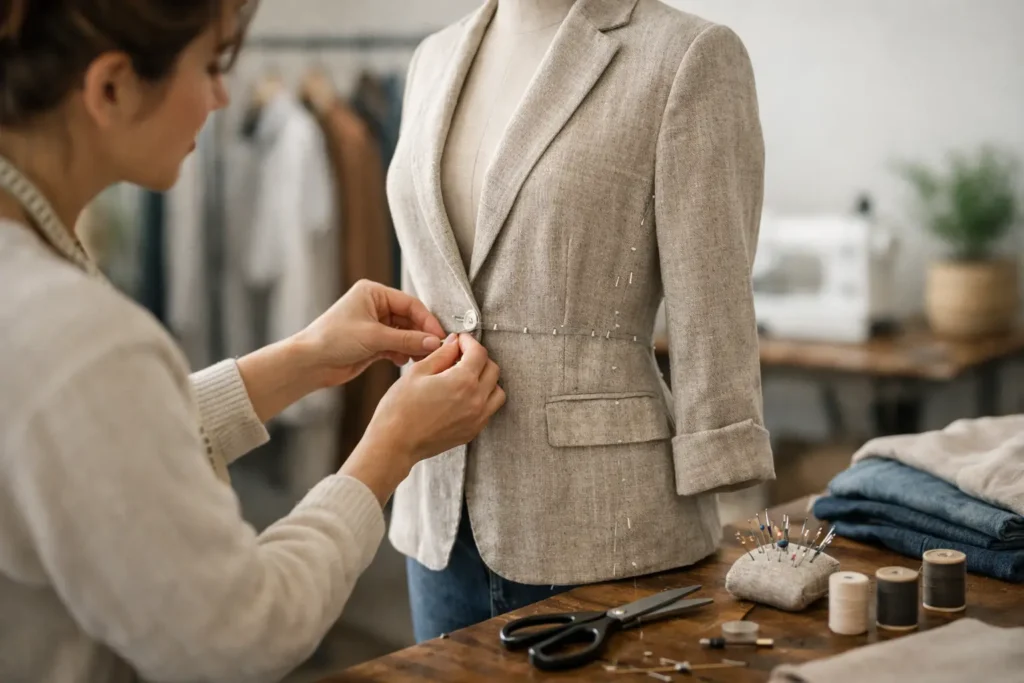
Why the Slow Fashion Alterations Trend Matters
A jacket that sits neatly at the shoulder, trousers that break correctly over your shoes, and a dress that moves comfortably can make an existing wardrobe feel new again. That is the practical appeal behind the slow fashion alterations trend: rather than replacing clothing at the first sign of poor fit or wear, more people are choosing to refine, repair and keep the pieces they already own.
For Melbourne wardrobes, this is less about following a fashion statement and more about making sensible choices. Well-made clothing is worth looking after. A careful alteration can turn an almost-right garment into a reliable favourite, while a quality repair can keep a much-loved item out of the rubbish and in regular rotation.
What the slow fashion alterations trend looks like in real life
Slow fashion is often discussed in broad terms, but alterations make the idea tangible. It means assessing a garment for its potential before deciding it has reached the end of its useful life. Sometimes the answer is a straightforward hem. Other times, it is reshaping a waist, taking in a jacket, replacing a zip or restoring a torn lining.
The trend is growing because many shoppers are becoming more selective. They may own fewer garments, but expect each one to work harder. They also recognise that ready-to-wear sizing is a starting point, not a guarantee of a good fit. Bodies vary, brands vary, and even the same labelled size can fit differently from one garment to the next.
Alterations bridge that gap. A pair of trousers bought for the waist may need shortening through the leg. A blazer that fits through the chest may need sleeve adjustments. A special occasion dress may be beautiful but sit too loosely at the bodice. These are not failures of the garment or the wearer. They are normal fitting issues that skilled tailoring can often improve.
Better fit changes how often you wear something
A garment that pinches, drags, slips or bunches tends to stay at the back of the wardrobe. It may be perfectly good fabric, a suitable colour and a style you still enjoy, yet it is not comfortable enough to reach for on a busy morning.
This is where alterations offer value beyond appearance. Adjusting the fit can improve movement, comfort and confidence at the same time. For workwear, that might mean a suit that looks polished without feeling restrictive through a full day. For casual clothing, it could be jeans that sit properly at the waist and fall to the right length. For formalwear, it is often the difference between feeling self-conscious and feeling fully present at the event.
The best results are usually subtle. The garment should still look like itself, only more considered and more natural on you. A well-fitted piece does not announce that it has been altered. It simply looks as though it was made for the person wearing it.
Repairs are part of the picture
The slow fashion approach is not limited to resizing. Repairs deserve equal attention. A broken zip, loose seam, missing button or worn lining can make a garment seem unusable, even when the rest of it is in excellent condition.
Repairing these issues is particularly worthwhile for quality items. Leather jackets, tailored coats, wool trousers and occasionwear often involve fabrics and construction details that are difficult to replace at the same standard or price. A thoughtful repair can preserve the character of the original piece while restoring its everyday usefulness.
There are limits, of course. Fabric that has become very thin, severely damaged or weakened throughout may not hold a lasting repair. An experienced tailor will explain when a repair is sensible, when an alteration is possible but not cost-effective, and when replacement may be the better option. Honest advice is part of good craftsmanship.
Which garments are worth altering?
The answer depends on fabric quality, construction, sentimental value and how much the fit needs to change. A garment does not need to be designer to be worth saving. If you enjoy wearing it, it suits your lifestyle and the work required is proportionate to its value, alterations can be a smart choice.
Tailored garments are often strong candidates because their structure is designed to be adjusted. Suits, blazers, trousers, dresses and skirts can frequently be refined at the waist, hem or sleeves. Wedding gowns and formal dresses also benefit from professional fitting, as small changes have a major effect on comfort and photographs.
Everyday pieces can be equally worthwhile. Hemming jeans, tapering trousers, repairing a favourite knit or replacing the elastic in a skirt can extend the useful life of clothes you wear often. Curtains are another practical example. When you move house, change flooring or update a room, adjusting the drop can be more economical than starting again.
More complex changes need careful assessment. Taking a garment in is generally easier than letting it out, because this depends on the available seam allowance. Altering shoulders, reshaping heavily lined jackets or significantly changing the size of leather garments requires particular expertise. It can be done in some cases, but the expected result should be discussed before work begins.
The case for quality over constant replacement
Fast replacement can look convenient, especially for inexpensive basics. Yet the cost is not only on the receipt. Repeatedly buying garments that do not fit well can leave you with a crowded wardrobe and little to wear. The better choice is often to buy thoughtfully, then maintain what earns its place.
This does not mean every item should be repaired indefinitely. Some inexpensive garments are made in a way that makes alteration difficult or uneconomical. Very stretchy fabrics, bonded seams and poorly constructed pieces may have limited scope for change. Slow fashion is not about forcing every garment to last forever. It is about treating clothing as useful property rather than disposable clutter.
It also encourages better buying decisions. When you know a hem or waist can be adjusted, you can focus on the elements that are harder to change: shoulder fit, fabric quality, comfort and overall shape. This is especially helpful when shopping for suits, dresses and special occasion clothing.
A good fitting starts with a conversation
Professional alterations work best when the tailor understands how you intend to wear the garment. Bring the shoes you plan to wear with a dress or trousers, particularly if heel height affects the hem. For a suit, consider whether you will wear it with a belt, particular shirt or specific shoes. These details help achieve a finish that works outside the fitting room.
Be clear about what feels wrong. You do not need technical tailoring terms. Saying that a waistband digs in when sitting, sleeves feel too long, or a neckline gaps when you move gives useful information. A skilled tailor can translate that into the right alteration method.
Allow enough time for important garments. Wedding alterations, formal dresses and pieces requiring multiple fittings should not be left until the last minute. A careful process may involve trying the garment on more than once, especially where fabric, boning, lining or detailed embellishment is involved.
At AD Stitch, this personal approach is central to expert clothing alterations. From a quick trouser hem to more detailed suit, dress or wedding adjustments, the aim is not simply to change measurements. It is to help each garment feel comfortable, balanced and ready to wear with confidence.
Slow fashion alterations are personal, not perfect
There is a refreshing practicality in choosing to alter what you own. It respects the money already spent on a garment, reduces needless waste and gives your wardrobe a more individual feel. A repaired elbow, a shortened hem or a reshaped waist can become part of the story of clothing that has been chosen, worn and cared for.
Start with the items you already avoid wearing for small, fixable reasons. The dress that needs taking in, the trousers waiting for a hem and the jacket with a failing lining may be closer to useful than you think. With the right assessment and careful workmanship, your next favourite outfit may already be hanging in your wardrobe.