


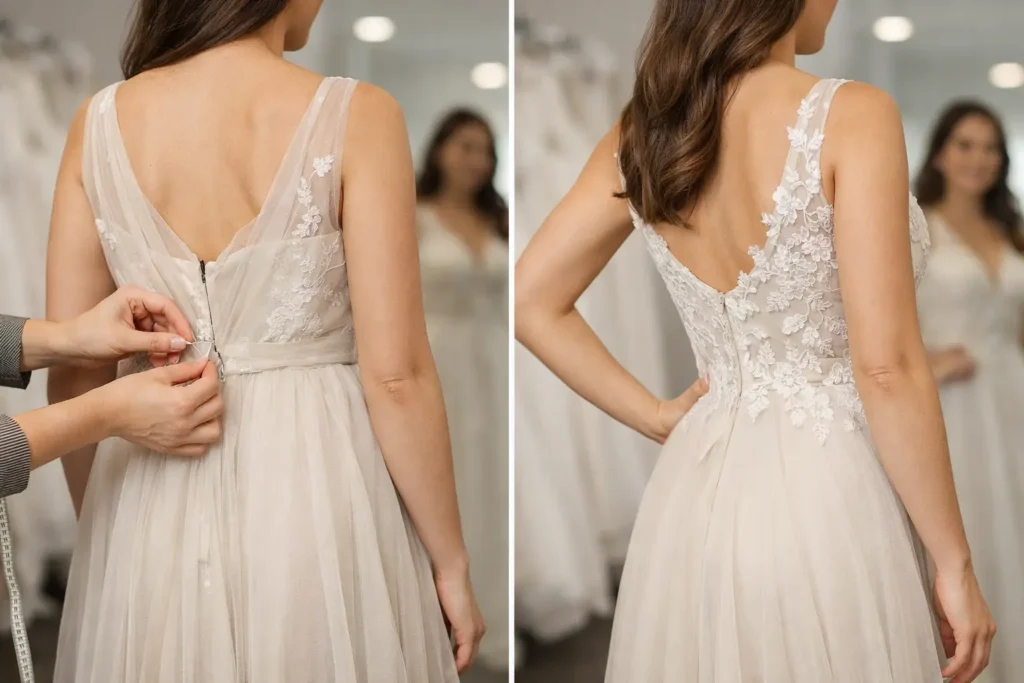
Dress Alteration Before and After Results
A dress can look almost right on the hanger and still feel wrong the moment you put it on. The waist may sit too low, the straps may slip, or the hem may make the whole shape feel out of balance. That is where dress alteration before and after results become so noticeable: a few precise adjustments can turn a dress you avoid wearing into one that feels made for you.
The best alterations do not announce themselves. They allow the fabric, cut and your personal style to do the work. Whether you are preparing for a wedding, a work function, a school formal or simply want to enjoy a favourite dress again, the goal is the same – a fit that looks polished and feels comfortable from the first photo to the last dance.
What changes in a dress alteration before and after?
Before an alteration, the issue is not always obvious in a mirror. You might keep pulling at the neckline, feel excess fabric gathering at the back, or notice that the dress looks different when you walk than when you stand still. These are fit problems, and they can affect both comfort and confidence.
After professional tailoring, the dress should sit naturally on the body. The shoulders are aligned, the bust is supported without pulling, the waist falls at the right point and the hem works with your height and footwear. A successful alteration preserves the original design while making it suit your proportions.
It is not about making every dress skin-tight. Some styles need ease to move well, especially shift dresses, linen pieces, evening gowns and dresses with a full skirt. A skilled tailor considers the fabric, lining, seams and intended use before recommending changes. The right result depends on the garment as much as it depends on the wearer.
The alterations that make the biggest difference
Hemming for proportion and movement
Hemming is often the first alteration people think of, but there is more to it than removing length. The ideal hem depends on the dress shape, where you plan to wear it and the shoes you will wear with it. A maxi dress that drags on the ground can become safer and more elegant. A midi dress that finishes at an awkward point on the calf can look more balanced with a small adjustment.
For formal dresses, bring the shoes you intend to wear to the fitting. Even a few centimetres can change the line of the garment. Delicate fabrics, pleats, beading and curved hems also require careful handling so the finish remains even and true to the original style.
Taking in the waist, bodice or side seams
A loose waist can make an otherwise beautiful dress lose its shape. Taking in the side seams or refining the waist can create definition without compromising comfort. This is especially effective for dresses that fit well through the shoulders and bust but feel too roomy through the middle.
The process can be more involved when a dress is lined, boned, heavily embellished or made from a slippery fabric such as satin. In those cases, the outer fabric and inner construction need to be adjusted together. The aim is a smooth result, with no puckering, twisting or strain at the seams.
Adjusting straps and shoulders
Straps that are too long can affect the entire fit of a dress. The neckline may sit too low, the armholes may gape and the bodice can lose support. Shortening or reshaping straps often provides a surprisingly dramatic improvement, particularly for cocktail dresses, bridesmaid dresses and sleeveless summer styles.
Shoulder adjustments can also improve how sleeves and necklines sit. They are more technical than a simple hem because they may affect the armhole, lining and overall balance. Done well, they make the dress look settled rather than altered.
Refining the neckline and bust
A neckline that gapes, sits too high or feels too revealing can stop you from wearing a dress with confidence. Depending on the construction, it may be possible to take in the centre back, adjust the side seams, reshape straps or add discreet support.
Bust adjustments must be approached carefully. There needs to be enough room for natural movement, sitting and breathing. Removing too much fabric can create horizontal pulling lines, while leaving too much can cause the bodice to collapse or shift. A fitting lets your tailor assess the dress on your body rather than guessing from measurements alone.
Why fabric and construction matter
Two dresses with the same fit issue may need very different solutions. A simple cotton dress is generally more straightforward to alter than a fully lined evening gown with lace, sequins or internal boning. Stretch fabrics need to retain their recovery, while silk and satin can show every stitch mark if handled carelessly.
This is why an honest assessment matters. Some dresses can be altered significantly; others have limited seam allowance or details that make major changes impractical. A trusted tailor will explain what is achievable, what will provide the best value and where the garment’s original construction sets a limit.
Alterations are also easier when there is fabric available inside the seams. Taking a dress in is usually more straightforward than letting it out, although this depends on the garment. If you need extra room through the bust, hips or waist, do not assume it can be done without first having the dress checked.
Bring the right items to your fitting
A good fitting is the foundation of a good result. Wear the undergarments you expect to wear with the dress, especially if they change your shape or support. For formalwear, bring your shoes. For a wedding or special event, it can also help to bring any shapewear, belt or jacket you plan to use.
Move around during the fitting. Sit down, raise your arms and walk a few steps if the space allows. A dress that looks perfect while standing still should also feel comfortable through the moments you will actually experience at an event.
Try to book alterations early for important occasions. This leaves room for careful work and, where needed, a follow-up fitting. Last-minute adjustments are sometimes possible, but complex dresses benefit from time and attention rather than rushed decisions.
Before-and-after results should still look like your dress
The most satisfying transformation is often subtle. Friends may say you look wonderful without being able to identify why. The dress does not look remade; it simply fits your body, sits neatly and allows you to relax.
That is particularly valuable for garments with sentimental or financial value. Perhaps you found a dress you love on sale but it is one size too large. Perhaps a cherished piece no longer fits after a change in lifestyle. Perhaps a bridesmaid dress needs a more flattering shape before a significant day. Professional alterations can make these pieces wearable rather than leaving them in the back of the wardrobe.
At AD Stitch, each dress is assessed with attention to its fabric, design and the way you want to feel in it. From straightforward hemming to detailed bodice adjustments, precise tailoring helps Melbourne customers get more wear, comfort and confidence from the clothes they already own.
When to alter a dress and when to choose another option
Alteration is worthwhile when the dress fits well in the areas that are difficult to change, such as the shoulders, armholes or overall proportions, and needs refinement elsewhere. It is also a sensible choice for quality garments, occasionwear and pieces you genuinely enjoy wearing.
However, not every dress is the right candidate. Major resizing can alter the original proportions, particularly where there are bold prints, complex panels, pockets, cut-outs or intricate embellishment. In some cases, a smaller adjustment, a different styling choice or another dress may be the better answer. Clear advice before work begins helps you make that decision with confidence.
A well-fitted dress should let you focus on where you are going, not on adjusting your straps, checking your hem or wondering how it looks from behind. Bring in the piece you have been hesitating to wear – the right alteration may be all it needs to feel like yours.