


Made-to-Measure Versus Clothing Alterations
A jacket can sit perfectly through the shoulders yet pull across the waist. A dress may be the right size on the label but gape at the neckline. These are the everyday fit problems behind made-to-measure versus clothing alterations – two different services that can both improve how you look and feel in your clothes.
The right choice comes down to the garment, the fit issue, your timeline and what you want the finished piece to do for you. Made-to-measure starts before the garment is made. Alterations improve a garment that already exists. Neither is automatically better, but one may be far better suited to your situation.
What made-to-measure really means
Made-to-measure clothing is produced from a standard pattern that is adjusted using your measurements. You choose a style, fabric and selected details, then the garment is made specifically for you. A suit, shirt, formal dress or traditional garment can be made-to-measure, depending on the tailor and the service offered.
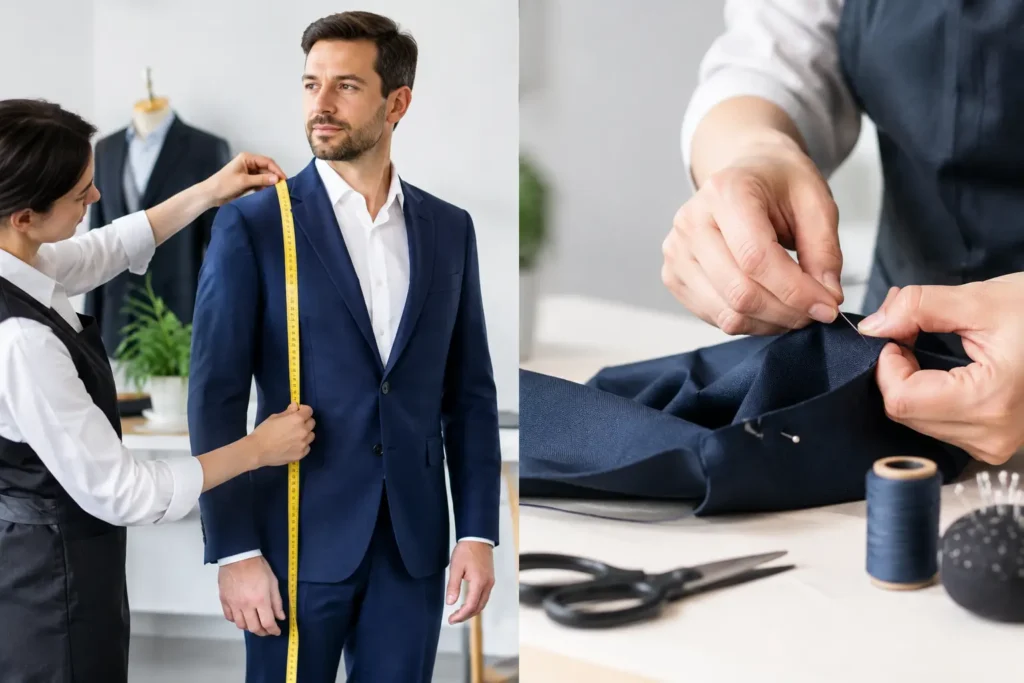
This process usually begins with a detailed fitting consultation. Measurements are taken across the chest, waist, hips, shoulders, sleeves, body length and other areas relevant to the garment. The tailor then adjusts a base pattern rather than starting with a completely blank pattern.
That distinction matters. Made-to-measure is not quite the same as fully bespoke tailoring, where a unique pattern is drafted from scratch and often involves several fittings during construction. Both offer a high level of personal fit, but made-to-measure is generally a more accessible middle ground between off-the-rack clothing and bespoke work.
Made-to-measure is particularly useful when standard sizing rarely works for your proportions. Perhaps you have broad shoulders and a narrow waist, longer arms, a fuller hip, or you simply want control over fabric, lining, lapels, pockets or hem length. It can also be an excellent option for an important garment you expect to wear for years.
The trade-off is time and cost. Because the garment must be selected, measured, ordered or constructed, and sometimes fitted again, it is not the best solution for a function this weekend. It also requires a clear idea of how you want the garment to look and feel.
What clothing alterations can achieve
Clothing alterations adapt an existing garment to improve fit, comfort, function or appearance. This may mean shortening trousers, taking in a dress, adjusting a suit jacket, reshaping a waistband, repairing a zip or replacing a damaged lining. The garment is already there, but its potential has not yet been fully realised.
A skilled tailor assesses how the fabric hangs on your body, where the garment is tight or loose, and whether there is enough seam allowance to make the required adjustment. This is why an in-person fitting is so valuable. Two garments can appear to need the same alteration, yet their construction may call for very different work.
Alterations are often the practical choice for quality ready-to-wear clothing. If you have found a suit that fits well through the shoulders but needs the sleeves and trousers shortened, alterations can create a polished result without commissioning a new suit. The same applies to a favourite dress that needs a neater waist, jeans that need hemming, or a wedding gown that needs refining after purchase.
They are also a thoughtful way to extend the life of clothes you already love. A well-made leather jacket, a beautiful coat, a formal gown or a sentimental family piece may only need expert adjustment or repair to become wearable again. Keeping a good garment in use can be both more economical and less wasteful than replacing it.
Made-to-measure versus clothing alterations: the key difference
The simplest difference is timing. Made-to-measure creates the garment around your body and preferences. Alterations refine a garment after it has been made.
That difference affects what can be changed. With made-to-measure, the tailor can plan proportions from the beginning. Sleeve length, jacket balance, trouser rise, skirt shape and style details can all be considered before cutting. With alterations, the original cut and construction set the boundaries.
A capable tailor can achieve remarkable changes to ready-made clothing, but not every alteration is advisable. Taking in a waist is often straightforward. Making a garment significantly larger may not be possible if there is little extra fabric in the seams. Adjusting shoulders, armholes or the overall balance of a tailored jacket can be complex and may cost more than the garment justifies.
This does not mean you should only buy clothes that fit perfectly from the rack. It means you should buy strategically. Prioritise fit through the shoulders for jackets, through the chest for shirts, and through the hips and seat for trousers and skirts. Length, waist shaping and sleeve fit are often easier to alter than the garment’s core structure.
When alterations are the smarter choice
Alterations make sense when you already own a garment with good fabric, sound construction and a fit issue that can be corrected. They are ideal for everyday wardrobe improvements, from shortening work trousers to reshaping a blouse for a cleaner silhouette.
They are also valuable for eventwear. A dress bought for a wedding or special occasion may need the hem adjusted for your shoes, straps shortened, the bodice shaped closer to the body or a bustle added. Bridesmaid dresses, mother-of-the-bride outfits and formal suits often need these final refinements even when they have been ordered in the correct size.
For suits, alterations are often what separate a presentable outfit from one that looks truly considered. Sleeves that finish at the right point, trousers that break neatly over shoes and a jacket that follows the waist without pulling can change your whole appearance. Comfort improves too, especially when you spend long days sitting, walking or moving between meetings.
Speed can be another deciding factor. While every garment should be assessed individually, an alteration is usually more practical than made-to-measure when you need a result within a shorter timeframe. Allow enough time for fittings and collection, particularly before weddings, races, graduations or holiday travel.
When made-to-measure is worth considering
Made-to-measure is worth the investment when repeated alterations still do not solve your fit concerns. If every off-the-rack suit needs extensive work, a garment planned for your proportions may provide better value over its lifetime.
It is also a strong choice when the details matter as much as the fit. For professional suiting, milestone events or culturally significant clothing, you may want a particular fabric, cut, neckline, sleeve style or finish that is difficult to find in stores. Starting with your preferences can avoid compromise later.
Think carefully about how often you will wear the piece. A made-to-measure navy suit that serves you at work, weddings and formal dinners may earn its place in your wardrobe. A highly trend-driven item for one occasion may be better bought ready-made and altered with care.
Ask these questions before you decide
Before buying or altering a garment, consider whether the issue is mainly sizing, structure or style. If a garment is almost right and made from quality material, alterations may be all it needs. If the proportions are consistently wrong or you want specific design control, made-to-measure could be the more satisfying path.
It helps to bring the shoes, underwear or shapewear you plan to wear with the finished outfit to your fitting. These details affect hems, posture and how the garment sits. For wedding and formal alterations, do not leave this until the last week. A calm fitting process gives your tailor time to make precise adjustments rather than rushed compromises.
Be open about your budget and deadline as well. A trusted tailor should explain what is achievable, flag any limitations in the garment and recommend the most sensible option. Good tailoring is not about making the most complicated change. It is about choosing the work that gives you the best fit and the most confidence.
At AD Stitch, careful fittings and expert clothing alterations help Melbourne customers get more from the garments they own, whether that means a small repair, a suit refinement or a special-occasion adjustment. Bring in the piece that is close but not quite right – the right alteration can make it feel like it was chosen for you all along.