


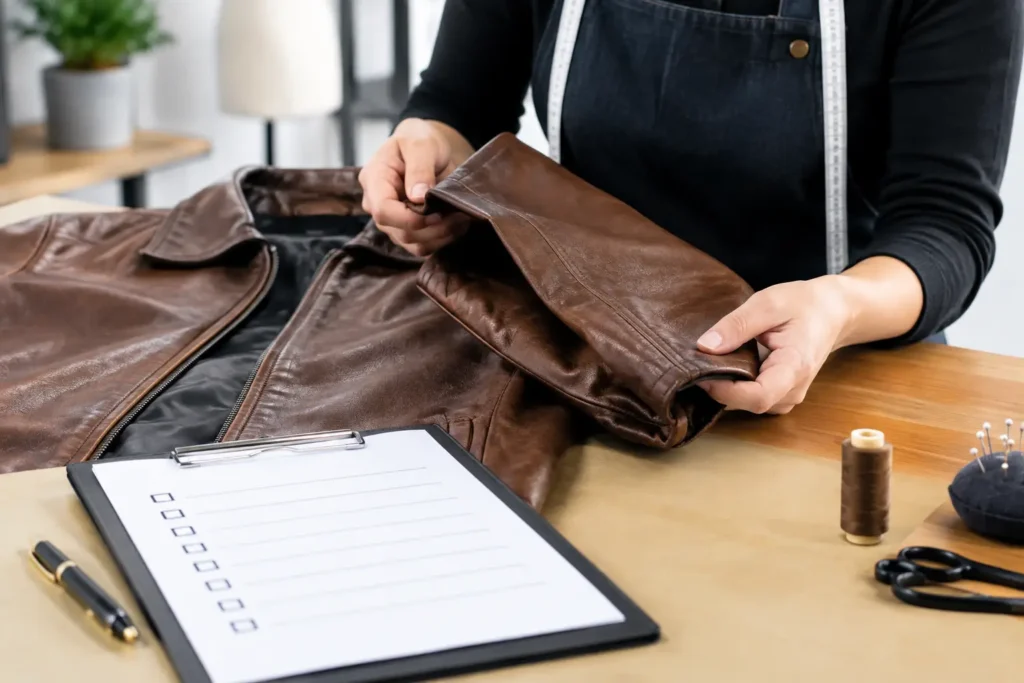
Leather Alteration Service Review Checklist
A leather jacket that sits awkwardly at the shoulders, trousers that bunch at the ankle, or a treasured leather skirt with a broken zip can be difficult to replace. Leather has character, weight and a finish that ordinary fabrics do not. That is why a useful leather alteration service review should look beyond whether a repair was simply completed. The real question is whether the garment still looks intentional, feels comfortable and retains the quality that made you keep it.
For Melbourne customers considering an alteration, the right service can turn an unworn piece back into a favourite. The wrong approach can leave permanent needle marks, stretched seams or a fit that never quite feels right. Here is what to look for before handing over leather clothing for alterations or repairs.
What a leather alteration service review should assess
Leather is less forgiving than cotton, denim or most suiting fabrics. Once it has been punctured, cut or stretched, there may be no easy way to hide a mistake. A good review therefore considers the tailor’s judgement as much as the finished stitch line.
Start with the garment itself. Is it genuine leather, suede, nubuck, faux leather or a bonded material? Each responds differently to handling. A skilled alteration specialist will inspect the thickness, lining, seams, panels and hardware before promising a result. They should explain what can be changed safely and where the construction limits the alteration.
Reviews that only say “great service” are encouraging, but the most helpful feedback is specific. Look for comments about neat finishing, accurate fitting, care with expensive garments, clear turnaround times and communication when a repair is more involved than expected. A customer who mentions that their jacket still hangs naturally after the sleeves were shortened is giving you more useful information than a general star rating alone.
Fit should look natural, not altered
The best leather alterations are often the least noticeable. A shortened sleeve should retain a balanced cuff or zip placement. A taken-in side seam should follow the original shape of the jacket rather than pulling across the back. Leather trousers should allow room to sit and walk without strain at the crotch, hips or knees.
This is where an in-person fitting matters. A tailor needs to see how the garment moves on your body, not just measure it flat on a counter. Bring the shoes, layers or shirt you expect to wear with it, especially for motorcycle jackets, fitted leather pants or event pieces. A few extra minutes at the fitting can prevent an alteration that looks fine standing still but feels restrictive in real life.
The finish tells you whether the work will last
Inspecting photos and customer feedback can help, but ask practical questions as well. Will the work preserve the original lining? Can the existing hardware be reused? Will the new seam be reinforced where needed? These details matter because leather is heavy and places more stress on seams than lightweight clothing.
A quality repair should sit flat without puckering or rippling. Stitching should be consistent, with thread that suits the garment in both strength and colour. On visible areas, the seam placement should respect the original panel lines. If a tailor needs to make a compromise, such as changing the position of a zip or removing a decorative detail, they should raise it before work begins.
Common leather alterations and their trade-offs
Many leather garments can be improved substantially, but not every request is equally straightforward. Honest advice is a sign of good craftsmanship, not a lack of willingness.
Shortening sleeves is common on leather jackets, particularly when cuffs cover the hands or stop at an awkward point. It may be relatively simple where there are plain cuffs, but sleeves with zips, snaps, lining tabs or detailed stitching require more planning. In some cases, shortening from the shoulder produces a better result, though it is more complex and may cost more.
Taking in the body of a jacket can improve a boxy fit, yet the tailor must keep the armholes, pockets and side panels in proportion. Removing too much can make the jacket tight through the chest or back when you reach forward. It depends on the style of jacket and whether it is meant to be worn over knitwear.
Leather trouser hems, waist adjustments and zip replacements are also possible, although construction makes a difference. A simple hem is generally more predictable than altering a waistband with belt loops, pockets and a fixed lining. Replacing a zip requires the right strength of zip and careful work around the facing, so it operates smoothly without distorting the leather.
Repairs are another area where expectations should be realistic. A torn seam can often be restored neatly. A deep tear through the middle of a panel, however, may need a patch, reinforcement or visible repair. A reputable tailor will explain whether the best outcome is discreet, structurally strong or both. Sometimes preserving a well-loved garment means accepting a small sign of its history.
Questions to ask before booking leather alterations
Before you leave your garment, ask for a clear assessment of the requested work. You do not need technical tailoring knowledge, but you should understand what will be changed and what the final fit is likely to be.
Ask whether the alteration is suitable for your specific leather type, whether the lining must be opened, and whether any original details will move or be removed. Confirm the quoted price, expected completion date and whether a fitting or collection appointment is needed. If you are working towards a wedding, trip, performance or special event, say so at the start rather than assuming a quick turnaround is available.
It is also reasonable to ask what happens if the fit needs a minor adjustment after collection. Not every change can be anticipated, particularly with structured leather garments. A service that welcomes sensible follow-up questions gives you greater confidence than one that rushes through the consultation.
Preparing your garment for the best result
Bring the garment clean and dry, with any detachable belts, liners or accessories that affect the fit. Empty pockets and point out existing scuffs, marks or damage. This is not about assigning blame. It gives both you and the tailor a clear record of the garment’s condition before work begins.
Wear or bring the layers you normally pair with the item. A leather blazer worn over a thin top will fit differently from one worn over a shirt and jumper. For trousers or skirts, bring the shoes that determine your preferred hem length. If the garment has a specific purpose, such as riding, dancing or attending an evening event, explain how you need to move in it.
Avoid trying to pin, glue or tape leather yourself before the fitting. Pins leave holes, while household adhesives can stiffen the material and complicate a proper repair. If a button, snap or zip pull has come away, keep every piece and bring it along.
Value is more than the lowest quote
Leather work can cost more than a standard clothing alteration because it requires careful handling, specialised judgement and extra time around linings, seams and hardware. A very low quote may be tempting, but it is worth asking what is included and whether the tailor has examined the item in person.
The best value comes from work that extends the wearable life of a garment. A jacket that fits your shoulders, closes comfortably and works with your wardrobe is far more likely to be worn than one left at the back of the cupboard. Repairing or refining quality leather also reduces the need to replace an item that may have years of wear left.
At AD Stitch, leather alterations are approached with the same attention to fit, finish and personal service given to suits, dresses and everyday clothing. A proper consultation helps establish what is possible before any cutting or stitching begins.
Your leather garment does not need to be perfect to deserve care. Bring it in with a clear idea of how you want it to feel, listen to practical advice, and choose workmanship that lets its original character show through.