


Hemming vs Shortening a Dress – Which Is Right?
A dress that sits even a few centimetres too low can change the whole look. It may catch under your heel, hide the shape of your shoes or feel less polished than it should. When people ask about hemming vs shortening a dress, they often mean the same practical goal: making the dress the right length. In tailoring terms, however, the two jobs are related but not identical.
Shortening changes the length of the garment. Hemming creates or restores the finished edge at the bottom. Most dress shortening includes hemming, but the right method depends on the fabric, the shape of the skirt and the original construction. Knowing the difference helps you describe what you need and understand why one dress may be a straightforward alteration while another needs more careful work.
Hemming vs shortening a dress: the key difference
A hem is the finished lower edge of a garment. It prevents the fabric from fraying and gives the dress a neat, intentional line. Depending on the dress, a hem may be turned up and stitched, hand-sewn so the stitches are almost invisible, rolled very narrowly, bound, faced or left with a clean overlocked finish.
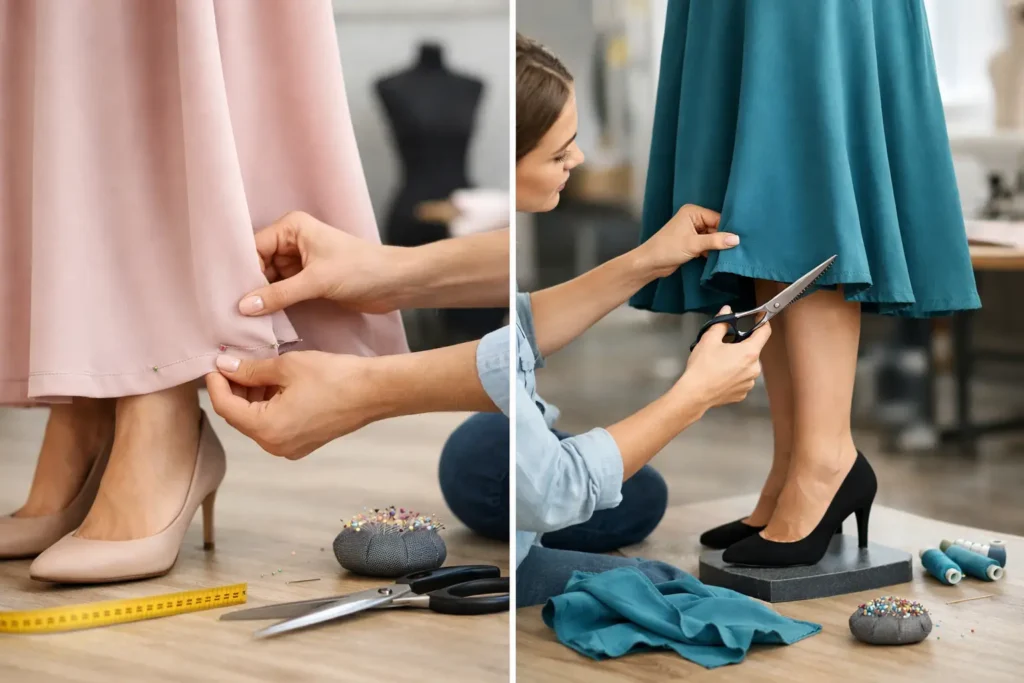
Shortening is the process of removing or repositioning length. A tailor marks where the dress should finish, takes up the excess fabric and then creates an appropriate hem. This may sound simple, but a quality result relies on choosing a finish that suits the garment rather than applying the same method to every dress.
For example, a cotton day dress can often be shortened with a conventional machine hem. A satin evening dress may need a fine, narrow hem that does not weigh down the fabric. A lined cocktail dress requires the outer layer and lining to be adjusted so they sit correctly together. In each case, the dress has been shortened, but the hemming technique is different.
When a dress only needs hemming
Sometimes there is no need to change the length at all. The existing hem may have come undone, been damaged by catching on a shoe, or started to fray after years of wear. In this situation, the length remains the same and the tailor repairs or replaces the hem.
This is common with lightweight fabrics, where a narrow rolled hem can loosen over time, and with long dresses that have been brushed against the ground. Re-hemming may also be needed when the original stitching has left visible damage or the edge has become uneven.
A professional repair aims to match the original look as closely as practical. The thread colour, stitch type and depth of the hem all matter. A visible machine stitch may suit a casual linen dress, while a formal skirt often benefits from discreet hand finishing.
When shortening is the better solution
Shortening is needed when the overall length is wrong for your height, footwear or occasion. A maxi dress may drag on the floor in flats but work perfectly with heels. A work dress may sit below the knee when you prefer a cleaner, more practical length. A bridesmaid dress might need to be raised just enough to allow comfortable movement throughout a long day.
The fitting should be done with the shoes you intend to wear. This is especially important for formalwear, where heel height can dramatically change the required length. If you have not chosen your event shoes yet, it is usually best to wait before finalising the hem.
A good tailor will also consider how you stand and walk. Some people naturally carry more weight through one hip or have a slightly uneven posture, meaning a straight measurement from the waist does not always create a level hem. The goal is for the dress to look balanced when you are wearing it, not simply to measure the same on a flat table.
The fabric and shape determine the method
The more delicate or structured the dress, the more consideration its hem needs. Fabric is not just a surface to cut. It affects how the dress hangs, moves and responds to stitching.
Fine, slippery and sheer fabrics
Chiffon, georgette, silk and similar lightweight fabrics can shift while being handled. Their hems are generally narrow so the edge remains soft and does not look bulky. Sheer dresses may have multiple layers, each requiring individual adjustment to keep the finished length even.
These fabrics can also show needle marks, pulling or uneven stitching more readily than heavier materials. Careful handling makes a noticeable difference to the final result.
Stretch fabrics
Jersey, knit and stretch dresses need a hem that can move with the garment. If the stitching does not have enough give, it may pop when you sit, walk or bend. The hem also needs to stay flat rather than rippling around the lower edge.
Structured dresses and lined garments
A tailored sheath dress, fitted cocktail dress or lined formal gown may have darts, seams, vents or shaping close to the hem. Shortening too far can alter the proportions or interfere with these details. The lining must be adjusted to allow the outer fabric to fall smoothly, without peeking below or pulling the dress out of shape.
In some cases, it is better to shorten from another point in the garment rather than simply cutting from the bottom. This is especially true where there is a decorative border, scalloped edge or placement print worth preserving.
Why the original hem matters
Some dresses have an original hem that is part of their design. Think of a denim-style dress with contrast topstitching, a knit dress with a particular finish, or a dress with a wide decorative border. Cutting it off and replacing it with a standard hem may technically shorten the garment, but it can change its character.
Where possible, a tailor may lift and reattach the original hem or use a method that recreates the look. Whether this is suitable depends on the amount of length being removed, the fabric thickness and the garment’s construction. Taking up two centimetres is very different from removing 15 centimetres.
This is also why it helps to bring the dress in before attempting a DIY trim. Once fabric has been cut away, certain options are no longer available. A small saving at home can become a more complicated repair if the edge ends up uneven, frayed or too short.
Common dress hemming mistakes to avoid
The most frequent mistake is pinning or measuring a dress without the right shoes. The second is assuming every part of a flared or circle skirt will behave like a straight skirt. Bias-cut fabric, in particular, can drop after hanging and may need time to settle before the final hem is finished.
Be cautious with dresses that have lace, beading, sequins or appliqué near the bottom. These details may need to be removed and reapplied, worked around individually, or retained by altering from a different area. The work is more involved because the finish needs to look considered from every angle, not merely shortened.
It is also worth thinking about where you will wear the dress. A floor-length gown for an indoor wedding can sit closer to the ground than a dress worn at an outdoor event, where uneven paths and grass make a little extra clearance more practical.
Getting the length right at your fitting
Before your appointment, wash or dry clean the dress only if it has not already been cleaned according to its care instructions. Natural fibres can shrink, and it is better to alter the dress after any expected change in size. Bring the shoes, shapewear and underwear you plan to wear, particularly for fitted or formal dresses.
Tell your tailor how you want to feel in the dress as well as where you want it to sit. Do you need to move quickly at work, dance at a wedding or wear it with both flats and heels? Those details help guide the best length and finish.
At AD Stitch, professional dress alterations begin with a careful fitting because a hem should support the way you wear the garment. From everyday dresses to special-occasion pieces, the aim is a clean finish, comfortable movement and a length that looks intentional.
The best hem is rarely the one that simply removes the most fabric. It is the one that respects the dress’s fabric, shape and purpose, so you can step out feeling comfortable, confident and properly put together.