


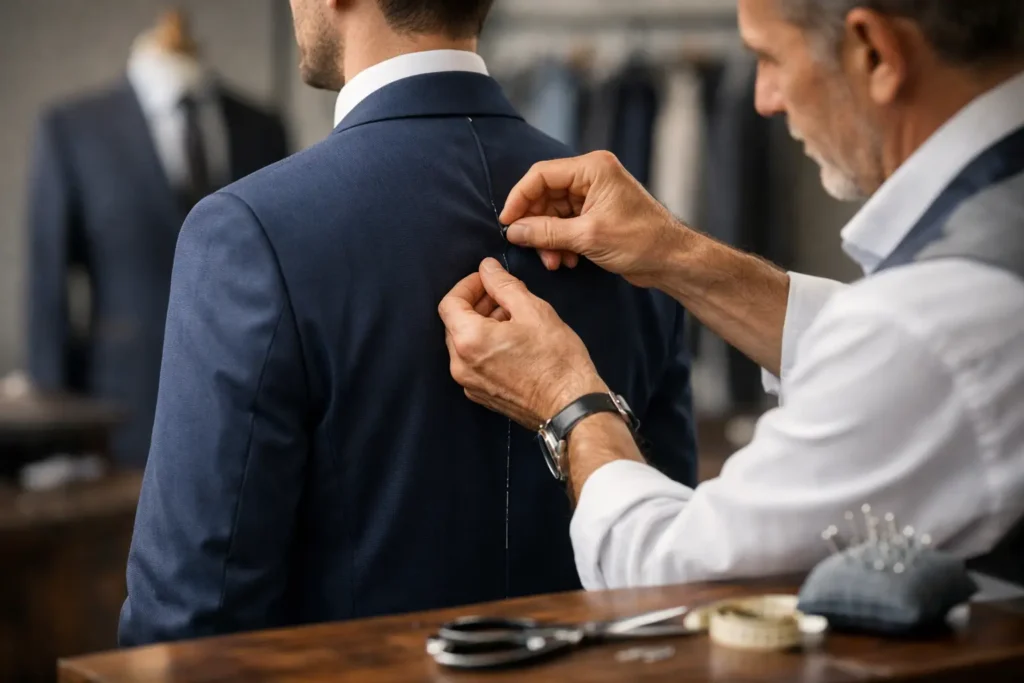
Can Suits Be Made Smaller? What Tailors Can Do
A suit that is too large rarely looks intentionally relaxed. The shoulders can droop, the jacket can billow at the waist, and the trousers may bunch at the seat or break untidily over the shoes. So, can suits be made smaller? In many cases, yes. A skilled tailor can make meaningful improvements to the jacket and trousers, turning an overlooked suit into one that feels sharper, more comfortable and more like it was chosen for you.
The key is knowing which areas can be altered cleanly and which parts are limited by the suit’s original construction. Good tailoring respects the garment’s balance. The goal is not simply to remove fabric, but to preserve the lines that make a suit look polished.
Can suits be made smaller without losing their shape?
Most suits can be reduced through the body, sleeves, trouser waist and leg. These are common alterations and, when done carefully, can make a substantial difference to how the suit sits. A jacket that is slightly loose through the chest and waist, for example, can often be taken in to create a more defined silhouette without changing its essential character.
The shoulders are the exception. Shoulder alterations are possible, but they are complex and usually more expensive because the tailor may need to dismantle and rebuild much of the jacket. The shoulder line affects the sleeve position, collar, chest and overall balance. If the shoulders are significantly too wide, it may not be worthwhile to alter the jacket, especially if the suit was inexpensive to begin with.
That does not mean a suit with broad shoulders is automatically beyond help. Sometimes the rest of the jacket can be refined enough that it looks and feels much better. An in-person fitting is the best way to judge what is practical and whether the result will justify the work.
The alterations that make the biggest difference
Taking in the jacket body
Taking in the side seams or centre back seam is one of the most effective ways to make a suit jacket smaller. This removes excess fabric through the waist and can improve the jacket’s shape from the front, side and back.
For a modern tailored look, the jacket should follow your body without pulling across the button or restricting movement. You should be able to sit, reach and breathe comfortably. An overly tight jacket does not look more tailored – it simply looks strained. A good tailor will leave enough ease for the suit to move naturally during a workday, wedding or formal event.
Adjusting jacket sleeves
Sleeves can usually be narrowed if they look too loose, and their length can often be shortened. Ideally, the jacket sleeve finishes near the wrist bone, allowing a small amount of shirt cuff to show.
The method depends on the cuff. Sleeves with non-functioning buttons are generally more straightforward to shorten. Functional buttonholes near the cuff can limit how much length can be removed from the bottom, although an experienced tailor may be able to shorten from the shoulder in selected cases. This is more involved work, so it is worth discussing the finish you want before any alterations begin.
Reducing the trouser waist and seat
Suit trousers are commonly taken in at the waist, including through the centre back seam. If the waistband gaps or the trousers need a belt to stay in place, a waist alteration can make them much more comfortable and neater under a jacket.
The seat can also be reduced when there is excess fabric beneath the back pockets or around the upper thigh. This work requires care. Removing too much can create pulling, while leaving too much can make even an otherwise well-fitted suit look untidy. The aim is a smooth line that allows you to sit and walk freely.
Tapering the trouser legs
A trouser taper removes excess width through the leg, usually from the thigh down to the hem. It can update the look of a suit with wide or dated trousers, particularly when the jacket still has good structure and quality fabric.
The right taper depends on the cloth, your build and the shoes you wear. A very narrow leg may suit some contemporary cuts, but a gentle taper is often more versatile for business wear. It gives a cleaner shape without dating the suit quickly or making it uncomfortable around the calf.
Shortening the trouser hem
Trouser length is one of the simplest alterations, yet it has a noticeable effect on the whole outfit. Too much fabric gathering at the ankle can make a well-made suit appear borrowed. A clean hem with a slight break, little break or no break can be chosen based on your preference and the style of shoe.
Bring the shoes you plan to wear with the suit to your fitting. A dress shoe, loafer and boot can each change where the trouser should finish.
What cannot always be made smaller
A suit can only be reduced as far as its fabric, seam allowance and construction allow. Tailors need enough spare cloth inside the seams to reshape the garment securely. In a well-made suit, there is often some allowance, but this varies between brands and garments.
Patterned fabrics need extra consideration. Stripes, checks and plaids must remain aligned across the altered seams. This is achievable in many cases, but it takes precision and may limit how much fabric can be removed without disturbing the pattern.
Lined jackets, double-breasted styles and suits with strong canvas construction also require more labour. They can still be worth altering, particularly if the cloth is high quality or the suit has sentimental value, but the quote should reflect the additional work involved.
If a jacket is more than one or two sizes too large, the proportions may be wrong in several places at once. The armholes may sit too low, the pockets may be too far apart and the lapels may look oversized for your frame. Altering every issue can become costly, with no guarantee that the suit will look as balanced as one that started closer to your size.
How to tell if your suit is a good candidate
Put the suit on with a dress shirt and the shoes you would normally wear. Stand naturally rather than pulling the garment into position. Then look for where the excess fabric actually sits.
A promising candidate often has shoulders that are close to correct, a collar that rests cleanly against the shirt, and a jacket length you are happy with. Excess room through the waist, sleeves and trousers is generally encouraging. These are the areas where expert clothing alterations can deliver the most visible change.
Be cautious if the shoulder pads extend well beyond your natural shoulder, the collar stands away from the neck, or the jacket hangs far below where you want it to finish. Those concerns may point to a suit that is simply too large or poorly proportioned for alteration.
The fabric condition matters too. Worn elbows, shiny seat areas, moth damage and thinning seams may affect whether it is sensible to invest in tailoring. A trusted local tailor will be upfront about the likely result rather than recommending work that does not represent good value.
Why a fitting matters more than a size label
Two suits marked the same size can fit very differently. One may be cut generously through the chest, while another may have narrow sleeves or a shorter jacket body. Your posture, shoulder slope and proportions also change how the garment hangs.
That is why a fitting should involve more than a quick measurement around the waist. A tailor assesses the garment while you stand, sit and move, then pins the areas that need attention. They can identify whether a jacket needs to be taken in evenly, shaped more through the back, or left with a little additional room for comfort.
For Melbourne professionals preparing for a new role, an important meeting or a special occasion, this attention can save a perfectly good suit from spending years at the back of the wardrobe. At AD Stitch, the focus is on precise alterations that suit the person wearing the garment, not a one-size-fits-all adjustment.
Choose the alteration based on the suit’s value
Before proceeding, weigh the alteration cost against the suit’s quality, condition and how often you will wear it. A quality wool suit with good construction is often an excellent candidate for tailoring. It can deliver years of wear once it fits properly. A lower-cost synthetic suit that needs shoulder reconstruction and extensive reshaping may be harder to justify.
There is also a sustainability benefit to refitting a suit you already own. A good alteration extends the useful life of quality clothing and reduces the need to replace garments simply because your size or preferred style has changed.
Bring the suit in clean, along with the shirt, belt and shoes you expect to wear. Be clear about where you will wear it and how you want it to feel. The best result is not the smallest possible suit. It is the suit that sits cleanly, moves comfortably and gives you the confidence to wear it again.