


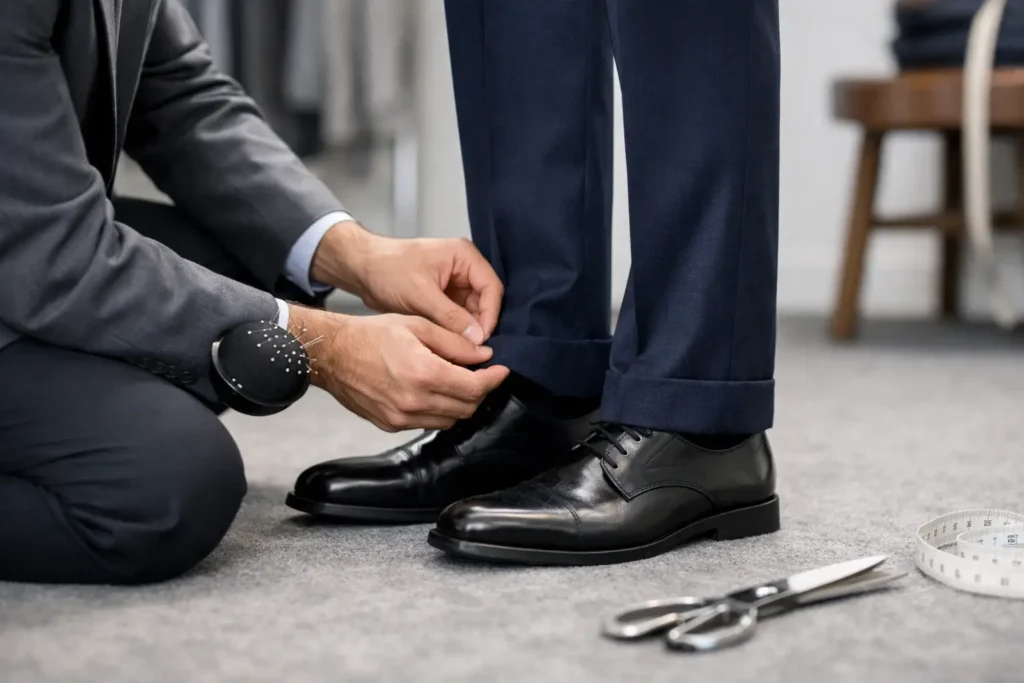
A Practical Guide to Pant Length Tailoring
You notice trouser length the moment it is wrong. Trousers that stack heavily at the ankle can make an otherwise sharp outfit look untidy, while hems that sit too high can feel awkward and unfinished. This guide to trouser length tailoring is designed to help you understand what good trouser length actually looks like, what affects it, and when a professional alteration will make the biggest difference.
Trouser length is not just about preference. It changes the line of the leg, the way fabric moves, and how polished the whole outfit feels. A small adjustment at the hem can make work trousers look cleaner, jeans sit better over sneakers, or suit pants fall properly over dress shoes. That is why experienced tailoring starts with how you wear the garment, not just where the hem lands on a ruler.
What trouser length should look like
A well-tailored trouser hem should look deliberate. It should meet the shoe in a way that suits the cut of the trouser, the fabric, and the occasion. There is no single perfect measurement for everyone because body proportions, footwear, and style all come into play.
In classic tailoring, trouser length is often described by the break. The break is the fold or crease that forms where the front of the trouser meets the shoe. A full break creates more fabric at the bottom and gives a traditional look. A half break is neater and more versatile for most people. No break gives a clean, modern finish, but it can be less forgiving if you regularly switch between shoes with different heights.
For everyday wear, most people suit a slight or medium break. It looks tidy without feeling too short, and it works well for office trousers, chinos, and many suit styles. If you prefer a sharper silhouette, especially with slimmer-cut trousers, a shorter hem with little break can look excellent. The trade-off is that it needs more precision and can expose socks or ankle when you sit or walk.
A guide to trouser length tailoring for different styles
Different trousers need different treatment. The right hem for a business suit is rarely the right hem for denim, and what works with boots may not work with loafers.
Suit pants
Suit trousers usually look best when they fall cleanly with a slight break or half break. Too much length can cause bunching, which interrupts the line of the suit and makes the fabric look heavier than it is. Too little length can make formalwear look underdone. Wool trousers in particular benefit from precise hemming because the fabric is designed to drape smoothly.
If you wear your suit mostly with one type of dress shoe, that shoe should be part of the fitting. Even a modest difference in heel height can change the finish.
Chinos and casual trousers
Chinos give you more flexibility. Some people prefer them to sit just on the shoe for a smart-casual look, while others like a slightly cropped finish. The slimmer the leg, the more obvious excess length becomes. If the hem pools at the ankle, the trouser can look too long even if the actual measurement seems minor.
Casual trousers also need to reflect how you move through the day. If you commute, walk often, or wear them across different settings, a practical hem is usually better than an aggressively short one.
Jeans
Jeans are often left too long because people assume the stacking is part of the style. Sometimes it is, but not always. A dark pair of jeans with a blazer or collared shirt usually looks better with a cleaner hem. For slim and straight fits, too much fabric at the ankle can make the leg appear shorter and heavier.
Denim hemming also needs care because the finish matters. Original hems, topstitching, and weight all affect the final result. Shortening jeans is simple in theory, but getting them to still look like they were made that way is where tailoring skill shows.
Wide-leg and fashion-forward cuts
Wider trousers need balance. They often sit best a little longer, especially if they are designed to skim over the shoe. Shortening them too much can change the whole proportion of the garment. On the other hand, if a wide leg drags on the ground, the hem will wear quickly and the trouser loses shape.
This is one area where personal style matters more than a fixed rule. The hem still needs to look intentional.
What affects the right trouser length
The most common mistake is judging trouser length in isolation. In practice, the hem is affected by several things at once.
Shoe choice is the biggest factor. Dress shoes, ankle boots, sneakers, and heels all create a different landing point for the trouser. If you rotate between very different shoes, you may need to choose the pair you wear most often and tailor around that.
Fabric weight also changes the result. Lighter fabrics drape differently and can sit longer without looking bulky. Heavier fabrics can bunch more quickly, so they often need a cleaner hem.
The cut of the leg matters just as much. Slim trousers need a more exact length because the narrower opening leaves less room for movement over the shoe. Wider legs can tolerate a little more length, but too much will still look sloppy.
Then there is height and body proportion. A short hem can visually lengthen the leg on one person and look abrupt on another. Good tailoring takes the whole silhouette into account, not just the lower leg.
How a tailor decides where the hem should sit
A proper fitting is more than pinning the trouser and asking, “Is this okay?” A tailor looks at your stance, the way the fabric falls, whether one leg sits differently from the other, and how the trouser behaves when you walk.
This matters because very few people stand perfectly evenly. One hip may sit slightly higher, one leg may appear longer, or the seat may influence how the hem hangs. These details are easy to miss at home and they affect the finish more than most people realise.
A skilled tailor will also ask how you plan to wear the garment. Work trousers worn with leather shoes need a different outcome from weekend chinos worn with low-profile sneakers. The best results come from tailoring the garment to your actual use, not an abstract ideal.
Common pant length mistakes
The biggest one is chasing trends without thinking about practicality. Very short hems can look sharp in photos, but if you want all-day comfort and broader shoe options, they may not be the best choice.
Another common issue is hemming one pair based on another pair that does not fit properly. If the rise, seat, or leg shape is different, copying the measurement will not necessarily copy the look.
There is also the assumption that longer means safer. In reality, extra length often makes trousers look less expensive and less cared for. A clean finish usually looks more polished than a hem that collapses onto the shoe.
Finally, many people forget to bring the right shoes to a fitting. That can turn a good alteration into a compromise.
When hemming is simple and when it is not
Basic trouser shortening is straightforward when the hem can be adjusted without affecting the rest of the garment. But some trousers have cuffed hems, detailed stitching, lining, zips, or a taper that changes the shape lower down the leg. In those cases, shortening the hem may require more technical work to preserve the intended proportion.
That is especially true with suit trousers. If too much length is removed from the bottom, the leg opening can become wider in relation to the shoe, which changes the overall look. Sometimes the trouser needs more than a quick hem to keep the shape balanced.
This is where professional advice saves frustration. What seems like a small adjustment can affect drape, symmetry, and comfort.
Getting the best result from your fitting
Wear or bring the shoes you are most likely to pair with the trousers. If the trousers are for work or a special event, wear the kind of shirt or belt you would normally choose as well. These details influence how the trousers sit on the waist and therefore where the hem falls.
It also helps to be clear about the look you want. If you like a modern finish with little break, say so. If you prefer a classic trouser that sits neatly over the shoe, that is useful too. A good tailor will guide you, but your preference still matters.
At AD Stitch, this kind of conversation is part of what makes alterations feel personal rather than rushed. Precision matters, but so does understanding how the garment fits into your life.
The right trouser length should not draw attention to itself. It should simply make the whole outfit sit better, feel more comfortable, and look more considered every time you put it on. If your trousers never seem quite right, the hem may be the small fix that changes everything.