


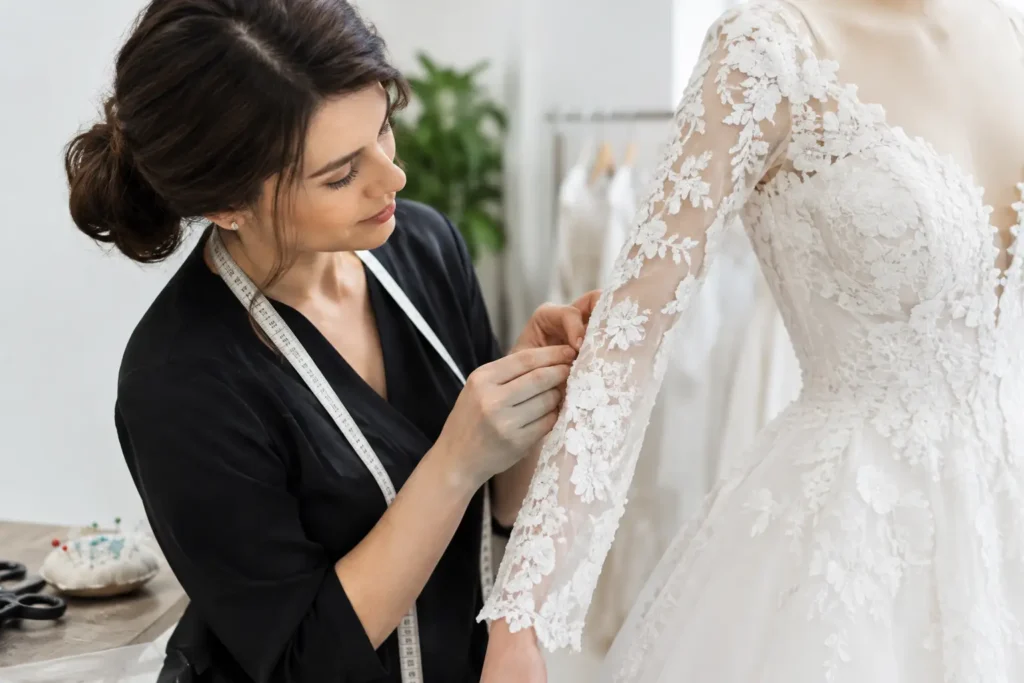
Can Wedding Dress Sleeves Be Altered? A Tailor’s View
A sleeve that pinches when you raise a glass, slips off the shoulder during photos or feels heavier than you expected can change how you feel in your wedding dress. So, can wedding dress sleeves be altered? In many cases, yes. A skilled bridal tailor can adjust sleeve length, width, position and shape, and may be able to remove or add sleeves depending on the dress construction.
The best result comes from looking at the dress as a whole. Sleeves affect the fit of the bodice, armhole and neckline, so this is not usually a simple cut-and-sew job. Careful assessment, accurate fitting and enough lead time make all the difference.
Can Wedding Dress Sleeves Be Altered Without Affecting the Fit?
Usually, but the level of work depends on the sleeve style and how the bodice is made. Wedding dresses often have structured linings, boning, delicate lace, beading or multiple layers of tulle. The sleeve joins the dress at the armhole, an area that is closely connected to the bust and shoulder fit.
If a sleeve is too loose, it may be possible to take it in along an existing seam. If it is too long, a tailor may shorten it at the cuff or, where appropriate, lift it from the shoulder. A sleeve that has fallen too far off the shoulder can sometimes be repositioned, although the neckline and bodice support need to be checked first.
The key question is not only whether the sleeve can be changed, but whether the dress will still sit naturally when you move. You should be able to hug guests, sit down and lift your arms comfortably without the bodice pulling upwards or the sleeve cutting into your skin.
Sleeve Alterations That Are Commonly Possible
Many brides are surprised by how much can be refined when the work is planned properly. The most common sleeve alterations include shortening long sleeves, narrowing sleeves through the arm, adjusting cuffs, taking in loose cap sleeves and refining straps that function like narrow sleeves.
Shortening sleeves
Long sleeves can often be shortened, particularly when they have a plain cuff, a simple hem or a straightforward lace edge. A tailored cuff can be moved higher, while a sheer sleeve may be carefully trimmed and re-finished.
A decorative edge adds complexity. If lace appliqué, beadwork or scalloping sits at the wrist, the tailor may need to remove and reapply details so the new edge looks intentional. This takes more time, but it helps avoid the obvious look of a shortened sleeve.
Taking in loose sleeves
Sleeves that look baggy in photos or bunch around the upper arm can often be narrowed. This is common with lace, crepe and chiffon sleeves. The amount that can be removed depends on how close the sleeve already sits to the arm and whether there is enough room for movement.
A sleeve should not be tightened simply to look slimmer while standing still. Bridal fittings should include bending your elbow, reaching forward and holding your arms as you would during the ceremony. A beautiful fitted sleeve that restricts you for ten hours is not a successful alteration.
Adjusting off-the-shoulder and detachable sleeves
Off-the-shoulder sleeves need particular care because they are designed to sit below the shoulder while still allowing some movement. If they are too loose, they can slide down. If they are too tight, they can pull the neckline or make raising your arms difficult.
Detachable sleeves are often more flexible to alter because they are separate from the bodice. Their attachment points can be moved, elastic can be adjusted and the sleeve shape may be refined independently. Still, bring the complete dress to every fitting so the sleeve placement is checked with the bodice on.
Can Sleeves Be Removed From a Wedding Dress?
Sleeves can often be removed, but this is one of the alterations where construction matters most. Removing a simple tulle, chiffon or lace sleeve from a clean armhole may be relatively straightforward. The armhole is then re-finished so it looks like the dress was designed to be sleeveless.
The work becomes more involved when sleeves support the dress or conceal structural elements. A sleeve may help stabilise a low back, balance a deep neckline or cover the join between the bodice and lining. Dresses with heavy beading, lace that extends across the shoulder, or boned corset bodices need a careful inspection before any promise can be made.
Sometimes a better option is to convert the sleeve rather than remove it entirely. Long sleeves may become cap sleeves, flutter sleeves or delicate shoulder straps. This can preserve the original design while giving you a lighter, more comfortable feel.
Adding Sleeves: What to Expect
Adding sleeves is possible, although it is generally more complex than taking them away. The new fabric needs to complement the dress in colour, texture, weight and movement. Ivory is not one universal shade, and a close match can look noticeably different under daylight or flash photography.
Lace sleeves can be created using matching lace if it is available, or a carefully selected complementary lace. Sheer tulle sleeves are another popular option, especially for brides who want a little more coverage without making the dress feel enclosed. A skilled tailor can also use fabric from a train bustle, overskirt or hem allowance where suitable, though this is not always possible.
The neckline, shoulder line and armhole must be designed to carry the added sleeve. A strapless dress with a structured bodice may need internal reinforcement before sleeves are attached. The goal is not simply to sew fabric onto the dress, but to make the change look balanced and feel secure.
Fabric, Lace and Beading Change the Job
Plain crepe, satin and mikado can be altered beautifully, but they show needle marks, seam lines and pulling more readily than some textured fabrics. Sheer tulle is delicate and can be difficult to unpick without damage. Stretch lace has movement that must be preserved, while non-stretch lace may need extra ease through the elbow and upper arm.
Beaded sleeves demand patience. Beads and sequins around the alteration area are usually removed before stitching and replaced by hand afterwards. This protects sewing equipment and produces a cleaner finish, but it adds labour. A good tailor will explain these details clearly rather than treating a heavily embellished sleeve like ordinary fabric.
If your dress has sentimental value or a rare fabric, bring it in early. Early assessment gives you more choices and avoids rushed decisions close to the wedding.
When Should You Book a Sleeve Alteration?
Book your first bridal fitting as soon as your dress arrives, particularly if you are considering removing, adding or redesigning sleeves. Significant sleeve changes may require several fittings because each adjustment affects the way the bodice sits.
Ideally, alterations begin a few months before the wedding, with final refinements closer to the date once your shoes and undergarments are confirmed. Avoid leaving sleeve work until the last week. Even a seemingly small adjustment can require hand-finishing, lace matching or another fitting to get the movement right.
Bring your wedding shoes, the bra or shapewear you plan to wear, and any veil, jewellery or gloves that may interact with the sleeves. If you have saved inspiration images, they can help communicate what you like, but the final recommendation should be based on your own dress and proportions.
Questions Worth Asking at Your Fitting
A professional consultation should leave you clear about what is achievable, how the sleeve will feel and whether the change affects other areas of the gown. Ask whether the alteration will alter the armhole or neckline, whether the original details can be retained, and how much movement you can expect once the work is complete.
It is also sensible to ask whether the alteration is reversible. Narrowing or shortening is sometimes easier to reverse when fabric has been retained, while removing sleeves or cutting into beaded lace is usually more permanent. There is no right answer for every bride, only the option that suits your comfort, style and dress construction.
At AD Stitch, bridal alterations are approached with the same care as the day itself: precise fitting, thoughtful workmanship and clear advice before work begins. The aim is for you to notice the dress, not the alteration, when you look back at your photos.
Your wedding dress should let you move, celebrate and feel like yourself. If the sleeves are stopping that from happening, arrange a fitting early and let an experienced tailor assess the possibilities in person.
FAQ Content
Q1. Can wedding dress sleeves be altered?
Yes. Wedding dress sleeves can often be shortened, lengthened, narrowed, widened or repositioned depending on the gown’s construction, fabric and design.
Q2. Can long wedding dress sleeves be shortened?
Yes. Long sleeves can usually be shortened at the cuff or adjusted from the shoulder. Lace, beading and decorative edges may require additional hand-finishing.
Q3. Can sleeves be removed from a wedding dress?
Yes. Wedding dress sleeves can often be removed and the armholes professionally finished to create a sleeveless design. The feasibility depends on the gown’s structure and support.
Q4. Can sleeves be added to a strapless wedding dress?
Yes. Sleeves can be added to many strapless wedding dresses using matching lace, chiffon, tulle or other suitable fabrics. Additional internal support may be needed.
Q5. Can tight wedding dress sleeves be made looser?
Yes. A tailor may be able to release existing seam allowances or add fabric panels to improve sleeve comfort. The available options depend on the fabric and construction.
Q6. Can lace wedding dress sleeves be altered?
Yes. Lace sleeves can be shortened, narrowed or redesigned. Delicate lace patterns and embellishments require careful handling to preserve the original appearance.
Q7. Can off-the-shoulder wedding dress sleeves be adjusted?
Yes. Off-the-shoulder sleeves can sometimes be repositioned, tightened or loosened to improve comfort and prevent slipping while maintaining the intended neckline.
Q8. How long does it take to alter wedding dress sleeves?
The timeframe depends on the complexity of the alteration. Simple shortening may require less work, while adding sleeves, removing embellishments or redesigning the armhole may require multiple fittings.
Q9. When should I book wedding dress sleeve alterations?
Book your first bridal fitting as soon as your wedding dress arrives. Ideally, begin alterations a few months before the wedding to allow enough time for adjustments and final fittings.
Q10. Where can I get wedding dress sleeve alterations in Melbourne?
AD Stitch provides professional bridal alteration services in Heidelberg, Melbourne. Visit the store for a personalised fitting and assessment of your wedding dress sleeve alteration requirements.