


Bridal Fitting Trends Melbourne Brides Value
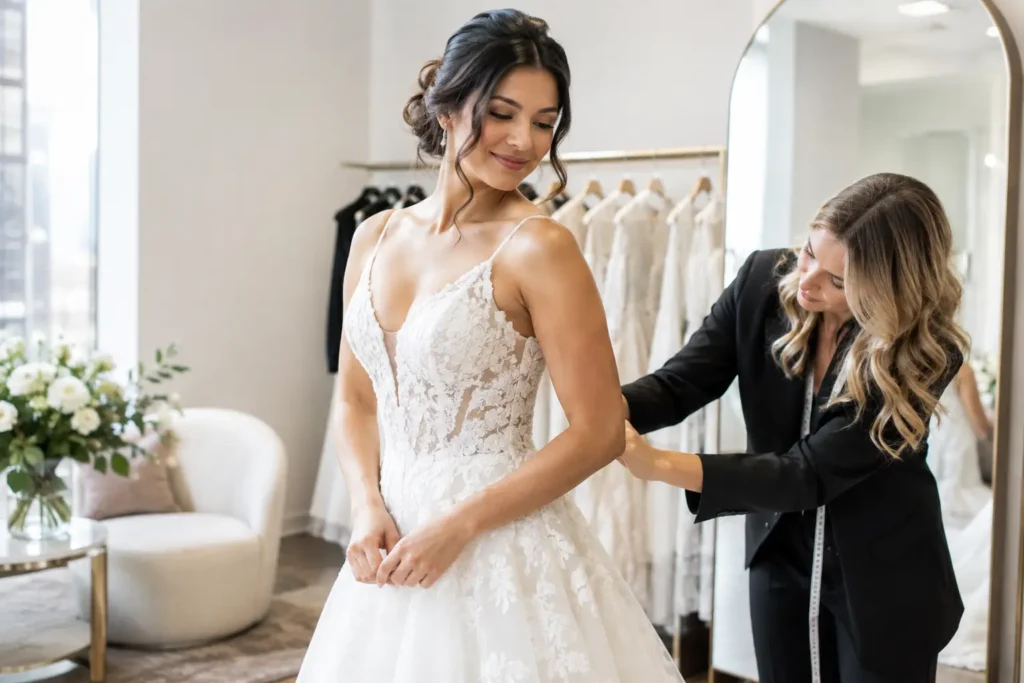
A bridal gown can look beautiful on the hanger and still feel wrong once you start moving, sitting, hugging guests or taking to the dance floor. That is why bridal fitting trends Melbourne brides are embracing are less about chasing a single silhouette and more about creating a gown that works for the real pace of the day. The best alterations protect the design you fell in love with while making sure you feel comfortable, supported and completely yourself.
At AD Stitch, we see brides arrive with gowns from boutiques, online retailers, family collections and designers. Each one needs a different approach. What matters is precise work, honest advice and enough time to refine the fit properly.
Bridal fitting trends Melbourne brides are choosing
A fit that looks natural, not overly tightened
The most noticeable trend is also the most timeless: a clean, balanced fit. Brides are moving away from the idea that every gown must be pulled as tightly as possible. A bodice should sit securely, but it should also allow you to breathe, eat and lift your arms without pinching or gaping.
For fitted gowns, this often means shaping through the side seams, bust and waist with small, careful adjustments rather than taking in one area dramatically. The result is a smoother line through the torso and less pulling across delicate fabrics such as satin, crepe and lace. If a gown has boning, cups or internal corsetry, alterations need to respect that structure rather than simply reduce the outer layer.
A good fitting also considers posture. Standing tall for a mirror is very different from the way you will stand during a ceremony or while talking to family. Your tailor should assess the gown while you move naturally, not only while you hold still.
Custom bustle work for the reception
A long train makes a wonderful entrance, but it becomes impractical after the formal photographs. Bustles remain one of the most requested bridal alterations, yet the preferred finish has become more discreet and gown-specific.
A bustle gathers or lifts the train so you can walk and dance with greater ease. The right style depends on the fabric, train length and gown shape. Some dresses suit an under-bustle that tucks neatly beneath the skirt, while others need an over-bustle that creates soft draping at the back. Structured gowns may require several carefully positioned points to keep the weight even.
This is not an area to leave until the last minute. A poorly planned bustle can distort the back of the gown, pull at a seam or become difficult for your bridal party to fasten. Bring a trusted person to your final fitting so they can learn the steps and take a few clear photos on their mobile for reference later.
Hemlines designed for your actual wedding shoes
Wedding shoes are no longer treated as a minor detail. Brides are often changing from heels into flats, sandals or sneakers later in the evening, and the hem needs a considered plan.
The formal hem should be set with the shoes you expect to wear for the ceremony. Ideally, bring the exact pair, already worn in if possible. A hem that is too long can catch underfoot, become marked on the ground and make walking difficult. Too short, and the gown can lose its intended proportion.
If you are changing into significantly flatter shoes for the reception, discuss it during the fitting. Depending on the dress, a bustle may provide enough clearance. In other cases, a removable overskirt, reception dress or carefully selected second shoe with a similar heel height may be the more practical choice. The right answer depends on the gown and how much movement your celebration involves.
Personalised support and modesty adjustments
Brides increasingly want their gown to reflect their own comfort, culture and personal style. That may mean adding straps, raising a neckline, fitting sleeves, creating a more secure back or adjusting sheer panels for additional coverage.
These changes can be beautifully integrated when they are planned early and made with compatible fabric, lace or mesh. A skilled tailor will explain what is possible without compromising the gown’s balance. For example, adding straps can improve confidence and support, but their placement must work with the bodice construction. Altering a neckline may affect the way the bust sits, so it often needs to be considered alongside cup placement and internal support.
This is where personalised tailoring is especially valuable. You should never feel that comfort and modesty are afterthoughts on a wedding day.
What is changing in bridal alterations
Many contemporary gowns feature minimalist fabrics and clean lines. They can appear simple, but they leave little room for error. On a heavily beaded gown, small changes may disappear within texture. On smooth crepe or satin, even a slight pucker, uneven hem or poorly positioned seam can be obvious in photographs.
There is also greater demand for adaptable pieces. Detachable sleeves, overskirts, bows and capes allow a bride to change her look between the ceremony and reception without buying a second dress. These additions need secure but unobtrusive fastening methods, with careful attention to weight and movement. A detachable piece should look intentional from every angle, not like an accessory added in a hurry.
Vintage and sentimental gowns are another meaningful trend. Updating a mother’s or grandmother’s dress can be deeply personal, but older fabrics may be fragile, discoloured or difficult to match. Sometimes a full redesign is appropriate; other times, preserving a lace detail, button line or section of fabric within a new garment is the safer option. An experienced tailor will be transparent about the condition of the material before recommending major changes.
A fitting timeline that protects your options
The finest alterations need breathing room. As a general guide, arrange your first fitting around eight to twelve weeks before the wedding, particularly if the gown needs substantial reshaping, sleeve work, lace adjustments or a bustle. More complex garments and busy spring or summer wedding periods may require even earlier planning.
Most brides need two or three fittings. The first establishes the main changes. The next checks the shape after alterations have begun, and the final fitting confirms the hem, fastening, bustle and overall comfort. If your weight is likely to change, tell your tailor early. There is no judgement in that conversation, but it does affect the timing and order of alterations.
Bring your wedding shoes, the undergarments or shapewear you plan to wear, and any accessories that affect the neckline or shoulder area. Wear the same bra solution at every fitting where possible. Even a small change in bra shape can alter how the bodice sits.
Do not assume a gown bought online will only need a quick hem. Sizing can vary considerably, and a dress may need adjustment through the shoulders, bust, waist, hips and length to look like it was made for you. Equally, do not over-alter a gown simply because you feel pressure to change every detail. The strongest results often come from focused adjustments that improve fit while preserving the garment’s original design.
Questions worth asking at your first fitting
A productive bridal fitting should leave you clear about the work ahead. Ask whether the gown can be adjusted without affecting lace placement, beading or boning, and whether the hem will be finished in a way that suits the fabric. If you need a bustle, ask how many fastening points it requires and who should be shown how to use them.
It is also sensible to ask about timing, especially if you are travelling before the wedding or collecting the gown close to the date. Your dress should be transported and stored carefully after the final fitting, ideally in a breathable garment bag and away from food, pets and direct sunlight.
The aim is not perfection for a few minutes in front of a mirror. It is confidence from the walk down the aisle to the last dance. Give your gown the time and expert attention it deserves, then let a precise fit do its quiet work while you enjoy the day.