


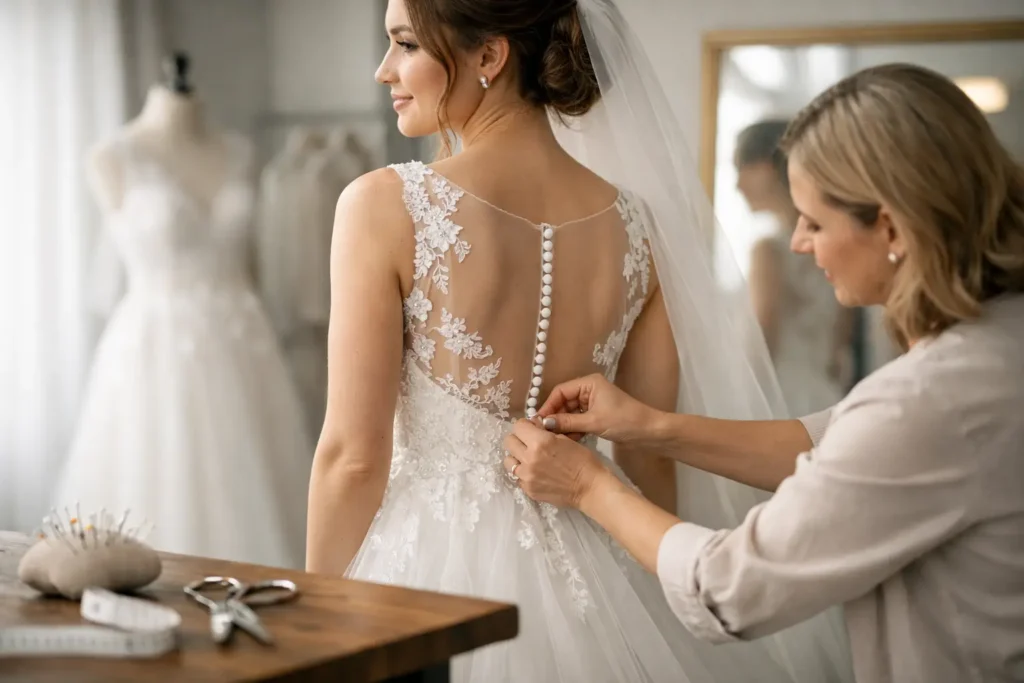
How Long Do Bridal Alterations Take?
The dress arrives, the wedding date is locked in, and suddenly one question becomes very real – how long do bridal alterations take? Most brides are surprised to learn that alterations are not a one-appointment job. A wedding gown usually needs several fittings, careful hand-finishing, and enough time for the shape of the dress to be refined without rushing the result.
For most bridal gowns, alterations take around 6 to 12 weeks from the first fitting to final collection. That said, the right timeline depends on the construction of the dress, the changes needed, the availability of your tailor, and how close you are to the wedding. A simple hem and strap adjustment will move faster than reshaping a bodice, adding bust support, or reworking lace by hand.
How long do bridal alterations take for most dresses?
A practical rule is to allow at least two to three months. That gives enough space for an initial fitting, one or two follow-up fittings, and final finishing. If your gown is heavily detailed or needs structural work, allowing closer to three months is the safer option.
Many bridal alterations are done in stages because one change affects another. If the bodice is taken in, the strap position may need adjusting. If the hem changes, the balance of the skirt can shift. If the gown has lace, beading or layers of tulle, each change must be handled carefully so the dress still looks original when the work is complete.
This is why experienced tailors avoid promising unrealistically fast turnarounds before seeing the gown in person. Bridalwear is more technical than standard dress alterations, and the finish matters just as much as the fit.
The usual bridal alteration timeline
In most cases, the first fitting happens around 8 to 12 weeks before the wedding. This is when the tailor checks overall fit through the bust, waist, hips and length, and maps out the required changes. If your shoes, undergarments and accessories are already chosen, that fitting will be far more accurate.
The second fitting is often scheduled two to four weeks later. By then, the main shaping work is done, and the dress is tried on again to refine the fit. This appointment is where smaller adjustments are often picked up, such as fine-tuning the bust, checking movement through the hips, or confirming the hem sits correctly when you walk.
A final fitting is usually booked one to two weeks before the wedding. At this stage, the gown should fit cleanly and comfortably, with only final checks or finishing touches left. Bustles, hooks, buttons and hand-sewn details are often confirmed here.
Some gowns need only two fittings. Others need three or even four. The more detailed the dress, the more likely it is that extra time will be needed.
What affects how long bridal alterations take?
The biggest factor is the complexity of the gown. A plain crepe or satin dress is usually more straightforward than a corseted gown with boning, cups, lace appliqué and multiple skirt layers. Delicate fabrics can also slow things down because every stitch needs to be precise and clean.
The type of alteration matters just as much. Shortening straps, hemming a simple skirt or taking in side seams is generally more manageable than reshaping the neckline or rebuilding support through the bodice. Adding sleeves, adjusting a low back, or altering intricate lace placement can take considerably longer because those changes affect both structure and appearance.
Your own timing also plays a role. If the dress arrives late, or if your size changes close to the wedding, the schedule becomes tighter. Most tailors prefer to begin bridal alterations when your measurements are reasonably stable. Starting too early can create extra work if the dress needs to be altered again later.
Workload matters as well. Peak wedding season can fill a tailor’s booking calendar quickly, especially for trusted local businesses with a strong bridal reputation. Booking early gives you better appointment flexibility and reduces the pressure of trying to fit complex work into a narrow window.
When should you book your first bridal fitting?
A good target is to book your first fitting as soon as your gown arrives, even if the appointment itself is scheduled for a little later. This is especially important if your wedding is in a busy season or your dress has a detailed design.
Most brides should plan their first proper fitting around two to three months before the wedding. If the dress needs major changes, booking earlier is sensible. If the gown needs only minor refining, a shorter timeline may still work, but it is always better to have room than to rely on a rush job.
If you are ordering your dress from interstate or overseas, build in extra time for delivery delays. It is not unusual for bridal timelines to shift, and having a buffer can save a lot of stress.
Can bridal alterations be done quickly?
Sometimes, yes. If the gown needs only light adjustments and the tailor has availability, a quicker turnaround may be possible. But rush bridal alterations come with limits.
The first limit is technical. Some jobs simply cannot be sped up without affecting finish. Hand-sewn lace, beading, structured bodices and multi-layer hems take the time they take. The second limit is scheduling. A good tailor may be able to help at short notice, but bridal appointments are often planned carefully because each dress needs focused attention.
Rush work can also cost more. That does not mean it is poor value – it reflects the need to prioritise your gown in a busy workroom. If you are close to your date, the best approach is to contact the tailor straight away, explain your timeline clearly, and bring the dress in for assessment as soon as possible.
How many fittings should you expect?
Most brides need between two and three fittings. Two can be enough for a simpler gown with minor adjustments. Three is very common for dresses that need shaping, hemming and final detail work.
More fittings may be needed if the gown is heavily embellished, if your body measurements are changing, or if you want design modifications rather than standard fit corrections. A bustle fitting alone can require careful checking, particularly if the train is long or the skirt is full.
It is worth remembering that more fittings do not mean something has gone wrong. Often, they mean the tailor is taking the right amount of care.
How to help your alterations stay on schedule
Bring your wedding shoes to every fitting, or at least the pair with the same heel height. Dress length can change significantly with even a small heel difference. Your undergarments matter too, especially with fitted gowns, low backs, strapless styles or dresses that rely on internal support.
Try to keep your body size stable once alterations begin. Small natural fluctuations are normal, but major weight changes can affect the fit and may require extra appointments. If you expect changes due to health, training or pregnancy, mention this early so the alteration plan can be handled properly.
Arrive on time and be clear about any comfort concerns. If the bodice feels too firm, if the straps slip, or if you cannot sit or walk comfortably, say so during the fitting. A bridal gown needs to look beautiful, but it also needs to work for a full day of movement, photos, dancing and weather changes.
A realistic expectation makes all the difference
Bridal alterations are part fitting, part craftsmanship, and part timing. The reason the process takes weeks rather than days is simple – a wedding gown is not being adjusted like an everyday dress. It is being shaped to your body, your shoes, your posture and the way you want to feel on the day.
For Melbourne brides, working with an experienced alteration specialist can make the whole process calmer and more predictable. A skilled tailor will tell you what is achievable, what needs more time, and where small changes can make the biggest difference to comfort and finish. At AD Stitch, that kind of honest guidance is part of the service.
If you are wondering how long do bridal alterations take for your specific gown, the most useful answer comes after an in-person fitting. Every dress tells its own story once it is on the body, and giving that process enough time is one of the simplest ways to feel confident when your wedding day arrives.