


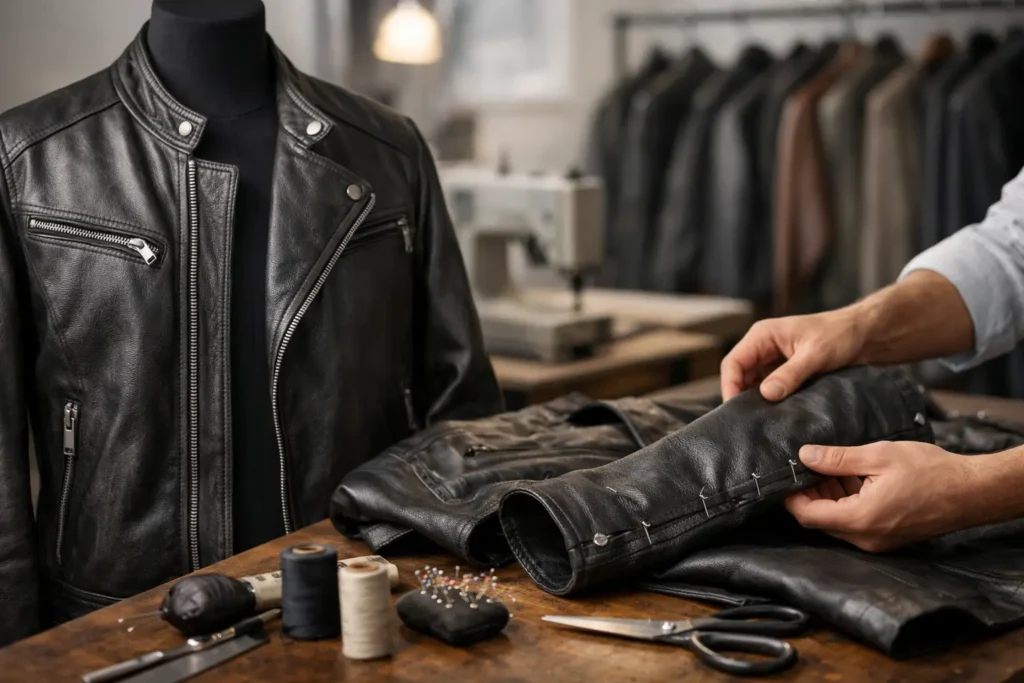
Leather Jacket Alteration: What’s Possible?
A leather jacket can look almost right for years – the shoulders feel a touch wide, the sleeves sit too long, or the body never quite falls the way it should. That is usually the moment people ask about leather jacket alteration. Unlike a cotton shirt or a pair of chinos, leather has less forgiveness. Once a needle goes through it, the hole is there for good, so every change needs to be carefully planned and precisely executed.
That does not mean alteration is off the table. Far from it. A well-made leather jacket is often worth adjusting, especially if the leather quality is strong, the style suits you, or the piece has sentimental value. The key is knowing what can be done well, what carries more risk, and why experience matters so much with this type of garment.
When leather jacket alteration makes sense
A good leather jacket should feel secure through the shoulders, comfortable through the chest, and clean through the sleeve and body length. If the fit is close but not quite there, alteration can make the jacket far more wearable.
Sleeves that cover too much of the hand are one of the most common issues. A jacket that balloons through the waist can also lose its shape, even if the leather itself is beautiful. Sometimes the problem is practical rather than visual – a lining pulls, the zip waves, or the cuffs no longer sit properly. In these cases, an alteration or repair can extend the life of the garment and bring it back into regular use.
It is less sensible when the jacket is wrong in several major areas at once. If the shoulders are too broad, the armholes are cut poorly, the chest is tight, and the length is off, the work quickly becomes extensive. Leather is not impossible to reshape, but large structural changes are often costly and may affect the original balance of the jacket.
What can usually be altered on a leather jacket
Some jobs are relatively straightforward in skilled hands. Others are possible, but depend heavily on the jacket’s construction.
Sleeve length adjustments
Shortening sleeves is one of the more common leather jacket alterations. This can sometimes be done from the cuff, but not always. If there are zips, press studs, shaped cuffs or detailed topstitching, the sleeve may need to be adjusted from the shoulder instead. That is more technical and usually more time-consuming, but it can preserve the original cuff detail.
The right method depends on how the sleeve is built and where the design features sit. This is why a quick glance at the jacket is never enough. A proper assessment matters.
Taking in the body
If the jacket feels boxy or loose through the waist, the body can often be tapered for a cleaner line. This kind of adjustment can make a big difference to overall shape without changing the character of the garment.
That said, leather behaves differently from woven fabric. Every seam has thickness, and every panel affects the way the jacket hangs. Taking in too much can create drag lines or distort pocket placement. Good tailoring aims for balance, not simply a tighter fit.
Lining repairs or replacement
Sometimes the leather outer is still in excellent condition, while the lining has worn out or torn. Replacing or repairing the lining can dramatically improve comfort and wearability. It can also be the right opportunity to fix hidden issues inside the jacket, such as worn seam allowances or strain points.
Zip and hardware replacement
A broken front zip can make an otherwise excellent jacket unwearable. Replacing the zip is often worthwhile, particularly on a favourite jacket with quality leather. Press studs, hooks and some other hardware can also be repaired or replaced, depending on the original design and available components.
What is harder than it looks
The biggest misunderstanding around leather jacket alteration is that every problem can be fixed the same way it would be fixed in fabric tailoring. Leather is far less forgiving.
Shoulder alterations
Shoulder work is possible, but it is among the most complex jobs on any jacket, and more so in leather. The sleeve head, armhole shape, lining, padding and outer panels all interact. If the shoulder fit is only slightly off, it may be manageable. If it is significantly too large or poorly cut, the work may not be worth the cost or risk.
Letting a jacket out
Taking a jacket in is often easier than making it larger. Letting leather out depends on whether there is enough seam allowance inside and whether the old stitch marks will show. In many cases, previous seam lines remain visible. That can limit how clean the final result looks.
Major length changes
Shortening the body of a leather jacket can be done, but hems often include waistbands, ribbing, zip details, pockets or carefully placed proportions. Removing length without affecting the style takes planning. On some jackets it works well. On others, the alteration can throw the whole design off.
Why craftsmanship matters more with leather
Leather remembers. Needle holes remain. Pressure marks can show. Grain variation, panel thickness and age all affect how the garment responds to handling. That is why leather alterations require more than a standard approach.
An experienced tailor will look beyond measurements. They will assess seam placement, panel shape, lining construction, topstitching, hardware, leather condition and how the jacket sits on the body. The goal is not just to make it smaller or shorter. The goal is to preserve the look of the jacket while improving the fit.
This is where specialist handling makes a real difference. A rushed job on leather is hard to hide. A careful one should feel considered, balanced and true to the original garment.
Leather jacket alteration and cost
People are sometimes surprised that leather alterations cost more than standard clothing adjustments. That is normal. The labour is more specialised, the process is slower, and mistakes are harder to reverse.
Cost usually depends on the type of alteration, the jacket’s design, the thickness of the leather and the amount of reconstruction involved. A plain sleeve adjustment is very different from reworking a zipped cuff. A lining repair is different again from reshaping the shoulders.
The better question is not whether it is cheap, but whether the result is worth it. If the jacket is well made, worn often, or difficult to replace, alteration can be a smart investment. If it is a low-quality jacket with multiple fit issues, replacement may be the better option.
How to prepare for a fitting
If you are bringing in a leather jacket for assessment, wear the type of clothing you would normally wear underneath it. A thin shirt and a bulky knit will change the fit quite a bit, especially through the sleeve and chest.
It also helps to explain what bothers you most. Some clients say the jacket feels too big, but what they really mean is the sleeves are long. Others think they need the shoulders adjusted when the real issue is excess width through the body. Clear communication helps identify the alteration that will make the biggest difference.
If the jacket has sentimental value or has been previously altered, say so early. Previous stitch lines, replaced panels or older leather can all affect what is possible.
Choosing the right tailor for leather jacket alteration
Not every alterations service handles leather with the same confidence. That is not a criticism – it is simply a specialised area of tailoring. Before handing over a jacket, you want to know it will be assessed properly and altered with care.
Look for a tailor who is comfortable explaining options, trade-offs and limitations. That matters just as much as technical skill. A trustworthy alteration specialist will tell you when a change is likely to work well, when it may compromise the design, and when it may not be worth doing at all.
For Melbourne clients, that kind of honest guidance is often what separates a good experience from an expensive disappointment. At AD Stitch, leather garments are approached with exactly that mindset – precise workmanship, practical advice, and respect for the garment itself.
A leather jacket does not need to be perfect off the rack to become a favourite. Sometimes it only needs the right adjustment, done properly, so it finally feels like it belongs to you.