


Dress Alterations That Truly Improve Fit
That dress looked right on the hanger, but once it was on, the straps slipped, the waist sat awkwardly, or the hem landed in the wrong spot. Dress alterations are often the difference between a dress you like and a dress you actually want to wear. A better fit changes more than appearance. It improves comfort, movement and confidence, whether the dress is for work, a wedding, a party or everyday wear.
A well-altered dress should still feel like your dress, only better. The goal is not to force every garment into the same shape. It is to refine the fit so it suits your body, the fabric and the way you plan to wear it. That takes skill, judgement and a clear understanding of what is possible.
Why dress alterations matter more than people expect
Most off-the-rack dresses are made to fit a general size chart, not a real person. Even when the size is technically correct, the proportions may be off. You might have a narrower shoulder, a fuller bust, a shorter torso or simply prefer a cleaner line through the waist and hips. Those details affect how a dress hangs.
Good tailoring addresses those differences with precision. A small adjustment at the shoulder can improve the neckline. Taking in the side seams can clean up the silhouette without making the dress feel tight. Shortening a hem can make the whole garment look more balanced. Often, the best alterations are the ones that no one notices directly, but everyone notices in the overall result.
There is also a practical side. Alterations can help you keep wearing a quality dress instead of replacing it. If your shape has changed slightly, or you have found a garment you love in almost the right size, tailoring can make it useful again. For many customers, that is not just about style. It is about value and avoiding waste.
Common dress alterations and what they fix
Some adjustments are straightforward, while others depend on construction, lining and fabric. Hemming is one of the most common requests because length has such a strong effect on proportion. The right hem depends on the style of the dress, the shoes you will wear and the occasion. A work dress, for example, may need a different finish from a formal gown.
Taking in or letting out the dress through the side seams is another regular alteration. This can improve shape through the bust, waist or hips, but it depends on whether there is enough seam allowance and whether the fabric can be reshaped cleanly. A dress with detailed beading, lace or strong design lines requires a more careful approach than a simple cotton shift.
Strap and shoulder adjustments are often overlooked, yet they can change the whole fit. If straps are too long, the bodice can drop and the neckline may gape. If the shoulders sit incorrectly, the dress can twist or pull. Fixing that area often improves comfort immediately.
Zips, lining and sleeves also matter. Replacing a zip, repairing a split seam or adjusting sleeves can restore a dress that would otherwise sit unworn in the wardrobe. In some cases, the issue is not the overall size at all. It is one faulty detail that affects the whole garment.
When a simple change makes the biggest difference
Not every dress needs major work. Sometimes one alteration solves the problem. A hem that is just a little too long can make a dress feel bulky. A waist that sits slightly low can make the fit look looser than it really is. These are often the adjustments that deliver the best value because they sharpen the whole look without changing the original design.
What can and cannot be altered
This is where experience matters. Many dresses can be improved significantly, but not every change is realistic. It depends on fabric, seam allowance, structure and the way the dress was originally made.
A dress with generous seam allowance may allow some room to let out. A heavily embellished dress may be far more limited, because moving seams can disturb the design. Delicate fabrics such as silk, satin or chiffon can be altered beautifully, but they require a careful hand and may show needle marks if repeatedly adjusted. Stretch fabrics can be forgiving in one way and tricky in another, because they need to sit smoothly without puckering.
There is also the question of proportion. A tailor can shorten a hem, but shortening the entire dress from the bottom may not always preserve the intended balance of the design. Likewise, taking a dress down several sizes is possible in some cases, but the garment may need reshaping across multiple areas to look right. That becomes more complex than a basic adjustment.
The honest answer is often, it depends. A good tailor will tell you what can be done well, what carries risks and what may not be worth the cost compared with the value of the dress.
How to prepare for a dress fitting
A fitting works best when it reflects how you will actually wear the dress. Bring the shoes you expect to wear, especially if the hem needs adjusting. Undergarments matter too, particularly for fitted dresses, formalwear and occasion styles. The right bra or shapewear can change how the garment sits through the bust, waist and hips.
It also helps to be clear about what feels wrong. You do not need technical tailoring terms. Simply explain what happens when you wear the dress. Maybe it rides up when you walk, feels too loose at the back, or cuts in under the arms. Those practical comments are often more useful than saying you want it tighter or looser overall.
If the dress is for a special event, allow enough time. Formal and bridal-style garments often need more than one fitting, especially if the changes are detailed. Last-minute alterations can sometimes be done, but more time usually means a better result and less stress.
What to expect during dress alterations
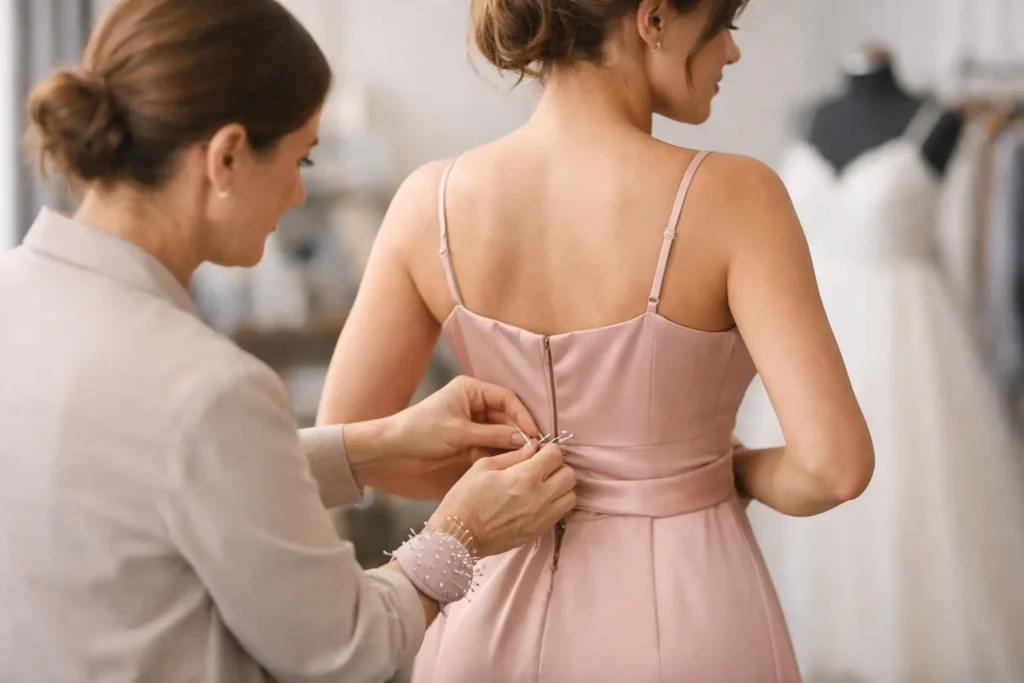
At the first fitting, the tailor will assess the garment on your body rather than relying on the label size. Pinning, marking and checking balance are all part of the process. Sometimes the requested change is exactly right. Sometimes a slightly different adjustment will produce a cleaner finish. That is where professional advice helps.
You should also expect a conversation about trade-offs. For example, taking in a dress too much may improve shape when standing still but reduce comfort when sitting or moving. Shortening a hem too far may affect the style line. The best outcome usually comes from balancing fit, comfort and the character of the garment.
Is tailoring worth it for everyday dresses?
For many people, yes. Not every dress needs alteration, and not every inexpensive garment is worth investing in. But if you wear the dress regularly, love the fabric, or struggle to find a good fit off the rack, tailoring can be worthwhile.
Workwear is a good example. A dress you wear often needs to feel comfortable from morning to evening and look polished without constant adjusting. Small improvements can make a big difference over time. The same applies to special occasion dresses. If you are attending an important event, poor fit is distracting. A well-fitted dress lets you get on with the occasion instead of tugging at straps or worrying about the hem.
In a busy local setting like Melbourne, many customers are not looking for dramatic fashion changes. They simply want clothes to fit properly, last longer and feel good to wear. That is exactly where skilled alteration work proves its value.
Choosing the right tailor for dress alterations
Trust matters with any garment, but especially with dresses that are delicate, sentimental or event-specific. You want someone who understands both the technical side of tailoring and the practical side of wear. Precision is important, but so is listening.
A reliable tailor will be upfront about timing, pricing and what result is achievable. They should pay attention to fabric, finishing and proportion, not just whether a seam can be moved. Craftsmanship shows in the details – smooth lines, balanced hems, clean stitching and a fit that feels natural rather than forced.
At AD Stitch, that approach is grounded in expert clothing alterations, careful fitting and personalised service. The aim is simple: help each garment sit better, feel better and earn its place in your wardrobe.
Dress alterations are not about changing who you are to suit the clothes. They are about making the clothes work properly for you, so getting dressed feels easy instead of frustrating.