


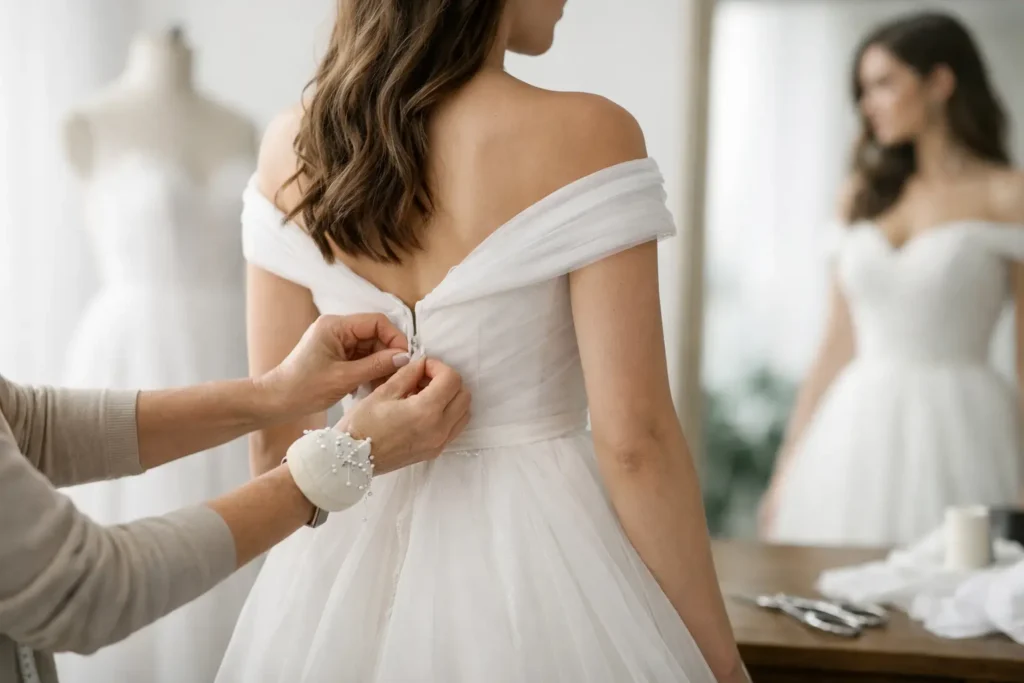
Deb Dress Alteration for the Perfect Fit
A deb dress can look stunning on the hanger and still feel wrong the moment you put it on. The bodice may shift, the hem may drag, or the waist may sit just a little off. That is where deb dress alteration makes the difference. The right adjustments do not change the spirit of the gown – they make it sit properly on your body, move with you, and help you feel confident from photos to the last dance.
For a debutante ball, fit matters more than most people expect. These gowns are often formal, structured, and detailed, which means even a small issue can become obvious once you start walking, sitting, dancing, or posing. A dress that needs constant pulling up or careful handling stops being enjoyable very quickly. Good alteration work solves that quietly, so the dress feels natural instead of demanding attention all night.
Why deb dress alteration matters more than people think
A deb gown is not just another formal dress. It is worn for a very specific event, usually with a clear dress code, a fixed date, and plenty of photographs. That combination leaves very little room for compromise. If the fit is not right, there is no easy backup plan a few hours before the event.
Most debutante dresses are also made with fabrics and finishes that need careful handling. Satin can show every pull. Tulle can lose shape if it is shortened poorly. Lace needs pattern matching. Beading and embellishments often need to be removed and reapplied by hand before the real work can even begin. That is why a proper fitting is not simply about taking in a side seam and hoping for the best.
There is also the comfort factor. A gown can look polished in a standing mirror and still feel restrictive once you move. If the armhole rubs, the bust support is weak, or the skirt catches at your ankles, it affects your posture and confidence. A well-altered dress should feel secure without feeling stiff.
Common deb dress alteration requests
The most common request is hemming, but it is rarely as simple as cutting fabric off the bottom. The final hem needs to work with your shoes, your height, the shape of the skirt, and how much floor clearance you want. Too long, and you risk tripping. Too short, and the dress can lose its elegant line.
Taking in or letting out the bodice is another regular adjustment. This is often needed around the bust, waist, or hips to create a cleaner silhouette. On structured dresses, that may involve boning, lining, cups, or multiple layers, so the work has to be done with precision. A quick fix can distort the whole front of the gown.
Strap adjustments are common too, especially when the neckline does not sit flat or the bodice feels too low. Shortening straps can improve support, but it has to be balanced with the rest of the dress. If not, the bust point can shift and create new problems.
Other alterations can include reshaping sleeves, refining the neckline, adjusting the zipper area, adding bust support, or securing loose embellishments. Sometimes a gown needs only one change. In other cases, a series of small corrections creates the result the wearer was hoping for all along.
What to bring to your fitting
The fitting is where the real planning happens. If possible, bring the exact shoes you plan to wear on the night. Heel height affects not only the hem, but also how the dress falls through the hips and how you carry yourself in it.
It also helps to wear the undergarments you expect to use. The right bra or shapewear can completely change how a bodice sits. Without those items, the alteration may be accurate in theory but wrong in practice.
If you have accessories that affect the dress, bring those too. A petticoat, a particular bra cup, or even a jacket can influence the fit and finish. The more complete the fitting setup, the more reliable the result.
Timing matters with deb dress alteration
One of the biggest mistakes people make is leaving alterations too late. Debutante season tends to create a rush, and quality tailoring takes time, especially for gowns with layers, lace, or hand-finished detail. Even a straightforward hem needs proper pinning, checking, and finishing.
Ideally, your first fitting should happen as soon as you have the dress and know your event date. That gives room for thoughtful adjustments rather than rushed changes. It also allows for a second fitting if the gown needs more detailed work.
There is a balance here, though. Altering too early can be risky if your size or shoes are likely to change before the event. The best timing depends on the dress, the complexity of the work, and how settled your plans are. That is why experienced advice matters – not every gown follows the same timeline.
How skilled alteration work protects the look of the gown
A good alteration should be hard to spot. The gown should still look like the original design, only better fitted. That takes technical skill, especially when the dress includes lace appliqué, horsehair braid, gathered tulle, built-in structure, or decorative trims.
For example, shortening a layered skirt may require each layer to be handled differently. Taking in a bodice with visible embellishment can mean removing detail first, reshaping the panels, then restoring the finish so the work disappears into the design. This is where craftsmanship shows.
It is also where cheap or inexperienced work can be costly. Uneven hems, puckered seams, misaligned lace, and poorly set zippers are difficult to ignore on a formal white gown. They are even harder to fix at the last minute. For an occasion this important, precision matters.
Choosing the right fit, not just the tightest fit
Many people assume a formal dress should be fitted as closely as possible. Sometimes that works. Sometimes it creates the opposite of elegance.
A deb gown needs enough structure to stay in place, but enough ease to let you breathe, sit, and move naturally. If the waist is pulled too tight, the fabric may strain or ripple. If the bodice is over-fitted, the neckline can cut in or gap as you move. The best fit is usually the one that looks smooth and feels secure without forcing the garment into a shape it was never designed to hold.
That is why fittings should include movement, not just standing still in front of a mirror. Walk a few steps. Sit down. Turn. Lift your arms gently. A dress that works only when you are perfectly still is not ready yet.
When a dress can be altered – and when it has limits
Most deb dresses can be improved significantly with the right work, but every garment has limits. Some gowns have generous seam allowances that allow for letting out. Others do not. Some hems can be shortened cleanly. Others may lose balance if too much length is removed.
Fabric type matters too. Delicate mesh, heavily beaded surfaces, and very fine satin all require extra care. Sometimes the ideal change is possible, but it involves more labour because of how the dress is constructed. Other times, a slightly different solution gives a better result while protecting the garment.
This is one of the reasons in-person assessment is so valuable. Looking at a gown properly allows a tailor to judge what is achievable, what will hold well, and what is worth doing. Honest advice is part of good service.
Confidence is the real result
The goal of deb dress alteration is not only to improve the garment. It is to help the person wearing it feel at ease. When the fit is right, posture improves. Movement becomes easier. Photos look more polished because you are not adjusting the dress every few minutes.
That confidence tends to show in subtle ways. You stand straighter. You smile more naturally. You stop thinking about whether the hem is under your shoe or whether the bodice is slipping. Instead, you can enjoy the event for what it is.
For families preparing for a big milestone, that peace of mind matters. A carefully altered gown removes one more source of stress and replaces it with certainty. At AD Stitch, that is the value of expert alteration work – practical skill, careful fitting, and a result that lets the dress do what it should have done from the start.
If your deb dress is close but not quite right, small changes can have a big effect. The best time to sort it is before the night arrives, while there is still room to fit it properly and finish it with care.