


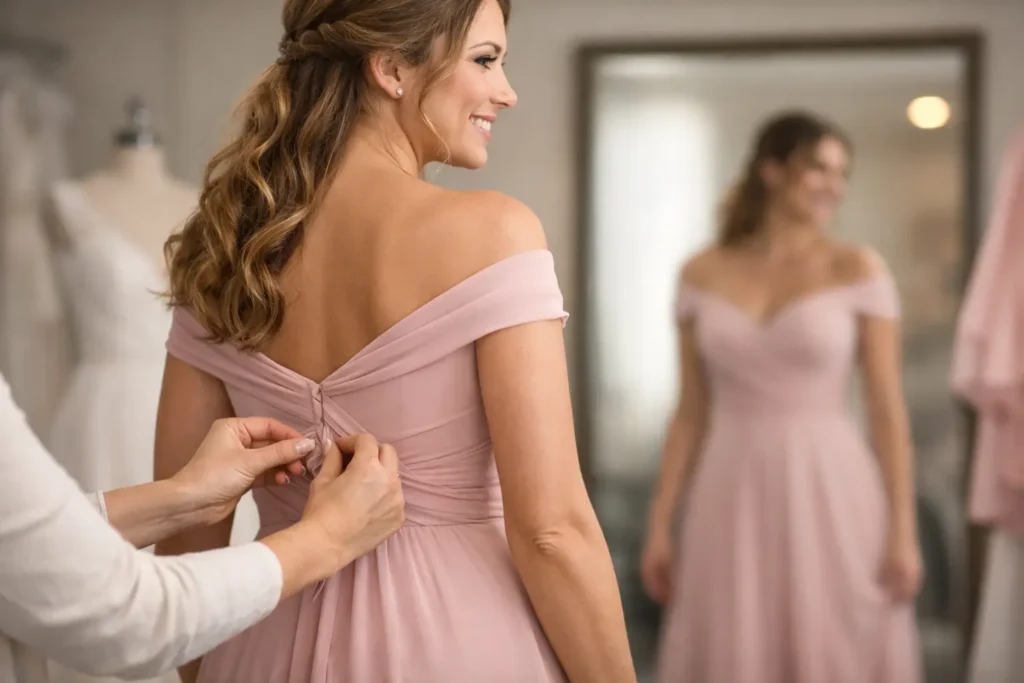
How a Bridesmaid Dress Should Really Fit
One bridesmaid has ordered online, another bought off the rack, and someone else is hoping the standard size will somehow work on the day. That is usually where trouble starts. A bridesmaid dress might look beautiful on the hanger or in the product photo, but if the fit is off through the bust, waist, hips or hem, the whole look can feel awkward and uncomfortable.
For bridal parties, fit is not a small detail. It affects how the dress sits in photos, how easily you can move, and whether you spend the day enjoying the celebration or constantly adjusting straps and smoothing fabric. The good news is that most fit problems are fixable when they are handled properly and early enough.
Why bridesmaid dress fit matters more than people think
A well-fitted dress does more than look neat. It changes posture, comfort and confidence. If the bodice is too loose, the neckline can gape and the straps can slip. If it is too tight, the fabric may pull, wrinkle or feel restrictive when sitting and dancing. Even a hem that is slightly too long can become a real issue over a full day of walking, stairs, photos and a busy reception.
Bridesmaid dresses also tend to be worn for long hours. Unlike an outfit you can change out of after dinner, this is a garment that needs to hold up from early preparation through to the last dance. That is why comfort matters just as much as appearance. A dress that looks perfect for five minutes in a fitting room may not feel nearly as good after eight or ten hours of wear.
There is also the group factor. In bridal parties, consistency matters. The dresses do not need to fit in exactly the same way on every person, because bodies differ, but they should look polished together. Good alterations help create that balance by refining each dress to suit the wearer while keeping the overall style cohesive.
The most common bridesmaid dress fit problems
Most bridesmaid dress issues show up in the same places. The bust is one of the biggest trouble areas, especially when dresses are chosen according to waist or hip measurements. A gown may fit neatly through the body but feel loose at the top, or the opposite may happen. Structured bodices and satin styles are less forgiving, so even a small mismatch becomes obvious.
The waist is another common problem. Many off-the-rack dresses are cut to standard proportions, and real bodies rarely follow those exact measurements. If the waist seam sits too high or too low, the entire silhouette can look slightly off, even if nothing seems dramatically wrong at first glance.
Length is perhaps the issue people underestimate most. Bridesmaid dresses are often ordered long and then worn with different heel heights. What works with one pair of shoes may not work with another. A hem that brushes the floor elegantly at a fitting can become a tripping hazard if shoe plans change.
Straps and sleeves also deserve attention. Slipping straps, armhole gaping, sleeves cutting in, or restricted movement across the shoulders are all signs that the fit needs refining. These problems are particularly frustrating because they are hard to ignore once the day begins.
What can usually be altered on a bridesmaid dress
A lot depends on the dress design, the fabric and how much seam allowance is available, but many bridesmaid dresses can be improved significantly with professional alterations. Taking in the bodice, adjusting straps, shortening hems and refining side seams are among the most common changes.
Necklines can sometimes be adjusted for better coverage or a cleaner line, though this depends on construction. A dress that feels too revealing or sits awkwardly at the front may be able to be improved without changing the overall style. Zips, closures and linings can also be addressed if they are causing poor fit or discomfort.
Hems are rarely as simple as they look. Soft chiffon, layered skirts, satin and dresses with horsehair braid or delicate finishes need careful handling to keep the shape and drape right. The goal is not just to make the dress shorter. It is to preserve the intended line of the garment.
Some changes are more complex. Letting out a dress is not always possible if there is limited fabric inside the seams. Major reshaping can also depend on embellishments, boning, lace placement or the way the dress was originally made. That is where honest advice matters. A skilled tailor should tell you clearly what can be done well, what may be limited, and what result to expect.
When to book bridesmaid dress alterations
The best time to organise alterations is earlier than most people think. Once the dress arrives, it is worth trying it on properly with the shoes and undergarments you plan to wear. That first try-on often reveals far more than a quick glance in the mirror.
As a general rule, alterations should not be left until the last minute. Bridal schedules can become crowded, and formal dresses often need more than one fitting to get exactly right. If fabric needs careful handling or the fit issue is more involved, extra time makes the process calmer and usually leads to a better result.
That said, there is also such a thing as too early. If your size is likely to change before the wedding, timing matters. A final fitting closer to the event helps ensure the dress still sits correctly. This is one of those situations where it depends on the wearer, the garment and the timeline.
For Melbourne bridal parties juggling work, family and event planning, leaving enough time also reduces stress. Alterations are much easier to manage when they are part of the plan rather than a rushed fix two days before the wedding.
What to bring to your fitting
A good fitting appointment is more accurate when you bring the right items. Shoes matter because they affect hem length and posture. Undergarments matter because they change how the bodice sits. If you plan to wear shapewear, a strapless bra or specific cups, bring them.
It also helps to move around in the dress during the fitting. Sit down, walk, lift your arms and turn. A bridesmaid dress should not only look good when standing still. It needs to work through the actual movements of the day.
If the wedding has a very coordinated look, a photo of the bridal party style can be useful too. That can help guide small decisions about hem finish, strap placement or how fitted the dress should feel in relation to the others.
Choosing the right size before alterations
One of the most useful things to know is that it is usually easier to take a dress in than let it out. If someone is between sizes, the larger option is often the safer choice, especially in formalwear where fabrics can be less forgiving.
This does not mean every oversized dress is a simple fix. If a dress is far too large, the proportions can shift in ways that make alteration more complicated. Necklines may sit incorrectly, armholes can become oversized, and details such as pleats or cups may no longer line up as intended. The right starting size still matters.
That is why professional advice can save time and money. A quick fitting assessment before the wedding date gets too close can help you decide whether the dress needs small refinements or more involved work.
Comfort and polish should go together
There is sometimes an assumption that formal dresses are meant to be a bit uncomfortable. In reality, a properly fitted bridesmaid dress should feel secure, flattering and wearable. You should be able to breathe comfortably, sit naturally and move without worrying that something is slipping, pulling or dragging.
Polish comes from precision. Small changes can make a surprising difference to how the whole dress looks. A raised hem, a smoother waistline, or straps adjusted by even a small amount can take a dress from almost right to beautifully finished.
That is where experienced alteration work earns its value. Good tailoring respects the original garment while making it suit the person wearing it. For bridal wear especially, that balance matters.
If your bridesmaid dress is close but not quite right, do not assume you have to put up with it. A careful fitting can often turn uncertainty into confidence, and that makes the day easier for everyone involved.