


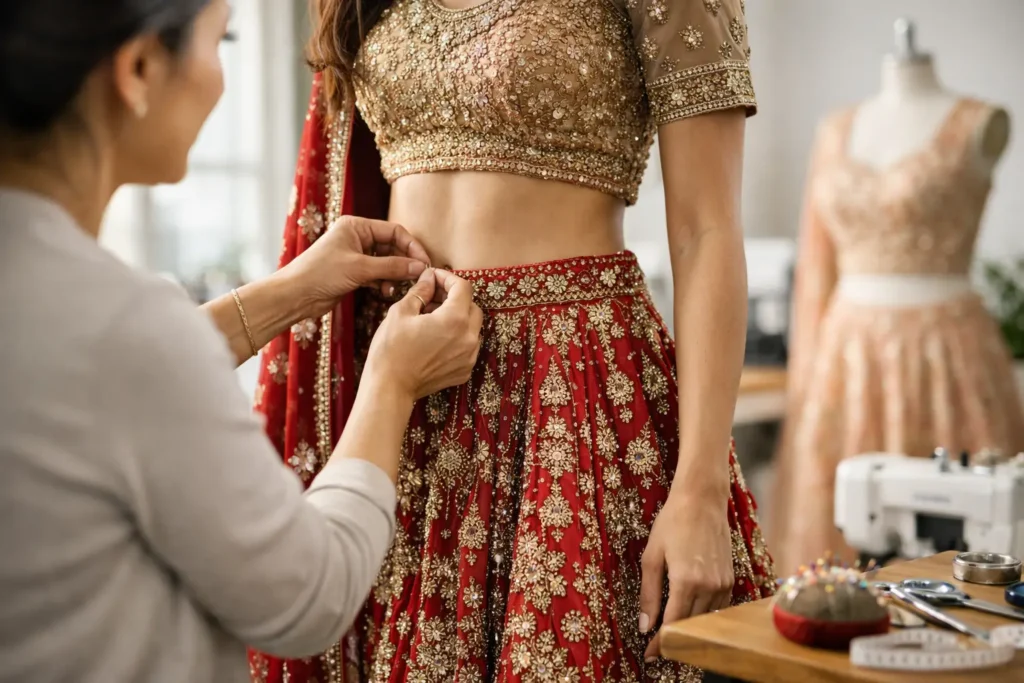
Lehngha Alterations That Actually Fit
A lehngha can look stunning on the hanger and still feel wrong the moment you put it on. The waist may sit too loose, the blouse may pinch through the bust, or the hem may drag and catch under your heels. That is where well-planned lehngha alterations make all the difference. The goal is not simply to make the outfit smaller or shorter. It is to keep the shape, embroidery and balance of the garment while making it feel right on your body.
For special occasion wear, fit matters more than people expect. A lehngha is often heavier than a standard skirt, and the blouse usually needs to hold close to the body without pulling or gaping. Add detailed embellishment, delicate fabrics and multiple layers, and this becomes a job for an experienced tailor rather than a quick pin-and-sew service. When alterations are handled properly, the outfit moves better, sits more comfortably and looks more polished from every angle.
What lehngha alterations usually involve
Most lehngha sets need adjustments in more than one area. The skirt, blouse and dupatta all work together, so a change to one piece can affect the whole look. A tailor will usually start by checking the overall proportion first, then the practical fit points.
The blouse is often the most technical part. It may need to be taken in through the side seams, let out where seam allowance allows, reshaped at the bust, adjusted at the shoulders or refined at the neckline. Sleeve width and sleeve length can also change how balanced the outfit feels. If the blouse is heavily embroidered, each adjustment has to be planned around the design so the finish still looks intentional.
The lehngha skirt usually needs attention at the waist and hem. A waist adjustment sounds simple, but with gathered fabric, can-can layers, lining and decorative waistbands, it can be more involved than standard skirt tailoring. Hemming also needs care. You want the skirt to clear the floor comfortably without losing its fall or looking uneven once shoes are on.
Even the dupatta can play a part. If it feels too long, too bulky or awkward to drape, discreet refinements can make it easier to wear without changing the character of the outfit.
Why lehngha alterations are different from regular dress alterations
A lehngha is not just another formal outfit. The fabrics are often more delicate, the construction is more layered, and the embellishment can limit where seams can be moved. Sequins, beads, zari work and lace trims all need to be handled carefully so the altered area blends with the original finish.
Weight is another factor. A fitted blouse has to support movement while staying comfortable for hours, and a heavy skirt needs a secure waist that does not twist or drop during the event. If the fit is slightly off in everyday clothing, it may be annoying. In a lehngha, that same issue can become obvious very quickly.
There is also the question of proportion. A good tailor does not only ask whether it closes. They ask whether the blouse length suits the skirt rise, whether the hem works with your footwear, and whether the overall silhouette still looks balanced. This is where craftsmanship shows.
Common fit issues and what can be adjusted
The most common problem is a blouse that almost fits. It might zip up, but feel tight when you sit or raise your arms. It might sit neatly at the front but gape at the back or under the arm. In many cases, these issues can be improved with reshaping rather than a blunt size change. Sometimes the fix is straightforward. Sometimes it depends on seam allowance, lining and embellishment placement.
A loose waist on the skirt is also common, especially when outfits are bought before an event and body measurements change slightly over time. Taking in the waistband is usually possible, but the method will depend on how the skirt is constructed. If there is heavy decoration at the waist, the work takes longer because the finish needs to remain clean.
Hem length is another regular request. A lehngha should not pool excessively unless that is a deliberate styling choice, and even then it needs to be manageable. The right length depends on your height, your shoes and how you want the skirt to fall. A proper fitting is essential here because a small change can affect the whole silhouette.
When to book lehngha alterations
Earlier is better, especially for bridal wear, engagement outfits or garments with heavy beadwork. Complex alterations should never be left to the last week if you can avoid it. Detailed work needs time for fittings, careful unpicking and neat reconstruction.
That said, not every alteration is major. Some lehngha adjustments are quite manageable when the garment has good seam allowance and the design is alteration-friendly. The best approach is to have the outfit assessed as soon as you have it, even if the event is still weeks away. That gives you a clear idea of what is possible and avoids unnecessary stress later.
If your weight tends to fluctuate before a big event, timing matters. Booking too early can mean needing another small adjustment closer to the day. In those cases, an initial consultation followed by a later fitting is often the smarter option.
What to bring to your fitting
Bring the shoes you plan to wear, or at least shoes with the same heel height. This is especially important for the skirt hem. If the blouse will be worn with specific shapewear or undergarments, bring those too. The fit can change more than people realise.
Wear or bring the full set if possible. Looking at the blouse alone does not always tell the full story. The neckline, blouse length and skirt rise need to work together. If you have jewellery or accessories that affect how the dupatta sits, mentioning that at the fitting can also help.
Most importantly, be clear about comfort. Some clients want a close, sculpted fit for a short formal event. Others need more ease for dancing, sitting and moving around for hours. Neither is wrong, but the tailor needs to know your priority.
Choosing a tailor for lehngha alterations
This is one area where experience matters. A tailor who is excellent with business suits or simple dress hems may still not be the right fit for embellished occasion wear. Lehngha alterations require technical skill, patience and a careful eye for finish.
Ask whether the tailor regularly works on formalwear and delicate fabrics. Look for someone who understands fit, not just measurements. A good alteration specialist will explain what can be done, where the limits are, and whether a requested change may affect the design. Honest advice is part of quality service.
If you are in Melbourne and want a local tailor who handles specialist garment adjustments with care, it helps to choose a business that offers personalised fittings rather than a rushed counter service. With occasion wear, small details matter.
What results should you expect?
The best result is not an outfit that looks altered. It is an outfit that looks as though it was meant to fit you that way from the beginning. The blouse should sit securely without strain. The waist should feel firm but comfortable. The hem should work with your height and footwear. The garment should still look balanced, with embellishment and detailing preserved as cleanly as possible.
There are limits, of course. If a blouse is several sizes too small and has no seam allowance, or if heavy embroidery runs directly through key adjustment points, options may be reduced. A trustworthy tailor will tell you that upfront rather than promising a perfect result where one is not realistic.
That practical honesty matters just as much as craftsmanship. Good alterations are not about forcing a garment into shape at any cost. They are about making smart, precise changes that improve fit while respecting the original construction.
Lehngha alterations are worth doing properly because these outfits are made to be seen, photographed and remembered. When the fit is right, you stop adjusting the waistband, tugging at the blouse or worrying about the hem. You can simply wear it with confidence, which is exactly how special occasion clothing should feel.