


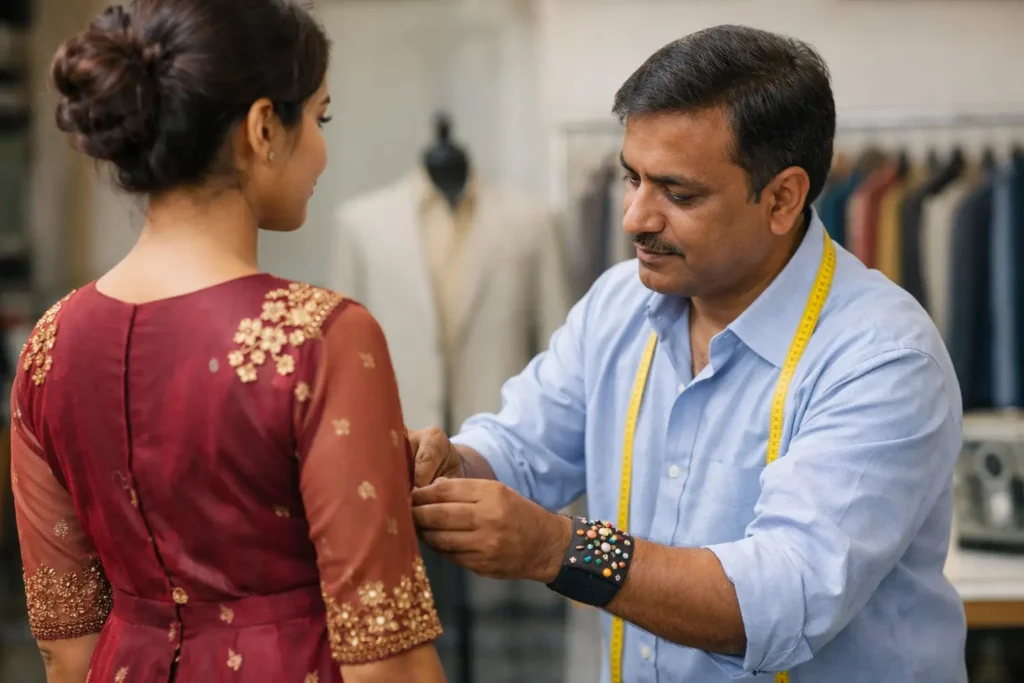
How an Indian Garment Tailor Gets the Fit Right
A saree blouse that pulls across the shoulders, a kurta that sits too boxy, or lehenga trousers that feel right standing still but awkward once you move – these are the moments when an Indian garment tailor makes a real difference. Specialist tailoring is not just about taking something in or letting it out. It is about respecting the garment’s structure, fabric, embellishment and cultural purpose while improving how it fits your body.
For many customers, Indian clothing comes with extra considerations that standard alterations counters are not always set up to handle. The fabrics can be delicate, the finishes detailed, and the fit expectations very specific. A garment might need to feel polished for a wedding, modest for a family event, or comfortable enough for a long day of wear without losing its shape. That is where experienced tailoring matters.
What makes an Indian garment tailor different?
Indian garments often combine decorative detail with highly personal fit. Unlike basic casualwear, these pieces are rarely judged on one measurement alone. A blouse may need a close fit through the bust and waist while still allowing arm movement. A salwar or churidar needs enough ease to sit cleanly without looking bulky. A kurta might need refinement through the shoulders, sleeves and side seams all at once.
An Indian garment tailor understands that the best result is not simply smaller, tighter or shorter. The goal is balance. Embroidery placement, border alignment, lining, drape and modesty all play a part. If the garment is heavily beaded or stitched with zari, every adjustment has to be planned carefully so the finish still looks intentional.
That specialist eye is especially useful when customers bring in garments purchased overseas or ordered online. Sizing can vary widely, and what looked right on the model can sit very differently in real life. The right tailor reads past the labelled size and focuses on how the garment behaves on your body.
Common garments that need specialist tailoring
Saree blouses are one of the most common pieces needing adjustment. A small change at the side seam, shoulder or neckline can completely improve comfort and shape. Because these blouses are usually close-fitting, even minor inaccuracies become obvious. If there is padding, lining or detailed embellishment, the work needs to be precise so the garment still looks clean from the outside and feels comfortable underneath.
Lehengas and skirts often need hemming and waist refinement. This can be straightforward or quite involved depending on the border work, can-can layers and fabric weight. If there is ornate trim at the hem, shortening from the waist may be the better option. If the waistband is heavily worked, a tailor may recommend a different approach. It depends on how the garment is constructed and where the detail sits.
Kurtas, sherwanis and salwar suits also benefit from proper fitting. Some need shaping through the torso for a cleaner line. Others need sleeve length correction or shoulder adjustment so the whole garment hangs properly. Men’s Indian formalwear in particular can look either elegant or awkward depending on fit through the chest, collar and sleeve.
Dupattas and finishing details can also need attention. Sometimes a hook, loop, fastening or edge repair is all that stands between a garment being wearable or left in the wardrobe.
Why fit matters more with occasionwear
Indian occasionwear is often worn for long events – engagements, weddings, religious celebrations and family gatherings that can run for hours. A garment might look beautiful for five minutes in front of the mirror, but if it pinches, slips or restricts movement, that discomfort builds quickly.
Good tailoring solves practical problems before they become distractions. A blouse should stay in place when you lift your arms. A lehenga should sit securely without constant adjusting. A kurta should allow you to walk, sit and move comfortably. These details matter because confidence usually comes from not having to think about your clothes once you put them on.
There is also the question of photographs. Special occasion garments are often worn for milestones that will be remembered for years. A slightly twisted seam, uneven hem or gaping neckline may seem minor in person, but it can become obvious in photos. Expert alterations help garments look polished from every angle.
The trade-offs a good tailor will explain
Not every alteration is equally simple, and a trustworthy tailor will say so. That is a good sign, not a problem.
For example, letting out a garment depends on whether there is enough seam allowance inside. Shortening a heavily embellished lehenga may require more labour than the garment suggests at first glance. Reshaping a blouse with fixed embroidery can be possible, but only within limits. In some cases, preserving the design matters more than chasing a very tight fit.
There are also fabric considerations. Silk blends, net, velvet and heavily lined materials all behave differently under the needle. Some fabrics show old stitch marks if seams are moved. Others can stretch or pucker if handled poorly. An experienced tailor will explain what can be achieved neatly and what may leave visible change.
This is where personal service counts. The best advice is specific to the garment in front of you, not a generic promise that everything can be altered perfectly.
How to choose the right Indian garment tailor
Start with experience in detailed garments rather than standard trouser hems alone. A specialist tailor should be comfortable assessing lining, embellishment, drape and fit together. If they ask thoughtful questions about how and when you will wear the garment, that is usually a strong sign. Tailoring is not only about measurements. It is about use.
Communication matters just as much as skill. You want a tailor who can explain what they recommend in plain language, point out possible limitations and give you confidence about the final result. That is especially important for eventwear, where timing and expectations are both high.
It also helps to allow enough time. The closer you leave formal alterations to the event date, the fewer options you may have. A simple adjustment can become stressful when there is no room for a fitting or a final tweak. If the garment is for a wedding or major celebration, earlier is always better.
For Melbourne customers, a local alterations specialist with a reputation for careful workmanship can save a great deal of worry. Businesses such as AD Stitch often see garments that need more than basic resizing – they need thoughtful handling, honest advice and a finish that looks right on the body, not just on the hanger.
What to bring to your fitting
Wear or bring the undergarments and shoes you expect to use with the garment if they affect length or shape. This is particularly important for lehengas, fitted blouses and formal suits. A different bra, heel height or shapewear choice can change how the garment sits.
Be ready to explain whether you want a close fit, a modest fit, or extra comfort for movement. These preferences are not all the same, and they change the alteration plan. If the garment is for dancing, sitting on the floor, long ceremonies or multiple hours of wear, say that upfront.
If you are unsure, that is fine too. A skilled tailor can guide you, but the more context you provide, the better the result tends to be.
When repairs are better than replacement
Some Indian garments are sentimental, expensive or difficult to replace. They may have been made overseas, gifted by family, or worn for a meaningful event. In those cases, repair and refitting can be far more worthwhile than starting again.
A broken zip, worn hook, torn lining or loose embellishment does not always mean the garment is finished. With careful work, many pieces can be restored and made wearable again. That is good for your wardrobe and often good value as well.
Tailoring also extends the life of clothing you already love. Instead of leaving a beautiful piece unworn because the fit is slightly off, you can have it adjusted to suit you properly now.
The best garments are the ones you feel comfortable wearing, not the ones you keep saving for a day when they might fit better. A capable tailor helps turn that hesitation into confidence.