


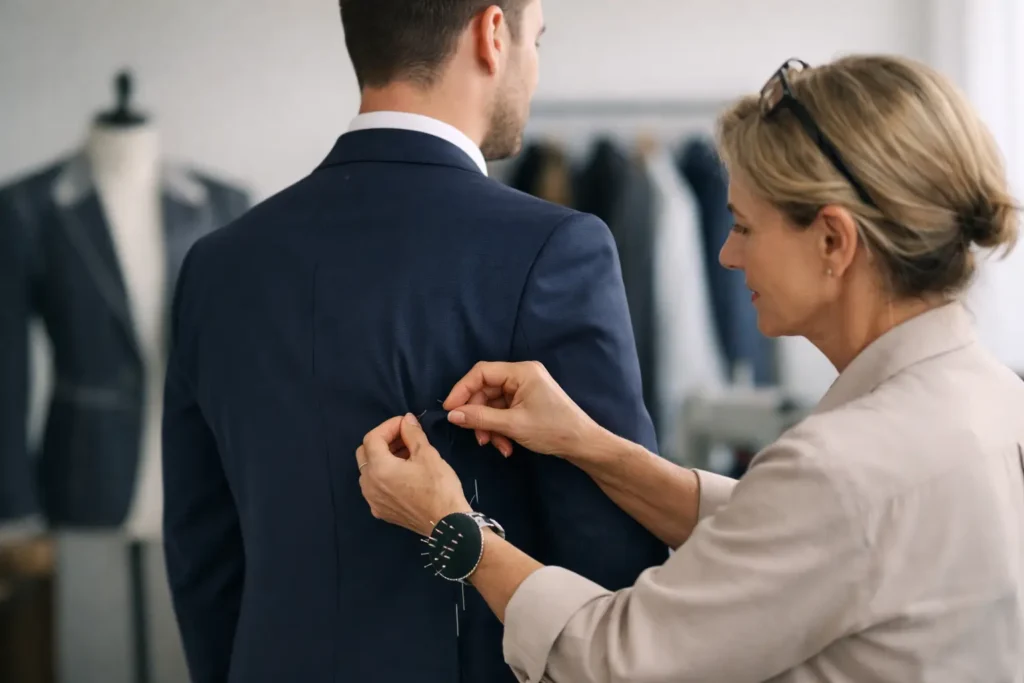
How an Alteration Tailor Improves Fit
A jacket that pinches at the shoulders, trousers that break awkwardly at the shoe, a dress that almost works but never feels quite right – these are the moments when an alteration tailor earns their place in your wardrobe. The difference is not just appearance. When clothing fits properly, it sits better, moves better and gets worn more often.
Most people have at least a few pieces they avoid for the same reason: the fit is close, but not right. That can happen with off-the-rack workwear, event outfits, bridalwear, denim, leather and even well-made garments that simply were not cut for your shape. Good alterations turn those near misses into reliable favourites, and that is often far better value than replacing them.
What an alteration tailor actually does
An alteration tailor adjusts an existing garment so it suits your body, your proportions and the way you wear it. That sounds simple, but the work can range from quick hems to highly technical reshaping. Shortening sleeves, taking in a waist, tapering pants and repairing seams are common jobs. More advanced work might include reshaping a bodice, lifting shoulders, relining a jacket, adjusting leather panels or refining curtain hems for a cleaner fall.
The key is that proper tailoring is never only about making something smaller. Sometimes a garment needs balance rather than size reduction. A hem may need to be levelled because your posture affects how the fabric falls. A jacket sleeve may need to be reset so the cuff sits correctly. A formal dress may need support added inside the garment so the outside drapes cleanly. Precision matters because small changes affect the whole line of the piece.
That is why experienced tailors assess the garment on the body, not just on a hanger. Fit is three-dimensional. Fabric, construction and movement all play a part.
Why fit matters more than the label
People often spend good money on quality clothing and still feel disappointed once they wear it. Usually, the issue is not the label or the fabric. It is the fit. A well-altered mid-range garment can look sharper than an expensive piece that pulls, bunches or hangs poorly.
For professionals, this matters every week. Suits, blazers, trousers and shirts need to work across long days, meetings and events. If the sleeve length is off or the trouser hem is too heavy, the whole outfit can feel untidy no matter how polished the fabric is. For occasionwear, the stakes are even higher. A wedding dress, bridesmaid dress or tailored suit has to photograph well, feel comfortable and hold its shape for hours.
Comfort is part of this too. Clothing should not distract you. If you are constantly adjusting straps, tugging at a hem or avoiding sitting down because something feels too tight, the garment is not doing its job. Good tailoring removes friction from daily wear.
When to see an alteration tailor
The best time to visit an alteration tailor is before a garment becomes a problem you stop wearing. If you have bought something you love but the fit is not quite there, early adjustments usually deliver the best result. Waiting too long can mean the item sits untouched for months, or worse, gets discarded when it could have been saved.
There are a few situations where tailoring is especially worthwhile. Workwear is one. If you rotate the same jackets, trousers and skirts regularly, even minor improvements pay off quickly because you notice the benefit every time you get dressed. Eventwear is another. A formal outfit often needs adjustments to length, bust, waist or straps to look finished.
Repairs also deserve attention. Torn seams, worn linings, broken zips and split hems can make good clothing look tired before its time. In many cases, repair and alteration go hand in hand. Restoring structure while refining fit can give a garment a much longer life.
The garments that benefit most from alterations
Some clothing categories respond especially well to professional tailoring. Suits are an obvious example because structure, proportion and clean lines matter so much. A jacket can look entirely different once the sleeves, waist and trouser break are corrected. Shirts can also improve significantly with simple tapering or sleeve adjustments.
Dresses are another category where fit changes everything. Casual dresses, work dresses and formal dresses each have different requirements, but all rely on balance through the bust, waist, hips and hem. Bridalwear takes that to another level because the fit has to be exact, often across multiple fittings, and the finish needs to be immaculate.
Leather is its own specialty. It is less forgiving than many woven fabrics, and the stitching, panels and finish require a careful hand. The same goes for delicate fabrics, embellished garments and lined pieces. These are not jobs for rushed alteration counters. They require judgement as much as technical skill.
Even household textiles can benefit from the same craftsmanship. Curtains, for example, need accurate hemming and clean handling to hang properly and suit the space.
What makes a good alteration tailor
Not every tailor approaches alterations with the same level of care. A good alteration tailor understands garment construction, but also knows when a requested change will improve the piece and when it may compromise it. That honesty matters. Sometimes the best advice is to make a smaller adjustment than the customer first imagined.
Clear communication is another sign of quality. You should be able to explain how you want the garment to feel and look, and receive practical guidance in return. A skilled tailor will often pin the garment on you, check mobility, and explain what is possible based on seam allowance, fabric type and original construction.
Craftsmanship shows in the details. Balanced hems, smooth seams, neat finishes and consistent proportions all matter. The best work is often invisible. You notice that the garment looks right, not that it has been changed.
Personal service makes a real difference as well. Alterations are not one-size-fits-all. People have different body shapes, comfort preferences and style goals. A local specialist who takes the time to understand those details will usually deliver better results than a fast-turnaround counter treating every garment the same way.
Alteration tailor advice before your fitting
A fitting goes more smoothly when you bring the right shoes and undergarments, especially for formalwear, bridal pieces and trousers. Heel height affects hem length. Support garments can change how a dress sits through the bodice and waist. If you plan to wear a belt, bring that too.
It also helps to be clear about how you want the garment to function. Do you need more movement through the seat for commuting? Do you want a slimmer leg on your trousers, or just a cleaner line? Are you after a close fit, or something a little easier for comfort? These details guide the work.
Be realistic as well. Some garments have enough seam allowance to be let out; others do not. Some designs can be reshaped beautifully; others are limited by fabric, lining or cut. Expert advice is valuable because it protects both the garment and your expectations.
Why alterations are a smart wardrobe decision
There is a practical reason more people are choosing alterations over replacement. A wardrobe built around pieces that fit properly is easier to wear and easier to trust. Instead of buying again in the hope that the next version will sit better, you improve what you already own.
That approach often saves money over time, especially with quality garments you would rather keep than replace. It also reduces waste. Extending the life of a favourite blazer, dress or pair of jeans is not only economical, it is sensible.
For many customers, the real value is confidence. When clothing fits properly, getting dressed becomes simpler. You stop second-guessing whether something looks off. You put it on, and it works.
A trusted local tailor can make that feel straightforward. At AD Stitch, that means expert clothing alterations handled with precision, care and the kind of personal service that gives customers confidence from fitting to finish.
The best clothes in your wardrobe are not always the newest ones. Often, they are the pieces that have been adjusted properly, worn often and made to feel like they were yours from the start.