


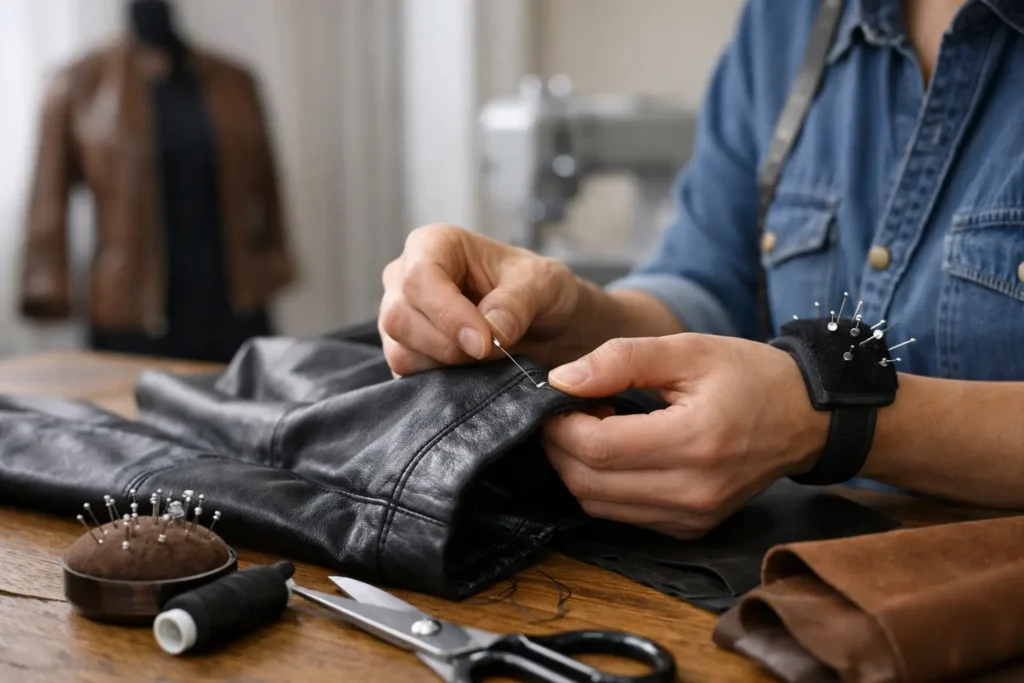
Leather Alterations That Keep Clothes Wearable
A leather jacket that pinches at the shoulders or trousers that sit awkwardly at the waist rarely stay in regular rotation for long. That is why leather alterations matter. When the fit is right, leather feels comfortable, looks sharper, and stays useful for years instead of sitting unworn in the wardrobe.
Leather is not like cotton, linen, or stretch blends. Every adjustment needs a more careful approach because the material holds stitch marks, reacts differently to handling, and often has linings, panels, zips, topstitching, or hardware that affect what is possible. A well-made alteration can make a piece feel custom. A rushed one can leave permanent signs.
What leather alterations can usually fix
Many people assume leather alterations are limited to simple hemming, but there is often more that can be done. Jackets, pants, skirts, dresses, vests, and some coats can all be adjusted, depending on how they are constructed.
Common requests include shortening sleeves, tapering side seams, adjusting the waist, narrowing legs, refining the fit through the body, and shortening hems. In some cases, shoulders, collars, or zip placements can also be addressed, although these are usually more complex. If a garment has a lining, the lining often needs to be altered alongside the outer leather so the piece still hangs correctly.
Repairs can overlap with alterations too. A favourite leather garment may need a torn seam repaired while the fit is improved at the same time. That can be a sensible option when the piece is worth keeping but no longer feels quite right.
Why leather is different from other alterations
With standard fabric garments, a tailor can often unpick, resew, press, and reshape with a fair amount of flexibility. Leather gives less room for error. Needle holes can remain visible, which means old stitch lines may not disappear if a seam is moved. Surface texture, thickness, grain, and finish also vary from garment to garment.
That is where craftsmanship matters. Good leather alterations start with assessing not just the size issue, but the structure of the garment. A sleeve adjustment on a soft lambskin jacket behaves differently from the same alteration on a heavier biker-style jacket. A pencil skirt with minimal detailing is different again from leather pants with panels, pockets, and decorative stitching.
This is also why an honest fitting matters. Sometimes the best result comes from a modest alteration rather than an ambitious one. A skilled tailor should explain the trade-offs clearly so you know what will improve, what may remain visible, and whether the result will justify the cost.
The leather alterations that give the best results
Some changes tend to be more straightforward and more rewarding than others. Hem shortening on leather pants or skirts is often worthwhile, especially when the original garment fits well elsewhere. Sleeve shortening can also be very effective, particularly when cuffs are too long and throw off the whole shape of a jacket.
Waist and side seam adjustments are another common improvement. If a leather skirt or pair of trousers fits through the hips but gaps at the waist, refining that area can make the piece far more comfortable and flattering. For jackets, subtle shaping through the body can remove bulk and create a cleaner line without changing the original character of the garment.
The best results usually come when the alteration works with the garment’s existing design. If seams, panels, or construction points allow a clean adjustment, the finished piece can look natural rather than obviously reworked.
When alterations become more complicated
There are also cases where leather alterations are possible but require more caution. Shoulder work on jackets is one example. Because shoulders affect sleeve pitch, balance, and the overall line of the garment, they are generally more technical and more expensive to alter. The same goes for major size reductions.
If a garment needs to come down several sizes, it may not be the right candidate. Pockets can end up too close together, panel proportions can look off, and original design details may no longer sit where they should. In leather, those changes are harder to disguise than they are in many woven fabrics.
Decorative features can add complexity too. Topstitching, studs, exposed zips, belted waists, quilted sections, and unusual seam placements all affect how an item can be altered. None of that means no. It simply means the job needs to be assessed properly before promises are made.
What to bring to a fitting
If you are considering leather alterations, come prepared to show how you actually wear the garment. Wear or bring the shoes you would normally pair with leather pants or a skirt. For jackets, think about whether you usually layer a knit or wear only a light top underneath. Small differences in styling can change the fit you need.
It also helps to mention what bothers you most. Is the sleeve length the issue, or is the armhole too tight? Does the waist gap when you sit, or does the whole garment twist when you move? Clear feedback helps a tailor identify whether the problem is a simple adjustment or part of a larger fit issue.
If the item is older, point out any worn areas, weak seams, or previous repairs. Leather can last a long time, but some pieces need condition and durability checked before alteration work begins.
Cost, value, and whether it is worth doing
People often ask whether leather is worth altering at all. The answer depends on the garment, the quality, and how much use you expect to get from it. A well-made leather jacket, skirt, or pair of trousers can absolutely be worth investing in, especially if the fit issue is the main reason it goes unworn.
Leather garments usually cost more to alter than standard fabric pieces because they take more specialised handling and more time. That said, replacing a quality leather item with something new that fits as well can cost far more. If the piece suits your style, is in good condition, and only needs targeted improvement, alteration is often the smarter choice.
There is also a practical value that goes beyond price. Better fit means more wear. More wear means better value from a garment you already own. For many customers, that matters just as much as the dollars.
Choosing a tailor for leather alterations
Not every alterations service handles leather with the same confidence. This is one area where experience makes a visible difference. You want someone who understands garment balance, construction, and finish, not just basic resizing.
A good tailor will inspect the garment closely, explain what can be done, and be upfront about any limitations. That kind of conversation is a positive sign. Leather alterations are not about saying yes to everything. They are about getting the best possible result without compromising the piece.
For Melbourne customers, working with a local alteration specialist also makes fittings easier. Leather often benefits from careful pinning, discussion, and one or two checkpoints rather than a quick over-the-counter guess. That personal service is part of what gives you a better result.
At AD Stitch, that approach matters. Precision, honest advice, and careful workmanship are what turn a difficult leather piece into something comfortable and wearable again.
A better fit can bring leather back to life
The most satisfying alterations are often the ones that rescue a garment you wanted to love but never quite wore. Leather has presence. When it fits properly, it adds polish, confidence, and durability to your wardrobe in a way few fabrics can.
If you have a leather piece sitting unused because the sleeves feel too long, the waist does not sit right, or the overall shape feels off, it may not need replacing. It may simply need skilled adjustment. The right alteration will not change what you liked about the garment in the first place. It will let you wear it the way you always intended.