


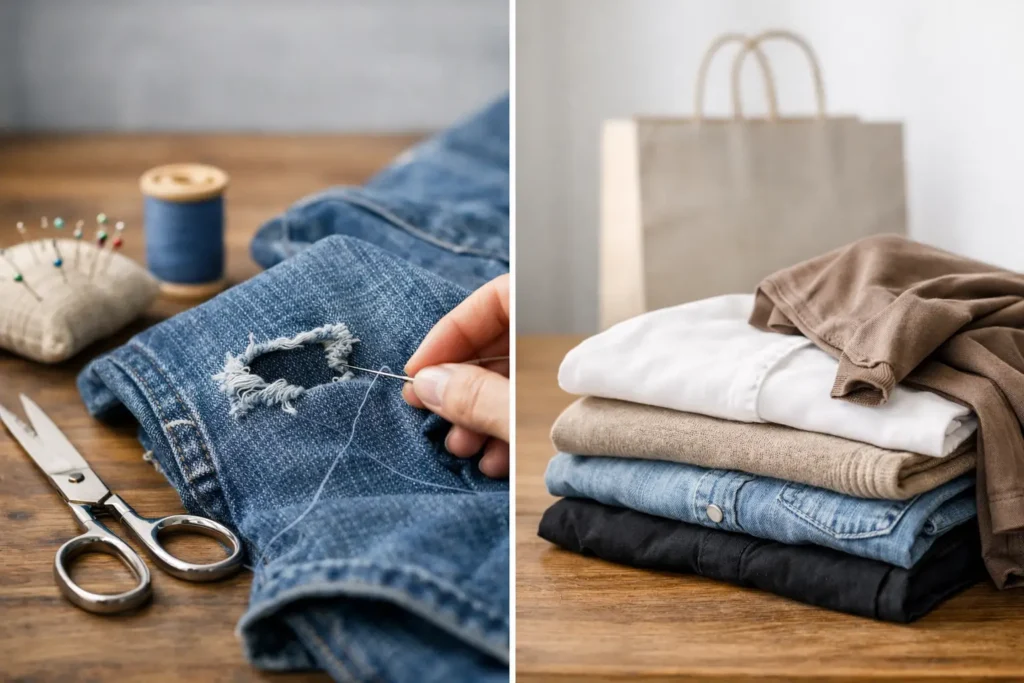
Repair or Replace Damaged Clothes?
A split seam on your work trousers at 7 am is annoying. A broken zip on a favourite dress just before an event is worse. When clothes fail, most people ask the same question – should you repair or replace damaged clothes?
The answer is rarely as simple as the price tag. A good decision comes down to fabric quality, where the damage sits, how the garment fits, and whether the item still earns its place in your wardrobe. In many cases, a professional repair or alteration can give a well-made piece years of extra wear. In others, replacement is the smarter option.
How to decide whether to repair or replace damaged clothes
Start with the quality of the garment itself. If the fabric still feels strong, the cut suits you, and the item fits well or could fit well with adjustment, repair is often worth considering. This is especially true for tailored trousers, jackets, dresses, coats, leather pieces, and occasionwear. These garments are usually more expensive to replace properly, and they often benefit from skilled repair work.
On the other hand, if the fabric has thinned across multiple areas, the shape has twisted beyond correction, or the damage is only one problem in a longer list, replacement may be more practical. A single torn pocket can be fixed. A shirt with worn cuffs, a frayed collar, fading under the arms, and a shrinking fit is usually telling you its time is up.
Sentimental value matters too. Many people have a favourite blazer, wedding outfit, or dress that still looks excellent apart from one fault. In those cases, repair is not just about saving money. It is about keeping a garment that already suits your body and your style.
The damage that is usually worth repairing
Some clothing problems look worse than they are. Open seams are one of the most common examples. If the fabric around the seam is still sound, restitching can usually restore both strength and appearance without much fuss.
Broken zips are another repair that often makes sense. A good garment should not be discarded simply because the zip has failed. Replacing a zip in jeans, skirts, trousers, dresses, or jackets can be a straightforward way to keep an item in use, particularly if the rest of the garment is in good condition.
Hems are also worth attention. A dropped hem, frayed edge, or uneven length can make an otherwise smart piece look tired. Re-hemming can tidy the finish and improve the way the garment sits on the body.
Tears can be repairable too, but this depends on size, location, and fabric type. A small tear near a seam is often more manageable than damage in the middle of a visible panel. Knitwear, silk, linen, leather, denim, and formal fabrics all behave differently, so repair quality depends heavily on technique.
Buttons, hooks, clasps, lining issues, loose belt loops, worn pockets, and minor resizing are all common fixes. These are the kinds of jobs that can turn a neglected item back into a reliable part of your wardrobe.
When replacement is the better choice
Not every garment deserves rescue. If the fabric is breaking down, a repair may only solve the obvious problem while leaving the rest of the item close to failure. This often happens with heavily worn basics, cheap synthetic blends, or garments that have been washed hard over many seasons.
Stains are another deciding factor. Some marks can be hidden with design changes or patch-style repairs, but large set-in stains on prominent areas usually limit the value of further work. If the garment no longer looks presentable even after repair, replacement may be the better investment.
Fit also plays a major role. If an item is damaged and has never fit properly in the first place, it is worth asking whether you would really wear it again. Repairing clothes you do not enjoy wearing often leads to the same piece sitting untouched in the wardrobe.
Then there is cost. Professional repair is about skill and finish, not a quick temporary fix. Sometimes the labour involved in rebuilding a complex garment can approach or exceed the replacement cost of a similar item. That does not always make repair the wrong choice, especially for premium pieces, but it should be weighed honestly.
Why repair often makes more sense than people expect
Many people compare repair cost to the original sale price and stop there. That can be misleading. The better comparison is usually between repair cost and the cost of replacing the garment with similar quality, similar fit, and similar appearance today.
A well-cut blazer that flatters your shoulders, a pair of trousers that sits neatly at the waist, or a dress that works perfectly for events can be surprisingly hard to replace. Even when you find something close, it may still need alteration to fit properly. In that situation, repairing the piece you already trust can be the more sensible option.
There is also the benefit of continuity. You already know how the garment wears, how it moves, and what it works with. That confidence matters, especially for workwear, formalwear, and special occasion pieces.
For Melbourne clients who want to get more life from quality garments, professional tailoring often offers better value than a string of disappointing replacements.
Repair or replace damaged clothes for different garment types
Some categories are clearer than others.
With suits and tailored jackets, repair is often worthwhile because structure, fit, and fabric quality matter so much. A lining repair, seam fix, button replacement, or sleeve adjustment can preserve a garment that would be expensive to replicate.
With dresses, the decision depends on fabric, occasion, and how much you love the fit. Eventwear and bridal garments are commonly worth repairing because they are made for a specific purpose and often carry emotional value as well.
With jeans, repairs can be excellent if the denim is still strong. Zip replacement, hemming, waist adjustment, and localised patching can extend wear significantly. If the entire seat and thigh area is thinning, though, the denim may be near the end.
Leather is a category where professional handling matters. Small tears, lining issues, zip failures, and fit problems may be worth addressing because leather garments are costly to replace and often improve with age. Poor repair work, however, can be very obvious.
Everyday basics are the least predictable. A simple repair on a good-quality shirt or skirt can be worthwhile. A badly faded tee with stretched seams and a neck that has lost shape usually is not.
The value of expert assessment
Photos can help, but damaged clothing is best judged in person. A trained tailor will look beyond the surface issue and assess fabric condition, garment construction, stress points, and whether the repair will hold up with wear.
This is where experience matters. A professional does not just ask, can this be fixed? They ask, can it be fixed well, and is it worth doing? That protects you from spending money on a result that looks obvious, feels uncomfortable, or fails again quickly.
At AD Stitch, this practical approach is part of what customers value. The aim is not to push every garment into repair. It is to offer honest advice and high-quality workmanship where repair or alteration will genuinely improve the life of the piece.
A simple way to make the call
If you are standing over a damaged garment and hesitating, ask yourself four things. Does it fit well or could it fit well with alteration? Is the fabric still in good condition overall? Would replacing it with the same quality cost noticeably more? And would you be glad to wear it again once repaired?
If the answer is yes to most of those, repair is usually worth exploring. If the garment is poor quality, badly worn, uncomfortable, and easy to replace, let it go without guilt.
Well-made clothes deserve a second look before they end up in the rubbish. Sometimes the right repair is all that stands between a forgotten item and a garment you rely on for years to come.