


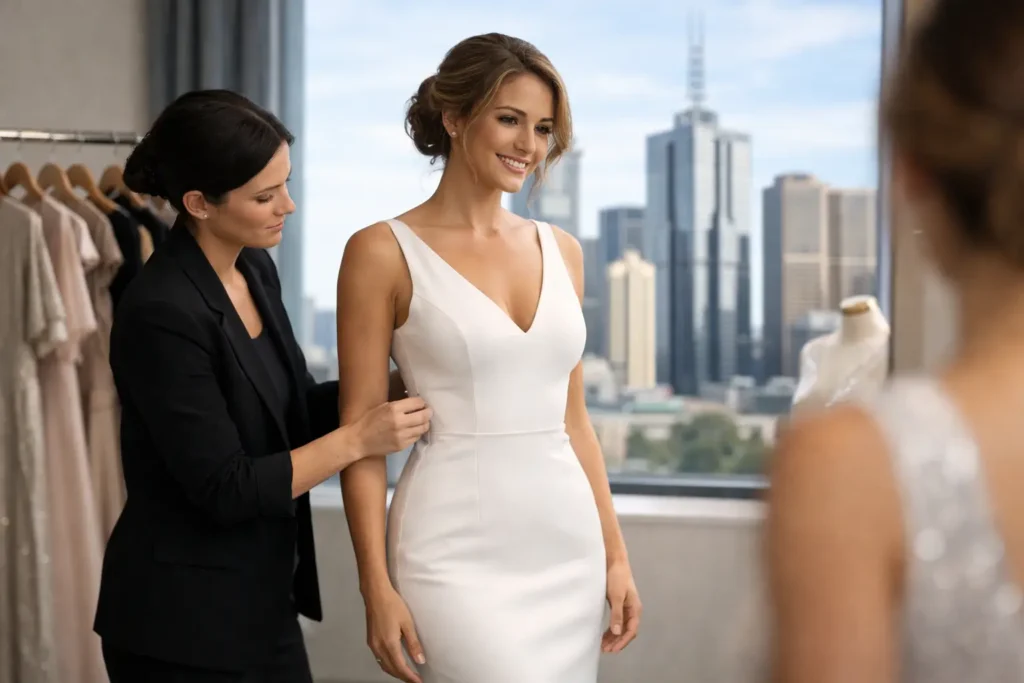
Professional Dress Fitting Melbourne Guide
A dress can look perfect on the hanger and still feel wrong the moment you zip it up. The waist sits a little high, the straps slip, the hem catches at the knees, or the bust pulls in a way that makes you spend the whole event adjusting it. That is where professional dress fitting Melbourne customers rely on makes a real difference – not just to appearance, but to comfort, movement, and confidence.
A proper fitting is not about chasing an unrealistic body shape. It is about making the garment work for your body, your proportions, and the way you plan to wear it. Whether it is an evening dress, bridesmaid dress, work dress or a favourite piece that deserves a second life, expert alterations can turn something almost right into something you genuinely enjoy wearing.
What professional dress fitting in Melbourne actually involves
Many people assume dress fitting means taking in the sides and shortening the hem. Sometimes it is that simple, but often a good result comes from looking at the whole garment. A skilled fitter checks balance, proportion and how the fabric behaves when you stand, sit and walk.
That includes the bust line, waist placement, hip shape, strap length, sleeve position, neckline security and hem finish. On a lined or structured dress, even a small change in one area can affect another. Taking in the waist, for example, might change how the bust sits. Shortening straps might lift the whole bodice and alter the armhole. The best fitting work is careful rather than rushed because precision matters.
This is also why a dress that seems like an easy fix can become more technical depending on its fabric and construction. Silk, satin, sequins, lace and heavily embellished styles often need a more experienced hand than standard daywear. A trusted local tailor will explain what can be adjusted cleanly and what may involve compromise.
Why fit matters more than size
Dress sizes are inconsistent across brands, designers and countries. A size 10 in one label can fit like a 12 or an 8 in another. Buying by size alone is one of the main reasons people end up disappointed, especially for formalwear or online purchases.
Professional dress fitting in Melbourne is valuable because it shifts the focus from the number on the tag to how the garment actually sits on you. The goal is a clean line through the body, enough ease to move comfortably, and support where the dress needs to stay in place.
A well-fitted dress should let you breathe, sit and walk without tugging or twisting. It should feel secure without digging in. That balance is where tailoring shows its value. It is not only about looking polished in photos. It is about being able to get through a long day or night without fussing with your outfit every ten minutes.
When to book a fitting
The best time to arrange a fitting depends on the dress and the occasion. For straightforward alterations, a shorter lead time may be fine. For weddings, formal events, complex eveningwear or dresses with delicate fabrics, more time is always better.
Ideally, book once you have the shoes and undergarments you plan to wear. Heel height changes hem length, and the right bra or shapewear can completely alter how the bodice sits. If those details are decided too late, the final fit may not be as accurate as it should be.
If your weight is likely to change before the event, timing matters too. It is often better to do major reshaping earlier and final fine-tuning closer to the date. An experienced fitter will usually guide you on the right schedule rather than overpromising a one-visit fix.
Common dress alteration issues and what can be improved
Some of the most common fitting problems are also the ones that make the biggest difference once corrected. Straps that fall down can often be shortened or reset. A gaping neckline may be reshaped. A waist that feels boxy can often be taken in for a cleaner silhouette. Hems can be adjusted so the dress sits properly with your shoes rather than dragging or cutting off at an awkward point.
Zips, closures and linings also matter more than many people realise. If the zip strains, it may not just be a sizing issue. The garment may need easing through the seam or adjustment through multiple points to distribute tension properly. Likewise, if the outer fabric sits well but the lining pulls, both layers need attention.
There are limits, though. A dress can usually be made smaller more easily than larger, because seam allowance is not always generous. Dresses with heavy beading, lace motifs or unusual panel construction can sometimes be altered, but the work is more specialised. Good tailoring is partly technical skill and partly honest advice.
What to wear and bring to your appointment
A fitting works best when the tailor can see the full picture. Wear or bring the exact shoes you intend to wear with the dress. Bring your chosen undergarments, especially if the dress is fitted through the bust or waist. If you are deciding between two bra options, bring both.
It also helps to be clear about how you want the dress to feel. Some clients want a close, sculpted fit. Others need more room to move because they will be working, dancing or sitting for long periods. Neither is wrong, but your fitter needs to know your preference.
If the event has a practical element, mention that too. A dress for a garden wedding, a work function or a black-tie evening may need slightly different handling. Comfort and occasion should always be considered alongside style.
Choosing a tailor for professional dress fitting Melbourne customers can trust
Not all alteration services offer the same level of dress expertise. For simple repairs, many places can help. For important dresses, construction knowledge and finishing quality matter much more.
Look for a tailor who understands garment structure, not just basic hemming. Ask whether they work regularly on formal dresses, bridal pieces or delicate fabrics. Clear communication is also a strong sign of professionalism. You want someone who will explain what is possible, what is worth doing, and where the risks are if a garment is especially fine or complex.
Local convenience matters too, but it should not come at the expense of workmanship. A dependable fitting service combines technical skill with personal care. That means listening properly, pinning accurately, and taking the time to achieve a result that feels considered rather than rushed. At a studio such as AD Stitch, that combination of expert craftsmanship and friendly service is exactly what gives customers confidence to hand over important garments.
The value of tailoring a dress you already own
There is a practical side to dress fitting that often gets overlooked. Altering a dress you already have can be a smarter choice than replacing it. If the fabric, colour or style already suits you, tailoring can extend its life and make it feel new again.
This is especially true for quality garments, sentimental pieces, and occasionwear worn more than once with different accessories. A dress that has been sitting unworn because the fit is slightly off may only need a thoughtful adjustment to become one of the hardest-working items in your wardrobe.
There is also less waste in improving what you own rather than discarding it. For many customers, that matters just as much as the visual result.
What a good final fit should feel like
The best alteration is often the one nobody notices. People may comment that you look polished, elegant or well put together, but they will not necessarily know why. The reason is usually fit.
A good final fit should feel natural. The dress should sit where it is meant to sit, move when you move, and stay secure without constant checking. Seams should lie smoothly. The hem should fall evenly. The whole garment should feel more like it belongs to you than something you are borrowing from a standard size chart.
That is the real benefit of professional fitting. It removes distraction. Instead of thinking about straps, bunching, pulling or length, you can focus on the event, the workday or the occasion itself.
If a dress is worth wearing, it is worth fitting properly. The right adjustments can change not only how a garment looks, but how you carry yourself once it is on.