


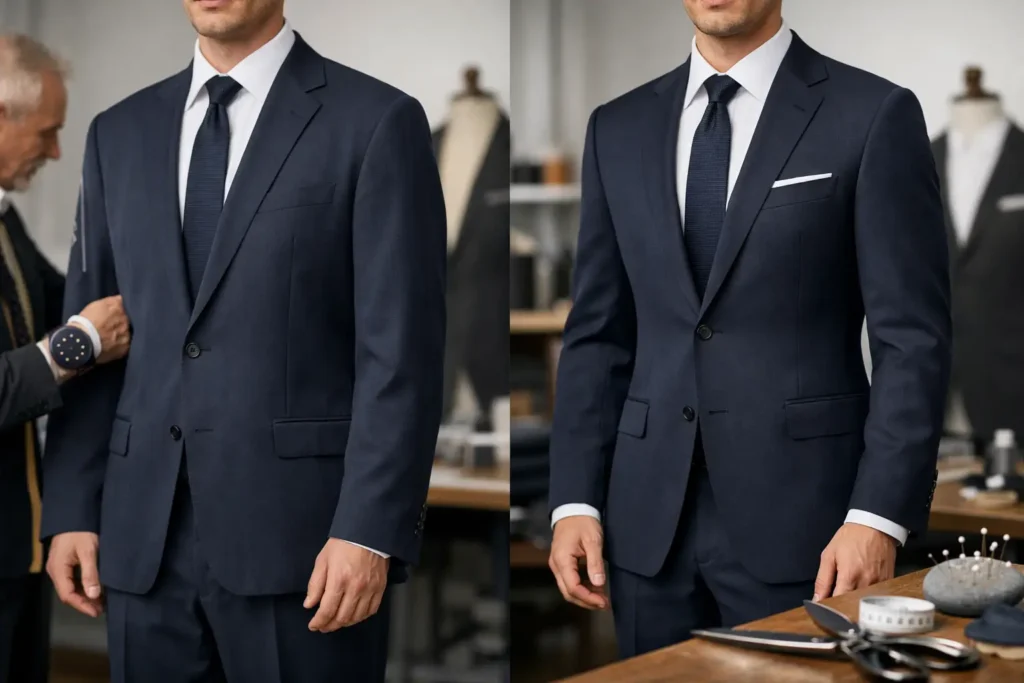
Before and After Suit Alterations Explained
A suit can be expensive and still look average the moment it goes on. The shoulders sit a little wide, the sleeves break awkwardly at the wrist, the trousers bunch at the ankle, and suddenly a good fabric is doing no favours at all. That is why before and after suit alterations matter so much – the difference is often less about the suit itself and more about how precisely it fits your body.
For most people, the “before” version of a suit is not a disaster. It is simply close enough to wear, but not close enough to look sharp. The “after” version is where comfort, balance and confidence come together. A well-altered suit sits cleanly, moves properly, and looks intentional rather than off-the-rack.
What before and after suit alterations really show
When people think about tailoring, they often picture dramatic transformations. Sometimes that does happen, but more often the change is subtle in the best possible way. A suit should not look altered. It should look as though it was always meant for you.
The clearest before and after suit alterations are usually seen in the jacket length through the body, the sleeve finish, the waist suppression, and the trouser line. Before alterations, extra fabric can create a boxy shape, drag lines, or a heavy silhouette. After alterations, the same suit looks cleaner through the chest and waist, the sleeves finish at the right point, and the trousers fall neatly without excess pooling.
That said, tailoring is not magic. The best results come when the original suit is reasonably close in the shoulders, chest and overall proportion. If those foundations are wrong, the alteration options become more limited and often more expensive.
The biggest visual changes come from the smallest adjustments
A few millimetres can change how a suit reads. That is one reason professional tailoring matters. What looks like a minor tweak in the fitting room can completely change the shape of the garment once it is on.
Jacket sleeves and cuff position
Sleeve length is one of the most noticeable details. Before alteration, sleeves are often too long, covering too much of the shirt cuff and making the jacket feel slightly borrowed. After shortening, the jacket looks more balanced and polished. The arms appear cleaner, and the shirt sits where it should.
There is a trade-off here. Some sleeves can be shortened easily from the cuff, while others need more careful work if there are functioning buttonholes or detailed finishes. A good tailor will tell you what is possible without compromising the jacket.
Jacket waist and side seams
A common problem in ready-to-wear suits is excess fabric through the waist. Before alteration, the jacket can look square and loose even if the shoulders fit well. After taking in the sides, the shape becomes more defined and flattering without feeling tight.
This adjustment is especially useful for men who want a neater business look or a more refined fit for weddings and events. The goal is not to make the jacket cling. It is to let the garment follow the body properly.
Trouser hem and break
Trouser length changes the whole appearance of a suit. Before alteration, hems are often too long, creating bunching around the shoe. After hemming, the line looks sharper and the leg appears longer and cleaner.
The right break depends on the suit style, the shoe, and personal preference. Some clients want a classic slight break, while others prefer a more modern minimal break. Neither is automatically right. It depends on the look you wear the suit for.
Tapering the trouser leg
Another strong before-and-after difference comes from tapering. If the lower leg is too wide, trousers can feel dated or bulky. A careful taper can slim the silhouette and improve balance from hip to hem.
This needs judgement. Too much taper can make movement uncomfortable or throw off the proportion of the suit, particularly in more traditional cuts. Good tailoring respects the original garment while improving the fit.
What suit alterations can and cannot fix
One of the most helpful things a tailor can do is explain the difference between a worthwhile alteration and a poor-value one. Not every suit should be heavily reworked.
Generally, sleeve length, trouser hemming, waist suppression, seat adjustments and trouser tapering are practical, effective alterations. These are often the changes that deliver the most visible improvement for a sensible cost.
Shoulders are another matter. If the shoulder width is significantly wrong, or the jacket collar does not sit properly against the neck, the work becomes more complex. It can still be possible in some cases, but it depends on the suit’s construction, fabric, and value. A well-made wool suit may justify more involved work. A budget garment may not.
The same applies to jacket length. Minor balance improvements can sometimes help, but major length changes are rarely straightforward. Proportions shift quickly, and a suit that is shortened too much can lose its intended shape.
Why the “after” result feels as good as it looks
People usually notice the visual improvement first, but comfort is just as important. A properly altered suit does not just photograph better. It behaves better through a long workday, a wedding, or an event.
When the waist sits correctly, you are not constantly adjusting the jacket. When the sleeves finish at the right point, the arms move more naturally. When the trousers are hemmed and balanced properly, walking feels easier and the fabric sits more cleanly.
This is where craftsmanship shows. Good alterations are not only about removing fabric. They are about preserving the suit’s line while making it more wearable. The best result is a garment that feels natural from the moment you put it on.
Before and after suit alterations for work, weddings and special events
The reason for the suit often affects the alteration approach. A daily work suit usually benefits from clean, durable adjustments that improve comfort without chasing a fashion-forward fit. You want room to move, sit, commute and wear it regularly.
A wedding or event suit may call for a more precise finish. The sleeve length, jacket waist and trouser break matter more because the suit will be photographed from every angle. In those cases, a fitting should ideally happen with the actual shirt and shoes you plan to wear. Small details become easier to judge when the full outfit is there.
If the suit is for a one-off event, timing also matters. Leave room for at least one fitting and, if needed, a follow-up refinement. Last-minute alterations can still help, but the best results come when there is enough time to assess the fit properly.
How to judge a suit before taking it in
If you are standing in front of a mirror wondering whether a suit needs alteration, start with the foundations. Look at the shoulders first. If they sit close to your natural shoulder line without collapsing or extending too far, that is a good sign. Then check the collar. It should sit neatly against the shirt without a gap at the back.
From there, assess the sleeves, waist and trousers. Too much fullness through the middle, sleeves that run long, and trouser hems that stack heavily are all common signs that tailoring will help. These are the areas where before and after suit alterations usually deliver the clearest value.
For Melbourne clients who want a suit to feel more polished without replacing it, a trusted local tailor can often make an off-the-rack garment look significantly better with a few precise changes. That is where experience counts. The fitting is not just about pinning fabric. It is about reading the garment, the body, and the intended use.
The real value of alterations is confidence
A suit that almost fits tends to stay in the wardrobe for the wrong reasons. It feels awkward, looks slightly off, and never becomes the easy option. Once altered properly, the same suit often becomes the one you reach for first.
That is the real power of tailoring. Before, the suit distracts you. After, it supports you. You stand better, move more comfortably, and stop thinking about the clothes because they are finally doing their job.
If a suit is worth wearing, it is worth fitting properly. Sometimes the change is obvious the moment you look in the mirror. Sometimes it is quieter than that. You simply put it on and feel like yourself, only sharper.