


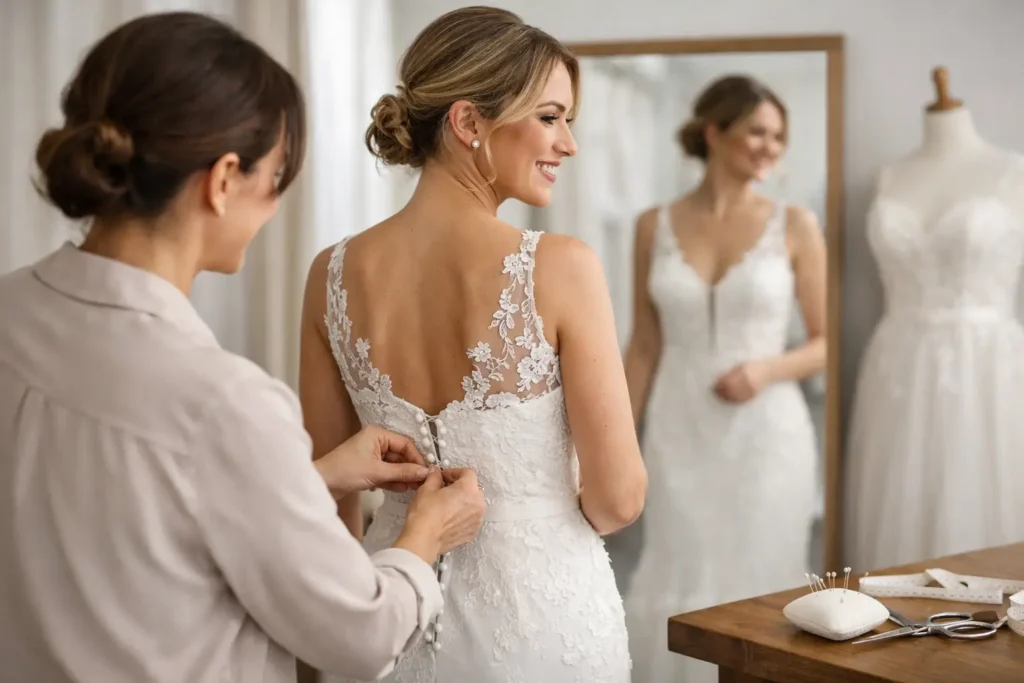
Bridal Alterations Fitting Guide
The first fitting is often the moment a wedding dress starts feeling real. You have chosen the gown, the date is locked in, and now the fit has to come together properly. A good bridal alterations fitting guide is not just about hems and pins. It is about making sure your dress feels secure, comfortable and flattering from the ceremony through to the last dance.
Bridal alterations can look simple from the outside, but the work is highly technical. Wedding gowns often combine delicate fabrics, structured bodices, layered skirts, lace placement, beading and built-in support. Small changes can make a major difference, and timing matters more than many brides expect.
Why a bridal alterations fitting guide matters
A wedding dress is not meant to fit like an off-the-rack day dress. Even beautifully made gowns usually need adjustments through the bust, waist, hips, straps or hem. The aim is not to make the dress tighter at all costs. The aim is balanced fit – secure enough to stay in place, shaped enough to flatter, and comfortable enough that you are not thinking about it every five minutes.
That balance depends on your dress design, your fabric, and how you plan to wear it. A fitted crepe gown behaves very differently from a layered tulle skirt. A strapless bodice needs different support from a gown with sleeves or a corset back. This is why bridal fittings are usually done in stages rather than in one quick visit.
When to start bridal alterations
For most brides, the best time to begin is around eight to twelve weeks before the wedding. That gives enough room for several appointments without leaving everything to the last minute. If your gown has heavy embellishment, complex lace, boning, or major reshaping, starting earlier is wise.
Leaving alterations too late creates pressure, and rushed work is rarely ideal on a garment this important. Starting too early can also be unhelpful if your body shape is likely to change before the date. The right timing sits in the middle – early enough for careful workmanship, close enough that the final fit reflects how the dress needs to sit on the day.
If your wedding is during a busy season, it is worth booking your fitting appointments in advance. Skilled alteration schedules fill quickly, especially for formalwear and bridal work.
What to bring to your fitting
The success of a fitting depends partly on what you wear with the dress. Bring the shoes you plan to wear on the day, or at least a pair with the same heel height. Hem length is one of the last details to finalise, and even a small heel difference can change how the skirt falls.
Bring your wedding undergarments as well, particularly if the gown is fitted, strapless or low-backed. The bra, shapewear or cups you wear can affect bust position, waist shaping and overall comfort. If you are still deciding between options, discuss that early rather than waiting until the final fitting.
It also helps to bring any accessories that may affect the gown, such as a hoop, petticoat or veil if they influence how the dress sits or moves.
What happens at the first fitting
At the first appointment, the dress is assessed on your body rather than on the hanger. This is where your tailor or dressmaker checks how the gown sits through key points like the bust, waist, hips, straps, sleeves and train. The hem may be marked, and areas needing adjustment will usually be pinned in place.
This appointment is also where honest conversation matters. If the dress feels loose, restrictive, heavy, scratchy or unstable, say so. Brides sometimes worry about sounding fussy, but bridal alterations work best when comfort concerns are raised early. A dress can look beautiful standing still and still be wrong for walking, sitting or dancing.
You should expect some discussion around what is realistically possible. Most fit issues can be improved, but not every gown can be reshaped in every direction without affecting design lines. Lace motifs may need to be lifted and reapplied. Beading can add labour. Structured bodices take precision. That does not mean the result will not be excellent – only that bridal work is careful work.
The most common bridal alterations
Hemming is one of the most requested adjustments, but it is rarely the only one. Bodice shaping is common, especially through the bust and waist. Strap adjustments often improve support and neckline position. Side seams may be taken in or let out depending on the gown allowance.
Bustle creation is another important alteration for dresses with a train. A bustle lifts the train after the ceremony so you can move more freely at the reception. There is no single best bustle for every gown. The right option depends on the weight of the fabric, the length of the train and the look you want once it is pinned up.
Sleeves and shoulders can also need refinement. If the dress cuts in under the arm, slips at the shoulder or restricts movement, that should be addressed before the final appointment. Comfort through the upper body matters more than many brides expect, especially over a long day.
How many fittings should you expect?
Most bridal gowns need two to three fittings. A simpler dress with minor adjustments may need less. A gown with detailed lace, significant reshaping or layered construction may need more. That is normal.
The first fitting usually identifies the key changes. The second checks progress and refines the fit. The final fitting confirms that everything sits correctly with your shoes and undergarments, and that details like hem and bustle are ready. If anything still feels off at the final appointment, mention it. Small refinements are much easier before the wedding than on the day itself.
Fit should support movement, not just appearance
One of the biggest mistakes in bridal alterations is focusing only on how the dress looks in a mirror. A proper bridal alterations fitting guide should also cover movement. Walk, sit, turn, raise your arms slightly and take a few natural steps. If you cannot breathe comfortably, if the bodice shifts, or if the skirt catches awkwardly, the fit needs attention.
This is especially true for fitted gowns, strapless styles and dresses with sleeves. A very tight fit may photograph smoothly while making the day tiring. A slightly more balanced fit often looks just as polished and feels far better over several hours.
The same applies to the hem. It should look elegant, but also allow you to walk confidently. A gown that is too long becomes a trip hazard. Too short, and it can lose proportion. Good hemming finds that middle ground.
Final fitting checks you should not skip
Your last appointment is not just a collection day. It is the moment to check the practical details that matter when time is short and nerves are high. Make sure you know how the bustle works and who will help attach it. If the dress has buttons, loops, corset lacing or hidden fastenings, understand how they should be done.
Look closely at the neckline, side seams and hemline. Walk in the gown wearing the correct shoes. Sit down. Check that the bodice stays where it should. If the dress has cups or internal support, make sure it still feels right after a few minutes, not just the first moment you put it on.
It is also sensible to ask how to transport and hang the gown before the wedding. Delicate fabrics and structured dresses should be handled with care once the alterations are complete.
Choosing the right alterations specialist
Bridal work is not the same as standard clothing adjustments. Wedding gowns need patience, technical skill and a careful eye for finish. Fine fabrics can show every stitch. Beaded or laced garments require extra handling. Structured dresses need correct shaping, not rough tightening.
That is why many brides look for a trusted local business with genuine alteration experience rather than treating bridal work as an afterthought. At AD Stitch, bridal fittings are approached with the same focus we bring to all expert clothing alterations – precise fit, clear communication and workmanship that respects the garment.
If you are comparing providers, ask yourself whether you feel listened to. Technical skill matters, but so does confidence in the process. You want someone who explains what can be done, notices the details and helps you feel calm rather than rushed.
A bridal fitting is about confidence
The best result is not a dress that only looks right in photos. It is a dress that lets you stand well, move easily and enjoy the day without constant adjusting. Good alterations give structure where you need it, ease where you need it, and a finish that feels considered rather than forced.
If you are preparing for your fittings, think of each appointment as part of getting ready properly, not as a last-minute fix. A well-altered gown does more than fit your body. It supports your confidence, and that changes how you carry yourself from the first step down the aisle to the final dance.