


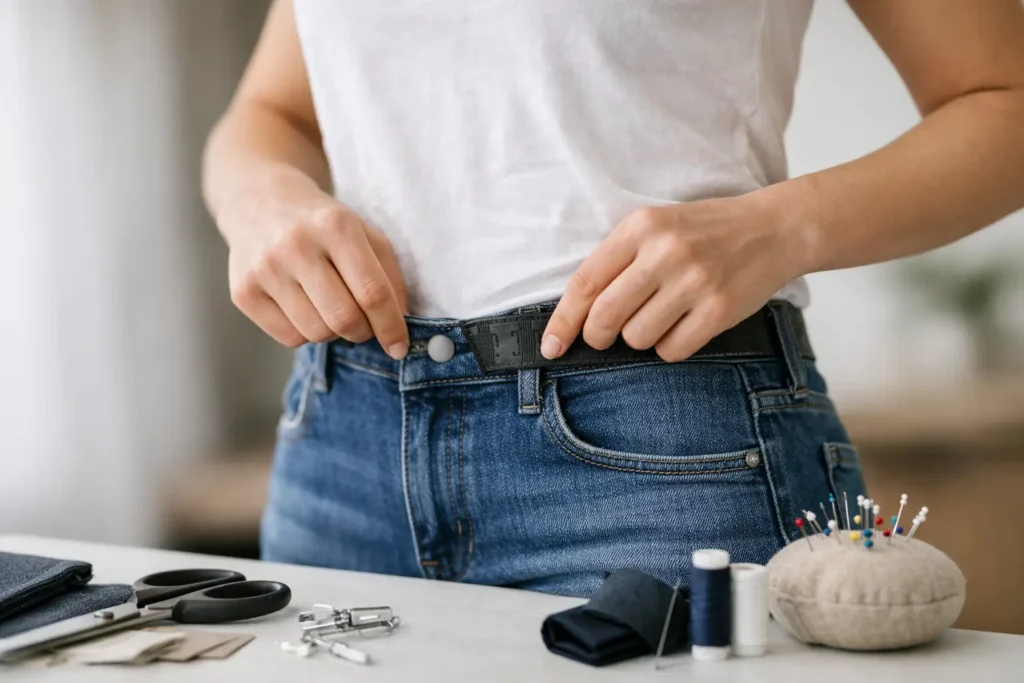
How to Fix Loose Waistband Problems Properly
A waistband that gapes at the back can ruin an otherwise good outfit. If you are wondering how to fix loose waistband problems without replacing the whole garment, the good news is that most can be corrected cleanly with the right alteration. The best option depends on the fabric, the construction of the garment, and how much needs to be taken in.
How to fix loose waistband without damaging the fit
The first thing to know is that a loose waistband is not always just a waistband problem. Sometimes the waist is too big and the hips fit well. Other times the whole garment is oversized, and tightening only the waistband can create pulling, bunching, or an unbalanced shape. That is why the most reliable fix starts with understanding where the extra fabric actually sits.
On jeans and trousers, the looseness usually shows as a gap at the centre back. On skirts, it may sit all the way around the waist. On dresses, the issue can come from body movement, fabric stretch, or a waist seam that was cut too generously in the first place. Each of those needs a slightly different approach.
If the garment only needs a small adjustment, there may be a simple solution. If the waistband is significantly loose, a professional alteration usually gives the cleanest result and keeps the original shape intact.
The most common ways to fix a loose waistband
A quick temporary fix can work when you need to get through the day. A belt is the obvious one, but it is not always suitable for office wear, occasionwear, or styles designed to sit smoothly at the waist. Safety pins and makeshift clips can pull the fabric awkwardly and are rarely comfortable for long. Elastic cinching can help on casual garments, but it changes the look and does not suit every fabric.
For a proper long-term result, the garment generally needs to be taken in through the waistband, the back seam, the side seams, or a combination of those. The choice depends on the cut.
Taking in the centre back
This is one of the most common fixes for trousers, jeans, and some skirts. If the waistband gaps at the back but the hips and seat fit well, reducing the centre back seam can remove the excess neatly. In many cases, the waistband has to be opened, reshaped, and reattached so the finish looks natural rather than pinched.
This method works well when the extra room is concentrated at the back. It is less effective if the waistband is loose all the way around.
Adjusting the side seams
Side seam alterations are useful when the garment is too loose more evenly through the waist and upper hip. This approach spreads the adjustment more evenly and can preserve the balance of the piece. On lined skirts or tailored trousers, this often requires more detailed work because both the outer fabric and lining need to be handled properly.
The trade-off is that side seam work can be more involved than a simple back seam adjustment, especially if pockets, zips, or decorative details sit nearby.
Reshaping the waistband itself
Sometimes the waistband has stretched, warped, or was not cut to follow the body properly. In those cases, the best fix is not just taking in seams below it. The waistband may need to be reshaped or partially rebuilt so it sits flush against the waist.
This is especially important on structured garments. A tailored pair of trousers should sit smoothly without rippling. A dress waistband should define the waist without creating tension across the bodice or skirt.
Adding elastic or hidden adjusters
On casualwear, school uniforms, children’s clothing, and some everyday skirts or pants, adding elastic can be practical. It gives flexibility and can make a garment easier to wear if body size fluctuates slightly. Hidden buttonhole elastic is another useful option in some waistbands.
Still, elastic is not the right answer for every garment. It can change the silhouette, add bulk, and make a polished item look more casual. On formalwear or business attire, a tailored alteration usually looks far better.
How to fix loose waistband on different garments
Not every waistband is built the same, so the same fix will not suit every item in your wardrobe.
Jeans
Jeans often gap at the back because denim is firm through the hips and looser at the waist. A centre back alteration is usually the cleanest solution, but jeans can be deceptively tricky. Topstitching, belt loops, yokes, and thick seams all need to be handled carefully so the repair does not look obvious. A rushed job can leave puckering or uneven stitching.
Trousers
Tailored trousers need a balanced approach. If the waistband is taken in without checking the rise, hips, and seat, the trousers may start pulling or sitting incorrectly. For workwear, accuracy matters. You want a result that feels comfortable when sitting, walking, and moving through the day.
Skirts
A-line skirts, pencil skirts, and lined skirts each behave differently. Pencil skirts often need careful waist and hip balancing so they still skim cleanly. A-line skirts can be more forgiving, but the waistband still needs to sit level. If there is a zip at the back or side, that can affect where the alteration should be made.
Dresses
With dresses, the waistband may be part of a waist seam rather than a separate band. That means the bodice and skirt have to stay in proportion. If the waist is tightened too much in one area, the whole dress can twist or sit unevenly. Special occasion dresses often need extra care because of delicate fabrics, beading, lace, or lining.
When a DIY fix is enough – and when it is not
If you have basic sewing skills and the garment is casual, a small adjustment may be manageable at home. A simple elastic insertion, a temporary tack, or a minor seam reduction can help on relaxed pieces you do not mind experimenting with.
But there are clear limits. If the garment is lined, tailored, structured, heavily topstitched, or made from delicate fabric, home fixes can quickly become visible. The same goes for expensive pieces or favourites you want to keep wearing for years. Once a waistband is cut or stitched badly, correcting it can take more time than doing it properly from the start.
A good rule is this: if you want the alteration to disappear into the garment, it is usually worth having it done professionally.
What a tailor looks for before altering a waistband
A proper fitting does more than measure the waist. A tailor checks how the garment sits through the hips, whether the waistband is level, where the gaping occurs, and how the fabric behaves when you sit or move. They will also look at the construction details – lining, zip placement, belt loops, darts, pleats, pockets, and seam allowance.
That matters because the best-looking result is not always the fastest alteration. Sometimes the neatest repair involves opening more of the garment so the adjustment can be distributed properly. It takes more craftsmanship, but the finish sits better on the body and lasts longer.
For Melbourne customers who want a polished result on everyday wear, workwear, or event outfits, this is where an experienced local alterations specialist makes a real difference.
Getting the best result from a waistband alteration
When you bring a garment in for alteration, wear or bring the shoes and undergarments you would normally pair with it if the overall fit affects the way it sits. Be clear about how you want it to feel. Some people prefer a close fit at the waist, while others want a little room for comfort when sitting down.
It also helps to mention whether the garment has stretched over time or never fit correctly in the first place. That gives useful context for deciding whether the issue is isolated to the waistband or part of a broader fit problem.
If the item is a favourite, say so. A skilled tailor will approach a well-loved piece differently from a basic fast-fashion item, especially if preserving original stitching or details matters to you.
Why the right fix is worth it
A loose waistband sounds like a small annoyance, but it changes how a garment looks and how confident you feel wearing it. You tug at it, cover it with longer tops, or leave it in the wardrobe even though the rest of the fit is good. A precise alteration brings it back into regular wear.
That is often the smarter choice than replacing the item, particularly for quality trousers, dresses, skirts, or jeans that already suit your style. Good alterations protect the investment you have made in your clothes and make them more comfortable at the same time.
If a waistband is slipping, gaping, or refusing to sit flat, the answer is rarely to put up with it. The right adjustment can make the whole garment feel as though it was made for you – and that is exactly how clothing should feel.