


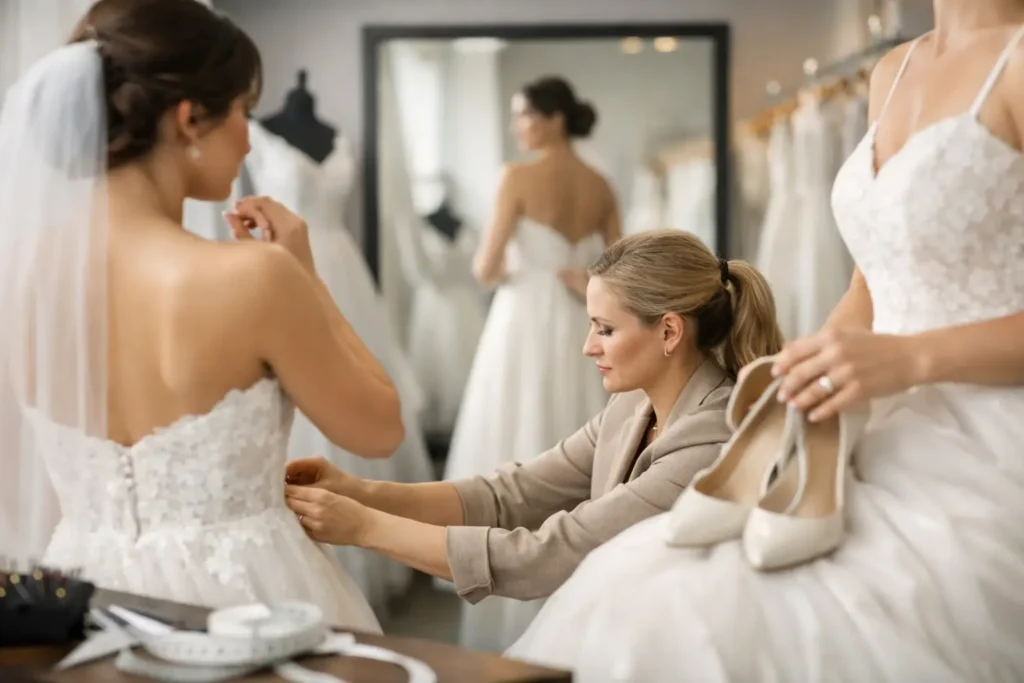
8 Top Wedding Dress Fitting Mistakes
The zip stops halfway, the hem suddenly looks wrong, and everyone in the fitting room starts offering opinions at once. That is usually how the top wedding dress fitting mistakes show up – not as one major problem, but as a series of small decisions that make the final fit harder than it needs to be.
A wedding gown fitting should bring clarity and confidence. When the process is rushed, poorly timed or handled without the right preparation, even a beautiful dress can feel uncomfortable or unfinished. The good news is that most problems are avoidable with a bit of planning and an experienced alterations specialist who understands both structure and comfort.
Top wedding dress fitting mistakes that cause the most stress
One of the biggest mistakes is leaving alterations too late. Bridal gowns are not everyday garments. They often have layered skirts, structured bodices, delicate lace, beading or built-in support, and each adjustment needs time. A hem is not always just a hem, and taking in a bodice can affect straps, cups and balance through the waist.
Many brides assume they can book a fitting a few weeks before the wedding and sort everything out in one visit. Sometimes that works for very minor changes, but often it does not. Most gowns need more than one fitting, especially if the silhouette is close through the bodice or hips. Starting earlier gives room for careful work and reduces the pressure if anything needs refining.
Another common issue is buying the dress with a “goal size” in mind. It is understandable – weddings often come with fitness plans, deadlines and expectations. But fittings work best when the gown is altered for the body you have, not the body you hope to have in a few months. Significant weight changes during the process can affect shape, support and proportion in ways that are not always simple to correct.
There is also the opposite problem: ordering a gown too large because it feels safer. While many dresses can be taken in, there is a limit. Some designs lose their original line if they are reduced too far, particularly through heavily detailed bodices or dresses with complex seam placement. It depends on the construction. A skilled tailor can advise what is realistic, but the cleanest result usually starts with the closest size possible.
Wearing the wrong items to your fitting
Shoes matter more than many brides expect. Hem length changes completely depending on heel height, and even a small difference can alter how the dress falls. If you attend an early fitting in flats and wear heels on the day, the gown may end up looking too short. If you bring a very high heel to the fitting and switch to something lower later for comfort, the hem may pool more than it should.
The same goes for undergarments. Strapless gowns, fitted crepe dresses and gowns with low backs all sit differently depending on what is worn underneath. Shapewear can smooth the line, but it can also change where the waist sits or how snugly the bodice fits. A bra that seems temporary can lift the bust differently from built-in cups. For the most accurate fitting, bring the exact undergarments – or as close as possible – to every appointment.
Jewellery and accessories are less critical, but they can still influence the overall look. A statement necklace may make a neckline feel busier. A cathedral veil can change how you feel about the back detail. These are not alteration issues on their own, but they can affect final decisions, so it helps to see the dress as a complete outfit before the last fitting.
Choosing comfort last instead of first
A wedding gown should look polished, but it also needs to allow movement. One of the top wedding dress fitting mistakes is focusing only on how the dress looks standing still in front of the mirror. Brides do not spend the day posed in one spot. They walk, sit, hug people, dance, get in and out of cars, and often wear the gown for many hours.
If the bodice feels tight enough to leave marks after five minutes, it will not feel better after six hours. If the sleeves restrict arm movement, greeting guests will become awkward. If the bustle is complicated or fragile, it can become a headache at the reception.
A good fitting includes movement checks. Sit down. Raise your arms. Take a few steps. Turn around. If something pulls, shifts or digs in, say so. Many brides worry about being fussy, but this is exactly what fittings are for. Precision is not just visual. It is also about wearability.
Bringing too many opinions into the room
Supportive family and friends can be helpful, but too many voices can cloud practical decisions. One person wants the dress tighter, another thinks it should be longer, someone else compares it to a completely different style. Before long, the fitting becomes about taste rather than fit.
Alterations are most successful when the bride can focus on how the dress feels and how she wants it to sit. Trusted input has value, especially from someone calm and honest, but a crowded fitting room can create confusion where there does not need to be any.
This is especially true with custom tweaks. Adding sleeves, reshaping a neckline or changing the train may sound simple when discussed casually, but each change affects balance and construction. It is worth pausing and asking whether the adjustment improves the gown or simply responds to last-minute nerves.
Assuming every change is simple
Not all alterations are equal. Taking up a plain hem is very different from shortening a gown with lace edging, horsehair braid, multiple layers or hand-applied embellishment. Adjusting straps on one dress may be straightforward, while on another it changes the bust point and the whole bodice fit.
That is why clear advice matters. An experienced alterations specialist will explain what can be done, what should be done, and what may compromise the design. Sometimes the best outcome is a smaller, smarter adjustment rather than a dramatic remake.
Brides are often surprised to learn that preserving original proportion is part of the craft. If a gown is altered without considering balance, details can end up in the wrong place. Lace motifs may sit too high, a waist seam can drift, or the skirt can lose its intended shape. Skilled work protects the designer’s line while making the dress feel made for you.
Skipping the final fitting check
The last fitting is not a formality. It is the point where details should be confirmed calmly, before the wedding rush takes over. Yet some brides treat it as a quick collection appointment, try the gown on briefly and assume everything is fine.
A proper final check should cover the hem, bustle, closures, straps, bust support and overall comfort. Walk in the gown again. Check it from the front, side and back. If someone will help you dress on the day, it is useful for them to understand buttons, loops or the bustle system as well.
Transport also deserves a thought. A gown can leave the studio fitting beautifully and arrive at the venue crushed if it is not handled properly. Ask how to hang it, how to store it in the car, and when to take it out of the garment bag. These practical details are easy to overlook and can make a real difference.
How to avoid the top wedding dress fitting mistakes
The smoothest bridal alterations usually come down to preparation, realistic timing and clear communication. Book early enough to allow more than one fitting. Bring your wedding shoes and undergarments. Speak up about comfort. Keep the focus on fit rather than on conflicting opinions from the room.
It also helps to work with someone who treats bridal alterations as technical work, not quick pinning. Wedding dresses are structured garments, and precision matters. At AD Stitch, that attention to craftsmanship is what gives brides confidence that the gown will not only look right but feel right as well.
If your dress has delicate fabric, heavy embellishment or a silhouette that needs close shaping, it is especially worth choosing a specialist who will be honest about trade-offs. Sometimes a dress can be altered in several ways, but only one option will preserve comfort, movement and the original design.
The best fitting does not make you feel squeezed into someone else’s idea of perfection. It lets you stand naturally, move comfortably and forget about the dress for all the right reasons. On a day with enough emotion already, that kind of confidence is never a small detail.