


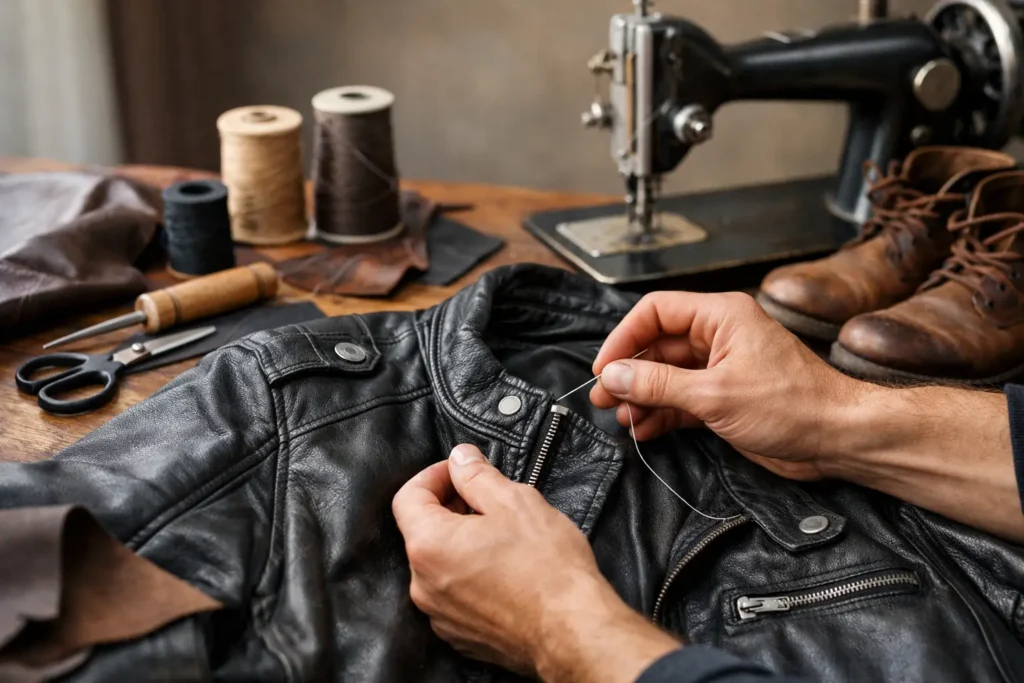
A Guide to Leather Garment Repairs
That worn patch on a leather jacket sleeve usually starts small – a scuff near the cuff, a loose seam at the shoulder, a zip that sticks once and then fails. A good guide to leather garment repairs begins with one simple truth: leather can often be restored beautifully, but it needs the right handling early. Leave damage too long, and a straightforward repair can turn into a more visible, more expensive job.
Leather garments are different from standard clothing in almost every practical way. The material has natural grain, varying thickness, limited stretch, and surface finishes that react differently to stitching, heat, adhesives, and cleaning products. That is why repair work on leather calls for more than a basic sewing machine and a steady hand. It takes judgement, experience, and a careful approach to preserve both fit and appearance.
Why leather repairs need a different approach
With cotton, denim, or wool, many faults can be corrected with fairly familiar techniques. Leather is less forgiving. Every needle hole is permanent, so unpicking and re-stitching has to be done with care. Colour matching is also more complex, especially on older garments where the leather has softened or developed a lived-in finish over time.
There is also the question of structure. A leather jacket, skirt, or pair of trousers often relies on panel shaping to sit properly on the body. If a repair pulls the leather unevenly or adds bulk in the wrong spot, the garment can lose its clean line. The best repair is not simply strong. It should also look balanced and feel comfortable when worn.
A practical guide to leather garment repairs by problem type
Some leather issues are mainly cosmetic. Others affect wearability straight away. Knowing the difference helps you decide whether the garment needs urgent attention or a planned repair.
Scuffs, surface wear and minor abrasions
These are among the most common problems, especially on cuffs, elbows, pocket edges and hems. Light surface scuffs may be improved with careful refinishing, but results depend on the leather type and how deep the wear goes. Smooth leather often responds better than suede or heavily textured finishes.
If the top layer has only dulled or lightly marked, a repair specialist may be able to restore colour and reduce the appearance of damage. If the leather has thinned, cracked, or worn through, the work usually moves beyond surface treatment and into structural repair.
Tears and split seams
A tear in leather is not the same as a seam opening. If stitching has come undone along an original seam line, that can often be repaired neatly by re-stitching with the right thread, tension, and machine setup. If the leather itself has torn, the repair is more delicate.
Small tears can sometimes be stabilised from behind and stitched in a way that limits further spread. Larger tears may need patch support or panel work. The trade-off is usually between visibility and strength. A very discreet repair may not suit a high-stress area, while the strongest repair may be slightly more noticeable up close.
Broken zips and faulty hardware
Leather jackets and skirts often fail at the zip before the leather itself wears out. Sliders loosen, teeth separate, and zip tapes fray. In many cases, replacing the slider is enough. In others, the entire zip needs replacing.
Zip replacement on leather has to be handled carefully because the original stitch holes remain visible. A skilled tailor will work with the existing construction where possible and avoid unnecessary disturbance to the surrounding leather. Snaps, hooks and press studs can often be replaced too, but matching the original finish matters if the garment has visible hardware.
Lining problems
Sometimes the leather looks sound, but the garment feels wrong because the lining is torn, twisted, or worn away under the arms. This is common in well-loved jackets and coats. A damaged lining can make a garment uncomfortable and place extra strain on the leather shell.
Lining repair or replacement can significantly improve the life of the garment. It also gives a repairer the chance to inspect the inside structure, including seam allowances and hidden stress points. When done well, a new lining can make an older leather piece feel refined again without changing its character.
Alterations combined with repairs
Not every leather job is purely about damage. Sometimes a garment also needs fit correction. Sleeves may be too long, a waist may need shaping, or a jacket may sit awkwardly after years unworn in the wardrobe.
This is where experience matters most. Leather alterations and repairs often influence each other. For example, shortening a sleeve may remove a damaged cuff edge at the same time. Adjusting side seams may help bypass worn areas. In other cases, an alteration can make a repair harder, so the order of work matters.
What can be repaired – and what depends
Most people are pleasantly surprised by how much can be saved. Seam repairs, zip replacements, lining work, hem issues, detached panels, and many minor tears are all commonly repairable. Surface restoration can also improve the look of everyday wear in the right circumstances.
What depends is the extent of damage, the type of leather, and the garment’s overall condition. Dry, brittle leather is harder to work with than leather that still has flexibility. Older garments with sentimental value are often worth repairing even if the result will not be completely invisible. Fast-fashion leather pieces with weak construction may cost more to repair than they are realistically worth.
A trustworthy tailor will be clear about that. Not every garment is a candidate for perfect restoration, but many can absolutely be made wearable, presentable, and comfortable again.
When not to attempt a DIY fix
There is a reason leather repair kits so often disappoint. They promise simple solutions to problems that are rarely simple. Glue can stain the finish, home needles can leave messy punctures, and colour products that look close in the bottle can dry to the wrong shade entirely.
DIY work tends to cause the most trouble when people try to fix tears, replace zips, or sew over damaged seams without understanding leather tension. Once extra holes are made, options become more limited. Even seemingly harmless products such as household cleaners or conditioners can darken leather unevenly.
If the garment is valuable, well-made, fitted, or sentimental, it is usually worth getting professional advice first. A quick assessment can save a favourite piece from becoming harder to restore.
How to choose the right repair specialist
A proper guide to leather garment repairs should also help you choose who does the work. Leather is not a fabric to hand over casually. Ask whether the tailor regularly works with leather garments, not just standard clothing repairs. Experience with jackets, skirts, trousers, and lined pieces makes a difference because construction varies from item to item.
It also helps to look for someone who understands both repair and fit. A leather garment still needs to sit well on the body after the work is done. In a service-focused tailoring studio, the conversation should cover not just what is damaged, but how the garment is worn, where it rubs, and what result you want. That practical attention is often what separates a tidy repair from a repair that genuinely brings the piece back to life.
For Melbourne customers, a local tailor with experience in both alterations and leather work can make the process simpler, especially when the garment needs an in-person assessment before quoting.
Caring for leather after repair
Once repaired, leather benefits from sensible care rather than over-treatment. Store garments on proper hangers so shoulders keep their shape. Avoid crushing them into crowded wardrobes. Keep them away from prolonged sunlight and direct heat, both of which can dry out the material.
If the garment gets wet, let it dry naturally at room temperature. Do not force it with a heater or hair dryer. Clean only with products suited to that specific leather type, and if you are unsure, ask before applying anything. Good repair work extends the life of a garment, but good aftercare helps protect that investment.
At its best, leather ages with character. A favourite jacket does not need to look brand new to deserve repair – it just needs skilled hands, honest advice, and a result that lets you wear it confidently again.