


Tailoring Trends for Better Fit and Comfort
A jacket that pulls across the shoulders, trousers that break untidily over the shoe, or a dress that looks beautiful but needs constant adjusting can change how you carry yourself. The most useful tailoring trends for better fit are not about chasing a fleeting fashion moment. They are about making clothing sit correctly on your body, move comfortably and earn a regular place in your wardrobe.
For Melbourne professionals, event guests and anyone tired of settling for “close enough”, alterations are becoming a practical part of dressing well. Rather than replacing an almost-right garment, more people are choosing expert clothing alterations that improve comfort, proportion and longevity.
Tailoring trends for better fit start with proportion
The strongest trend in modern tailoring is a move away from extremes. Very tight clothing can restrict movement and wear out quickly at stress points. Very oversized clothing can look unstructured when the shoulders, sleeves or hemline are not balanced. A better fit usually comes from keeping the intended shape of the garment while refining the areas that matter most.
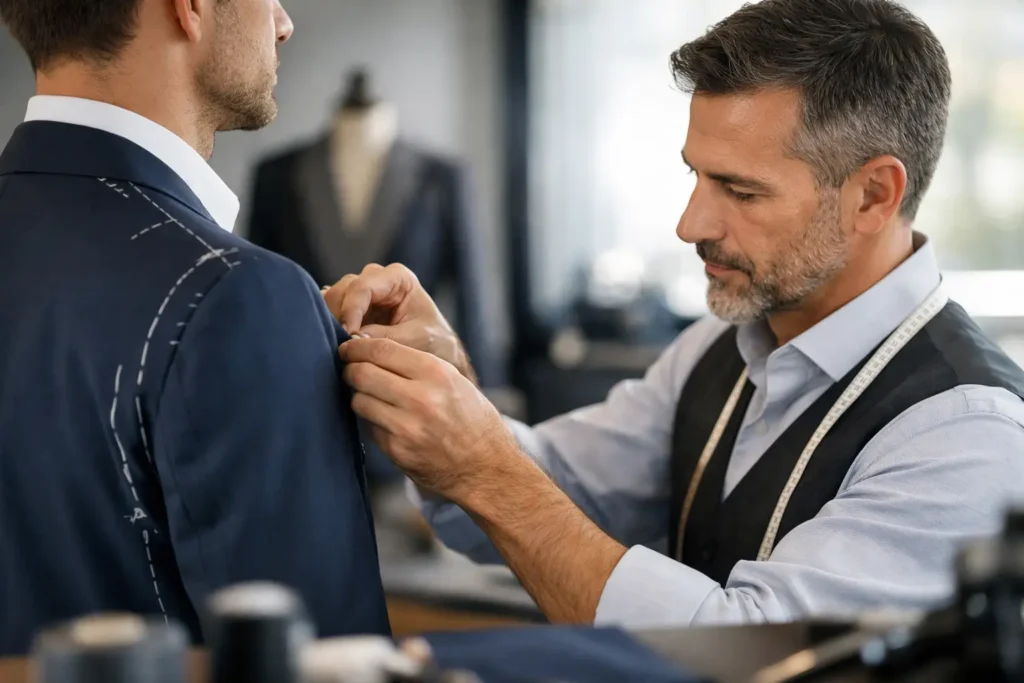
For a blazer or suit jacket, the shoulder line is the foundation. It should sit close to the natural shoulder without extending too far or pinching when you reach forward. From there, the waist can be gently shaped, sleeves shortened to the right point on the wrist, and the jacket length assessed against your height and overall build.
The same principle applies to dresses. A dress may need the straps shortened, bust adjusted, waist taken in or hem lifted, but not every section needs to be altered. Thoughtful tailoring protects the original design rather than forcing every garment into the same fitted silhouette.
A comfortable fit is not a loose fit
Comfort is now a key part of good style. The right garment should let you sit, walk, raise your arms and enjoy a meal without feeling restricted. That does not mean it must hang loosely. It means the garment has enough ease in the right places, such as the chest, seat, upper arm and thigh.
During a fitting, it helps to move naturally rather than only standing still in front of the mirror. Sit down in suit trousers, lift your arms in a dress, and take a few steps in a skirt. These small checks reveal issues that a static fitting can miss.
Softer suiting still needs precise alterations
Suits are increasingly being worn with less structure and more versatility. Unlined jackets, lighter fabrics, relaxed trousers and smart-casual combinations are popular because they work across the office, dinners and special events. Yet a relaxed suit should still look intentional.
Trouser alterations are often where the biggest difference is made. The waist should feel secure without digging in, the seat should sit smoothly, and the hem should work with the shoes you actually plan to wear. A slight taper can create a cleaner line through the leg, while a straighter cut may better suit a classic or more relaxed look.
There is no single correct trouser break. A shorter, neater break suits many modern tailored looks, while a fuller break can work with wider-leg trousers or a more traditional suit. The fabric, shoe style and occasion all matter. The aim is balance, not simply making trousers shorter.
For jackets, sleeve length remains a detail worth getting right. With a shirt underneath, a small amount of cuff is often visible. However, personal preference and the jacket style should guide the final result. A tailor can help you judge the proportions rather than relying on a fixed rule.
Dresses are being tailored for repeat wear
Special-occasion dressing is becoming more practical. Instead of buying a garment for one wedding, gala or party and leaving it in the wardrobe, clients are choosing alterations that make it suitable for future occasions as well.
A formal dress may need a hem adjusted for a particular heel height, but it may also benefit from discreet changes that make it easier to wear again. Refining a loose bodice, securing straps, adding a small hook and eye, repairing a zip or adjusting the side seams can transform how confidently the dress feels.
For brides and wedding party members, fit is especially important because the garment will be photographed from every angle and worn for many hours. Wedding alterations should allow time for fittings and final adjustments, particularly where lace, beading, delicate fabrics or layered skirts are involved. Bringing the intended shoes and undergarments to each fitting gives a more accurate result.
Cultural garments deserve the same careful attention. Saree blouses, formal traditional wear and garments made from fine or embellished fabrics can require specialised handling. The best adjustment respects the construction, coverage, drape and cultural purpose of the piece rather than treating it as a standard alteration.
Repair and refit are becoming one decision
One of the most worthwhile tailoring trends is the decision to repair and refit clothing that still has life in it. A favourite leather jacket with a damaged lining, quality jeans that need a new hem, or a coat with a loose seam does not necessarily need replacing.
Repair is particularly valuable when a garment already fits well in key areas, such as the shoulders of a jacket or the rise of a pair of trousers. Replacing a zip, repairing a seam, reinforcing a worn section or shortening a hem may be enough to bring it back into regular rotation.
Alteration is not always the answer, though. Some changes are limited by fabric, seam allowance, pocket placement or the original construction. Taking a garment in is often more straightforward than letting it out, and major changes to shoulders, armholes or heavily structured pieces can be complex. An experienced tailor should be honest about what will deliver a clean result and what may not be worth the cost.
The details that create a polished finish
Good fit is often noticed through the small details. A hem that falls evenly, a waistband that lies flat, a zip that closes smoothly and sleeves that finish at the right point all make clothing feel more considered.
These details also affect confidence. When you are not tugging at a neckline, stepping on a hem or worrying about a gaping button, you can focus on work, conversation or the occasion itself. That is why alterations should be measured against how a garment performs in real life, not only how it looks on a hanger.
At AD Stitch, fittings are approached as a conversation. A client may want a sharper work suit, a more comfortable pair of jeans, a wedding dress refined for the day, or a well-loved garment repaired rather than discarded. The right solution depends on the item, how it will be worn and the finish the client has in mind.
What to bring to a fitting
Arriving prepared makes a fitting more accurate. Wear or bring the shoes you will use most often with the garment. For dresses and formalwear, bring the correct bra, shapewear or underskirt if applicable. If you have a reference for the intended length or shape, a photo can help, but the final decision should always suit your proportions and comfort.
It is also useful to say how you plan to wear the garment. A suit for daily office use needs different ease from one reserved for occasional events. Jeans worn with sneakers may need a different hem from jeans worn with boots. These practical details help the tailor make adjustments that work beyond the fitting room.
Choose fit over fast fashion fixes
The best trend is not a particular cut, colour or silhouette. It is choosing clothes that feel like they belong to you. A few precise adjustments can make a ready-to-wear piece look more personal, help a quality garment last longer and reduce the temptation to replace clothing that only needs expert attention.
Before retiring the jacket that nearly fits or saving the dress you love for “one day”, consider what a careful alteration could change. The most flattering wardrobe is often already there – it simply needs the right fit.