


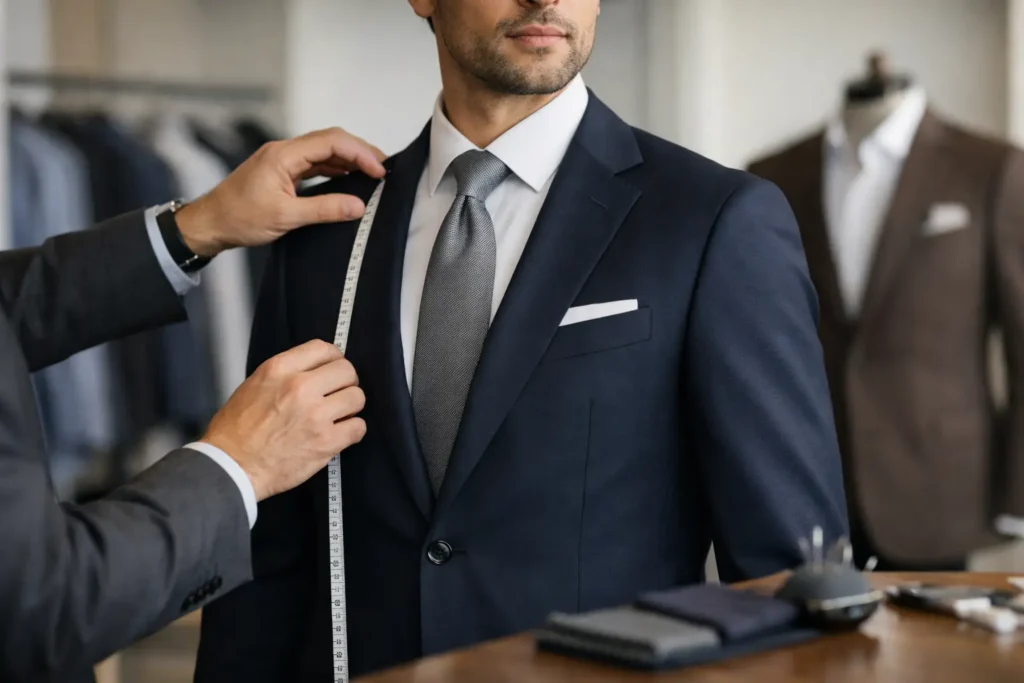
A Guide to Custom Suit Fit That Looks Right
A suit can be made from excellent cloth and still look ordinary if the shoulders sit too wide, the jacket pulls at the button or the trouser break collapses over the shoe. This guide to custom suit fit focuses on the details that make the difference between a suit that merely goes on and one that feels properly yours.
A good fit should look calm. The cloth should follow your body without strain, excess bunching or stiff restriction. It should also let you sit, reach, walk and work comfortably. That balance is why fit is more than a set of measurements. It is about your posture, proportions, preferred style and how you plan to wear the suit.
Start with the right fitting conditions
Try on a suit with the shirt, shoes and belt you are most likely to wear with it. A different shoe heel changes trouser length, while a bulky shirt can affect how the jacket sits through the chest and waist. If the suit is for a wedding, interview or formal event, bring the accessories you have already chosen.
Stand naturally in front of a mirror. Do not pull your shoulders back or hold your stomach in for the fitting. Your tailor needs to see how the garment behaves when you are relaxed, because that is how you will wear it most of the time.
Move as well. Button the jacket, sit down, raise your arms as if reaching for a shelf and take a few steps. A close-fitting suit should feel neat, not trapped. Some tension is normal when you move, particularly in a structured jacket, but sharp pulling across the back, chest or seat usually needs attention.
Guide to custom suit fit: check the jacket first
The jacket is the most difficult part of a suit to alter, so it sets the standard for the whole outfit. Shoulders, chest and overall balance should be as close to correct as possible before smaller refinements are made.
Shoulders should end at your shoulders
The shoulder seam should finish where your natural shoulder ends. If it extends down the upper arm, the jacket can look borrowed and the sleeve may lose its clean line. If it ends too early, the shoulder can appear tight and may create divots or pulling beneath the sleeve head.
Shoulder alterations are possible in some cases, but they are complex and can change the jacket’s balance. For that reason, it is wise to choose the best shoulder fit available from the start rather than relying on a major correction later.
The collar should sit close to the neck
Look at the back of the collar and the area beneath it. A well-fitted collar rests neatly against the shirt collar without a visible gap. A gap can come from the jacket being too large, but posture also plays a part. Someone with rounded shoulders, for example, may need a different adjustment from someone with a very upright stance.
This is one reason a proper fitting is valuable. The same jacket can sit differently on two people with identical chest measurements.
Chest and lapels should lie flat
With the jacket buttoned, the lapels should sit flat against the chest. There should be enough room to breathe and move, but not so much room that the front looks loose or caves in. Horizontal pulling lines around the button are a common sign that the jacket is too tight through the waist or chest.
A small amount of shape at the waist creates a cleaner silhouette, particularly with a single-breasted jacket. The button should fasten without effort, and the front should not split open below it. If you prefer a more relaxed look, the jacket can be less suppressed at the waist, but it still needs to retain a deliberate shape.
Get the jacket length in proportion
Jacket length depends on your height, body shape and the style of suit. Traditional tailoring usually aims to cover the seat, creating a balanced line through the body. A shorter jacket can look contemporary, but if it is cut too short it may make the torso appear boxy and leave the proportions feeling unfinished.
Rather than following one rule for everyone, assess the full silhouette. Look at the jacket from the front, side and back. The best length is the one that balances your upper and lower body while suiting the occasion.
Show the right amount of shirt cuff
As a general guide, around one to one-and-a-half centimetres of shirt cuff should show below the jacket sleeve when your arms are relaxed. This can vary slightly depending on the shirt cuff, watch and personal preference, but the sleeves should finish evenly at both wrists.
Sleeve length is one of the most effective alterations for improving an off-the-rack suit. It is also worth checking while standing naturally, not with your arms bent or pushed forward.
Trousers need shape without strain
Suit trousers should sit comfortably at your natural waist or chosen waistband position, depending on the cut. They should remain secure without needing the belt to do all the work. A belt is a finishing accessory, not a solution for trousers that are too large.
The seat should be smooth with enough ease to sit down comfortably. Excess cloth under the seat can look untidy, while tightness may create pulling lines and wear the fabric more quickly. Through the thigh, there should be room to walk and sit without the trousers clinging or twisting.
Choose a trouser break that suits the look
The break is the fold created where the trouser hem meets the shoe. A full break gives a more traditional, relaxed finish, while a slight break is neat and versatile for most business and formal suits. No break can look sharp with a slim, modern cut, but it requires careful measurement and the right shoe choice.
The key is consistency. Both hems should sit evenly, and the length should work with the shoes you actually wear. If you switch between dress shoes and boots, discuss that with your tailor before the hem is finished.
Pay attention to the taper
A gentle taper from the thigh to the ankle can create a clean line, but too much taper can make trousers difficult to move in and may distort the drape of the fabric. Wider-legged trousers can be elegant and comfortable when they are cut intentionally. The best shape depends on your build, the suit’s style and whether you favour a classic or more contemporary look.
Fit is also about posture and comfort
Two suits in the same labelled size can feel completely different because bodies are not standardised. One shoulder may sit lower than the other. You may have a forward neck, a curved back, athletic thighs or a longer arm. These are normal variations, and they are exactly where experienced tailoring makes a suit look more natural.
During a fitting, mention anything that affects how you wear the garment. Perhaps you drive often, carry a mobile in one pocket, wear a watch every day or need extra movement for work. A suit worn mostly at a desk has different demands from one worn for a full-day wedding or regular client meetings.
Comfort should not be mistaken for looseness. A suit with too much room can feel easy at first, yet look untidy and shift around as you move. A well-fitted suit feels secure at the shoulders and waist, with enough ease in the chest, arms and trousers to let you get through the day comfortably.
Know which alterations offer the best return
Not every adjustment is equally straightforward. Shortening sleeves, adjusting trouser hems, refining the waist, tapering trousers and taking in the jacket body are commonly worthwhile changes. These alterations can transform a good suit into one that looks considered and personal.
More involved work, such as changing shoulders, significantly resizing the chest or altering a jacket’s length, may be possible but requires careful assessment. The construction of the jacket, its lining, pockets, buttonholes and fabric all affect what can be done cleanly. A trusted tailor will explain the likely result before starting work rather than promising an unrealistic fix.
At AD Stitch, fittings are approached as a practical conversation: how the suit feels, where it pulls, what you wear it for and how polished you want the final shape to be. That attention helps avoid alterations that look good only when you stand still in front of a mirror.
Give the final fitting the time it deserves
Once alterations are complete, try the suit on again before the occasion. Check it with the correct shirt and shoes, button the jacket, sit down and look at the back as well as the front. Small details matter: aligned sleeve lengths, a flat collar, balanced trouser hems and clean lines through the seat.
If anything feels different from what you discussed, raise it promptly. Tailoring is precise work, and a final check makes sure the finished garment reflects the fit you expected.
The best custom suit fit does not call attention to itself. It lets you walk into a meeting, celebration or special event feeling comfortable, well-presented and confident that your clothes are working with you.